

English Literature: Stories from Across the Sea!
Images

pelican guide to english literature 7: the modern age

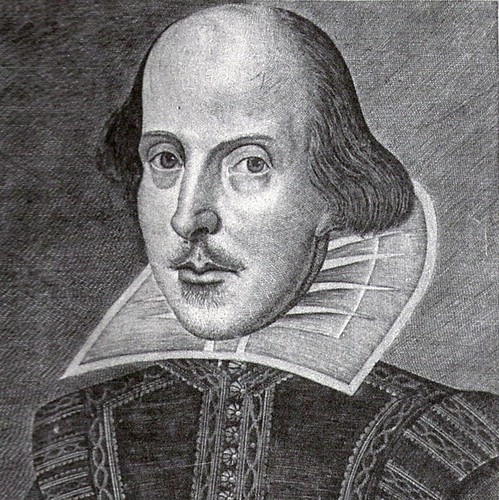
![Image taken from page 99 of '[Pictures from English Literature ... With twenty illustrations, by J. C. Horsley, E. M. Ward, W. F. Yeames, etc.]'](https://live.staticflickr.com/7289/10464587425_c752d99b44.jpg)


From Anglo-Saxon Roots to Norman Influence
English literature represents the vast body of written works produced in the English language, a linguistic entity that has evolved over more than 1,400 years. Its earliest discernible form, Old English, emerged from Anglo-Frisian dialects brought to Britain by Anglo-Saxon settlers in the 5th century. The most celebrated work from this era, 'Beowulf,' an epic poem despite its Scandinavian setting, holds a place of national significance.
However, the linguistic landscape dramatically shifted following the Norman Conquest of England in 1066. The new aristocracy favored French, making it the dominant language in courts, parliament, and polite society. This linguistic dominance led to the development of Middle English, a form that persisted until the late 15th century.
During this transitional period, writers like Geoffrey Chaucer played a crucial role in legitimizing the vernacular. His masterpiece, 'The Canterbury Tales,' demonstrated the literary potential of Middle English at a time when Latin and French were still the preeminent languages of scholarship and prestige in England.
Shaping Modern English
The evolution of English literature was profoundly influenced by technological advancements and linguistic phenomena. The introduction of Johannes Gutenberg's printing press in 1439 was a pivotal moment. This innovation facilitated the mass production of texts, contributing significantly to the standardization of the English language.
As more people gained access to printed materials, a more uniform spelling and grammar began to emerge. Concurrently, the King James Bible, published in 1611, served as another powerful force in shaping the language, its eloquent prose influencing countless writers. The Great Vowel Shift, a major series of changes in the pronunciation of English vowels that occurred roughly between the 1400s and 1700s, also played a critical role in distinguishing Middle English from Modern English, further solidifying the linguistic foundations upon which later literary works would be built.
Shakespeare's Enduring Genius and the Flourishing of English Drama
William Shakespeare stands as an unparalleled figure in English literature, widely acclaimed as its greatest writer and one of the world's most significant dramatists. His prolific output of plays, including tragedies, comedies, and histories, explored the complexities of the human condition with unprecedented depth and artistry. The enduring power of his work is evident in its universal appeal; his plays have been translated into virtually every major living language and continue to be performed more frequently than those of any other playwright.
Shakespeare's mastery of language, his profound understanding of character, and his innovative dramatic structures not only defined the Elizabethan and Jacobean eras but also set a benchmark for dramatic writing that continues to inspire and challenge artists today.
Imperial Reach and Post-Colonial Voices
The expansion of the British Empire from the late 16th to the early 18th centuries was instrumental in disseminating the English language and, consequently, English literature across the globe. At its zenith, the British Empire encompassed a vast geographical expanse and a significant portion of the world's population. This imperial reach facilitated the development of distinct literary traditions in English within its colonies and in the United States.
Writers from these diverse regions began to contribute unique perspectives, styles, and themes to the broader corpus of English literature. The global impact is further underscored by the fact that, cumulatively, writers from Great Britain, Ireland, the United States, and former British colonies have received more Nobel Prizes in Literature for works in English than for any other language, highlighting its status as a truly international literary medium.
The Cultural Resonance and Evolving Landscape of English Literature
The significance of English literature extends far beyond its artistic merit; it serves as a vital cultural mirror, reflecting societal values, historical events, and philosophical shifts across centuries. From the medieval romances and the Renaissance dramas to the Victorian novels and the modernist experiments, literary works have consistently engaged with and shaped public discourse. The influence of writers like Sir Walter Scott in the 19th century, whose historical romances inspired artists across Europe, demonstrates the far-reaching cultural impact of English literary output.
Today, English literature continues to evolve, embracing new voices, forms, and perspectives from a globalized world, demonstrating its remarkable adaptability and its persistent role in shaping global cultural understanding and dialogue.
Go deeper
Frequently Asked Questions
What is English literature?+
Why did English change after 1066?+
How did the printing press help English literature?+
Who is Shakespeare and why is he famous?+
How did the British Empire spread English stories?+
Based on content from Wikipedia · Licensed under CC BY-SA 4.0