

Dystopia: Worlds Gone Wrong!
Images

big freedia + boy w dystopia backpatch


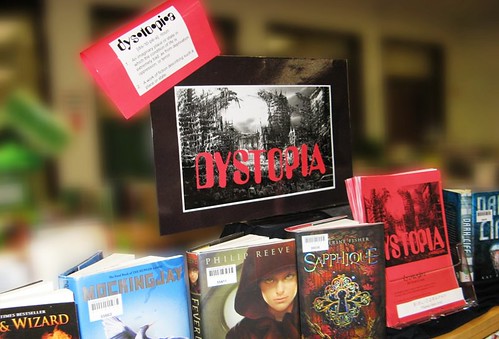

Deconstructing the Nightmare
A dystopia is far more than just a 'bad place'; it is a meticulously crafted imagined society that functions as the antithesis of an ideal world, or utopia. These societies are characterized by pervasive misery, dehumanization, and fear, often stemming from oppressive political systems, environmental collapse, or unchecked technological advancement. Unlike simple post-apocalyptic settings, dystopias typically depict a functioning, albeit deeply flawed, societal structure.
They are often totalitarian states where individual freedoms are systematically suppressed through methods like pervasive surveillance, brutal enforcement, and the manipulation of information. The core of a dystopia lies in its exaggeration of current societal trends or political ideologies to their most terrifying extremes, forcing readers to confront uncomfortable truths about their own world and the potential consequences of its trajectory. It is a genre that thrives on presenting a worst-case scenario as a stark warning.
From Philosophical Fears to Literary Warnings
The conceptual roots of dystopia stretch back centuries, predating the formal coinage of the term. Philosophers and writers have long contemplated societies that, while perhaps aiming for order or perfection, devolve into oppressive regimes. The term 'dystopia' itself, derived from Greek for 'bad place,' emerged as a direct counterpoint to Thomas More's 'utopia' ('good place').
Early literary explorations, such as those reacting to the French Revolution, began to articulate fears of collectivism and the dangers of radical social engineering. Over time, the genre evolved, incorporating anxieties about industrialization, scientific overreach, and political extremism. The 20th century, marked by world wars and totalitarian regimes, saw a surge in dystopian literature, with seminal works like 'Nineteen Eighty-Four' and 'Brave New World' solidifying its core themes.
This historical trajectory demonstrates a continuous engagement with societal anxieties, adapting to new fears while retaining the fundamental purpose of critique and warning.
The Enduring Resonance
The persistent popularity of dystopian fiction, particularly in young adult literature and film, speaks volumes about contemporary cultural anxieties. These narratives tap into a deep-seated unease about the future, fueled by issues like climate change, political polarization, economic inequality, and the pervasive influence of technology. Dystopias offer a cathartic exploration of these fears, allowing audiences to confront potential societal breakdowns in a controlled, fictional environment.
Furthermore, they serve as powerful tools for social and political commentary. By extrapolating current trends to their logical, often grim, conclusions, dystopian works challenge audiences to question existing power structures, consumerism, and the direction of technological development. They prompt critical thinking about the values we prioritize and the kind of future we are actively creating, making them more than just entertainment but vital cultural dialogues.
Anatomy of Control
Dystopian societies are meticulously engineered systems of control designed to maintain a façade of order at the expense of human dignity. Central to this is the omnipresent state, often embodied by a tyrannical government or a powerful, unaccountable corporation. Propaganda is a key weapon, used to indoctrinate citizens, distort reality, and foster unquestioning loyalty. Censorship is equally vital, eradicating dissenting ideas and historical truths to maintain ideological purity.
Individuality is systematically suppressed; conformity is enforced through social pressure, psychological conditioning, or outright punishment. The family unit may be dismantled or co-opted, replaced by state-controlled reproduction or communal upbringing. Surveillance is pervasive, ensuring that any deviation from the norm is quickly detected and quashed.
These mechanisms combine to create a society where fear, rather than freedom, dictates existence, and where the very essence of humanity is under threat.
The Dystopian Spectrum
Dystopian fiction encompasses a broad spectrum, reflecting diverse societal fears. Political dystopias, like Orwell's 'Nineteen Eighty-Four,' focus on totalitarian regimes and the suppression of freedom. Economic dystopias, seen in works like 'Jennifer Government,' explore the dangers of unchecked corporate power and extreme wealth disparity.
Technological dystopias, such as those in 'Black Mirror,' examine the negative impacts of advanced technology on human relationships and society. Environmental dystopias, like those depicted in 'WALL-E,' highlight the consequences of ecological destruction. Many narratives blend these elements, creating complex worlds.
Critically, dystopian fiction often serves as a mirror to our present. Authors draw upon contemporary issues-political rhetoric, technological trends, social inequalities-to construct their cautionary tales, making dystopias not just imaginative flights of fancy but potent critiques of our current reality and potential futures.
Go deeper
Frequently Asked Questions
What is a dystopia?+
Why do writers make dystopian stories?+
How is a dystopia different from a post‑apocalyptic world?+
Where do the ideas for dystopias come from?+
When did dystopian books become very popular?+
Based on content from Wikipedia · Licensed under CC BY-SA 4.0