

Domrémy-la-Pucelle
Images

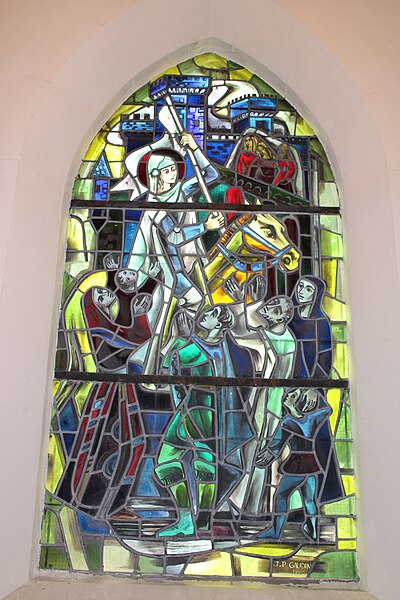
Église Saint-Rémy de Domrémy-la-Pucelle 091




The Genesis of a Name
Domrémy-la-Pucelle is a commune located in the Vosges department within the Grand Est region of northeastern France. Its significance in historical discourse is almost entirely derived from its association with Joan of Arc, the legendary French heroine. The village's original name was simply Domrémy.
However, in a profound act of commemoration, its name was officially altered to include 'la Pucelle,' a moniker derived from Joan's famous epithet, 'la Pucelle d'Orléans' (the Maid of Orléans). This renaming was not merely a geographical update; it was a deliberate and symbolic act that permanently inscribed Joan's identity onto the very fabric of the village. It signifies how a community can embrace and immortalize the legacy of its most prominent historical figure, transforming its name into a living testament to her impact on French national consciousness and history.
The Cradle of a National Icon
The village's paramount importance stems from being the birthplace of Joan of Arc, born circa 1412. Joan, a peasant girl from Domrémy, rose to prominence during the Hundred Years' War, claiming divine guidance led her to rally the French forces. Her strategic acumen and inspirational leadership were instrumental in pivotal French victories, most notably the lifting of the Siege of Orléans, which earned her the 'Maid of Orléans' title.
Her actions dramatically shifted the morale and trajectory of the war, contributing significantly to the eventual French triumph. Domrémy, therefore, represents the humble origins of a figure who would become a symbol of French nationalism, courage, and faith. The village serves as a tangible link to her formative years, offering insights into the socio-cultural environment that shaped her extraordinary destiny.
A Renaming as a Historical Marker
The transformation of Domrémy's name into Domrémy-la-Pucelle is a powerful historical marker. Following Joan of Arc's canonization and her elevation to sainthood and national heroine status, her home village sought to solidify its connection to her enduring legacy. The addition of 'la Pucelle' was a direct and intentional effort to ensure that the village would forever be associated with 'the Maid.' This act of renaming underscores the profound impact Joan had not only on the military and political landscape of France but also on the cultural and historical identity of the places connected to her life.
It illustrates how place names can function as historical narratives, preserving memory and honoring significant individuals for posterity.
Geographical Context and Enduring Significance
Geographically, Domrémy-la-Pucelle is situated in the northeastern French region of Grand Est, within the department of Vosges. This location places it within a historical heartland of France, a region that has been central to many of the nation's defining historical moments. The village's setting in this part of France is not incidental; it is part of the broader historical context of the Hundred Years' War and the subsequent development of French national identity.
Today, Domrémy-la-Pucelle continues to attract historians, pilgrims, and tourists interested in Joan of Arc's life and the historical period she inhabited. The village remains a vital site for understanding the origins of a figure whose influence extends far beyond her own time, resonating in modern discussions of heroism, faith, and national identity.
The Village as a Living Monument
Domrémy-la-Pucelle functions as more than just a geographical location; it serves as a living monument to Joan of Arc. The very name of the village acts as a constant reminder of its most famous inhabitant and her indelible mark on French history. While the original structures of Joan's time may have changed, the spirit and historical significance endure.
The village's continued existence and its name serve as a powerful testament to how a place can embody the memory of a person, transforming a simple geographical entity into a site of historical reverence and national pride. It highlights the enduring power of individual actions to shape the identity and narrative of a place across centuries.
See also
Frequently Asked Questions
What is Domrémy-la-Pucelle?+
Where is Domrémy-la-Pucelle located?+
Who was born in Domrémy-la-Pucelle?+
Why did the village change its name to Domrémy-la-Pucelle?+
What can visitors see in Domrémy-la-Pucelle?+
Based on content from Wikipedia · Licensed under CC BY-SA 4.0