

Dimetrodon: The Sail-Backed Hunter!
Images

Dimetrodon

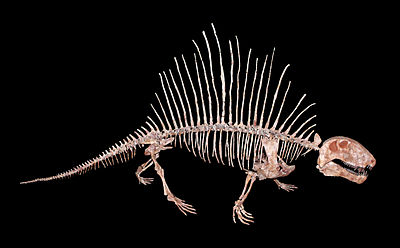


Re-evaluating Dimetrodon
Dimetrodon, a genus of extinct synapsids, represents a crucial evolutionary step, predating the age of dinosaurs by tens of millions of years. Flourishing during the Early to Late Permian period (approximately 295 to 272 million years ago), these animals occupied a niche that would later be dominated by archosaurs. Unlike true reptiles, synapsids possess a single pair of temporal fenestrae (openings) in their skulls, a characteristic that distinguishes them and ultimately paved the way for the evolution of mammals.
The species within the Dimetrodon genus varied significantly in size, with some reaching lengths of up to 15 feet (4.5 meters) and weighing several hundred pounds, making them apex predators of their time. Their skeletal structure, particularly the robust limbs and powerful jaws, indicates a highly active and predatory lifestyle, distinct from many of the more sluggish reptiles that coexisted with them.
Paleogeography and Paleoenvironment of the Permian Predator
The fossil record of Dimetrodon is predominantly found in the red beds of North America, particularly in regions like Texas and Oklahoma. These geological formations indicate a paleoenvironment characterized by warm, arid to semi-arid conditions, with seasonal rainfall supporting river systems, floodplains, and scattered vegetation. This landscape was a mosaic of open areas and more densely vegetated zones, providing ample hunting grounds and shelter for Dimetrodon and its prey.
The distribution of Dimetrodon fossils suggests it was a widespread and successful inhabitant of these Permian ecosystems, playing a significant role in the food web. Understanding this ancient geography is key to appreciating the adaptive strategies that allowed Dimetrodon to thrive in such a dynamic and challenging environment.
Predatory Adaptations and Dietary Niche
Dimetrodon's predatory prowess was supported by a suite of specialized adaptations. Its dentition is particularly noteworthy, featuring heterodonty-teeth of different shapes and sizes. This included large, serrated caniniform teeth at the front of the jaw, ideal for grasping and puncturing prey, followed by smaller, blade-like teeth further back for slicing flesh.
This dental arrangement suggests a diet primarily composed of smaller vertebrates, such as amphibians and other early reptiles, which it would have actively hunted. The powerful musculature indicated by its skeletal structure, coupled with its relatively long limbs, points to an animal capable of pursuit and ambush. Its success as a predator likely contributed to the evolutionary pressures shaping the development of its prey species.
The Sail
The most iconic feature of Dimetrodon is its large dorsal sail, formed by elongated neural spines of the vertebrae. This structure is widely believed to have served multiple critical functions. Foremost among these is thermoregulation.
The sail, richly vascularized, would have acted as a thermal window, facilitating rapid absorption of solar radiation to warm the body and efficient dissipation of excess heat, thereby optimizing metabolic activity. This physiological advantage would have been particularly beneficial in the fluctuating temperatures of the Permian climate. Beyond thermoregulation, the sail likely played a significant role in intraspecific communication and display.
Its potential for vibrant coloration suggests it was used for mate attraction, territorial signaling, or even as a deterrent to rivals and predators, underscoring its importance in Dimetrodon's social dynamics and overall fitness.
See also
Frequently Asked Questions
What was Dimetrodon and when did it live?+
Why did Dimetrodon have a sail on its back?+
How big could a Dimetrodon get?+
Where are Dimetrodon fossils usually found?+
What did Dimetrodon eat?+
Based on content from Wikipedia · Licensed under CC BY-SA 4.0