

Denmark's Amazing Football Team!
Images

File:20140904 - Kasper Schmeichel.jpg


Geographical and Administrative Foundations of Danish Football
Denmark, a sovereign state in Northern Europe, is characterized by its peninsula, Jutland, and an archipelago of over 400 islands. This unique geography, with its extensive coastline and relatively flat terrain, fosters a strong connection to outdoor activities and sports. With a population of approximately 5.9 million, the nation's football infrastructure is managed by the Danish Football Association (DBU), founded in 1889.
The national team's spiritual home is Parken Stadium in Copenhagen, a modern venue that has witnessed many of the team's historic moments. The DBU's organizational structure, encompassing numerous local clubs, ensures a widespread engagement with football across all age groups and regions, forming the bedrock of the national team's talent pool and fan base.
From Olympic Medals to the Unthinkable Euro Triumph
The Denmark national football team boasts a history marked by early international recognition, securing silver medals at the 1908 and 1912 Olympic Games. However, a stringent amateur policy, which prohibited players from turning professional abroad, delayed their FIFA World Cup debut until 1986. This period of exclusion only amplified the magnitude of their 1992 European Championship victory.
Invited to the tournament as replacements for Yugoslavia, the Danish squad, managed by Richard Møller Nielsen, defied all expectations. They defeated defending champions the Netherlands in a dramatic semi-final penalty shootout and then overcame world champions Germany 2-0 in the final. This improbable triumph remains one of the most significant underdog stories in sports history, a testament to their tactical prowess and unwavering team spirit.
Further international success includes winning the 1995 King Fahd Cup (a precursor to the Confederations Cup) by defeating Argentina 2-0 in the final.
The 'Danish Dynamite' Legacy and Modern Competitiveness
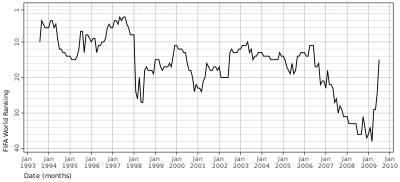
The 1980s heralded the 'Danish Dynamite' era, characterized by a dynamic, attacking brand of football that captivated audiences worldwide. This period saw Denmark consistently challenging at the highest level. Their most successful FIFA World Cup campaign occurred in 1998, where they reached the quarter-finals, narrowly losing 3-2 to a formidable Brazil side in a match widely regarded as one of the tournament's classics.
Denmark has also made appearances in the Round of 16 in 1986, 2002, and 2018, demonstrating sustained competitiveness. In recent history, their performance at Euro 2020, reaching the semi-finals after an emotionally charged tournament, underscored their resilience and continued status as a top European contender, losing to England in extra time.
Cultural Resonance and Societal Impact of the National Team
The Denmark national football team transcends mere sporting achievement; it is a significant cultural institution that embodies national identity and pride. The 1992 European Championship victory, in particular, is etched into the collective memory of the nation, symbolizing the power of unity and belief against overwhelming odds. The team's players often serve as ambassadors for Danish values, promoting fair play, dedication, and a strong work ethic.
The DBU's extensive grassroots development programs ensure that football remains accessible and popular across Denmark, fostering a deep connection between the populace and the national squad. This symbiotic relationship fuels the team's motivation and ensures a passionate fan base that rallies behind the red and white colors, celebrating both victories and the spirit of the game.
Strategic Development and Future Prospects
The Danish Football Association (DBU) places a strong emphasis on long-term strategic planning, focusing on youth development, coaching education, and the implementation of modern training methodologies. This structured approach has been crucial in maintaining the team's competitiveness on the international stage. The national team's philosophy often balances tactical discipline with individual flair, allowing players to express their talents within a cohesive unit.
Looking ahead, Denmark continues to invest in its footballing infrastructure and talent pipeline, aiming to build upon its historical successes. The team's recent performances suggest a bright future, with a core of experienced players complemented by emerging talent, poised to make further significant impacts in upcoming major tournaments.
See also
Frequently Asked Questions
What is Denmark's national football team?+
Why did Denmark win the 1992 European Championship?+
How many times has Denmark played in the FIFA World Cup?+
Where does Denmark play its home games?+
What was the 'Danish Dynamite' era?+
Based on content from Wikipedia · Licensed under CC BY-SA 4.0