

Demi Moore
Images

Bruce Willis & Demi Moore





Ascension Through the Ranks
Demi Moore's trajectory in Hollywood is a compelling narrative of ambition, talent, and strategic career moves. Her initial foray into acting began with a role on the long-running soap opera 'General Hospital' in 1981, a platform that provided invaluable experience in rapid-fire performance and character development. This early success was followed by her emergence as a key figure in the 'Brat Pack' phenomenon of the 1980s.
Films like 'St. Elmo's Fire' (1985) and 'About Last Night...' (1986) cemented her status as a rising star, showcasing a magnetic screen presence and a knack for portraying complex, relatable characters. However, it was her role in the supernatural romance 'Ghost' (1990) that catapulted her to global superstardom.
The film's immense critical and commercial success, including its status as the highest-grossing film of the year, validated her as a leading lady capable of carrying major productions and connecting with a vast audience on an emotional level. This pivotal role marked a significant turning point, transitioning her from a promising talent to an undeniable force in the film industry.
Redefining Stardom
The 1990s saw Demi Moore not only achieve critical acclaim but also shatter financial barriers for actresses. Following the success of 'Ghost,' she delivered a series of powerful performances in films that explored themes of power, desire, and societal expectations. 'A Few Good Men' (1992), 'Indecent Proposal' (1993), and 'Disclosure' (1994) were significant box office hits that showcased her versatility and ability to command attention in demanding roles. Her willingness to tackle challenging subject matter, often pushing boundaries, contributed to her growing influence.
The pinnacle of her financial power came in 1996 when she was paid an unprecedented $12.5 million to star in 'Striptease.' This figure not only made her the highest-paid actress in the world at the time but also represented a significant shift in Hollywood's compensation landscape for women. This achievement was a testament to her marketability and the immense value she brought to film projects, inspiring a generation of actresses to advocate for equitable pay and recognition.
Navigating Shifting Tides
While the latter half of the 1990s and early 2000s saw a decrease in the frequency of her leading roles, Demi Moore's career remained dynamic and multifaceted. She strategically chose supporting roles in notable films such as 'Charlie's Angels: Full Throttle' (2003) and 'Margin Call' (2011), demonstrating her commitment to quality filmmaking and her ability to contribute significantly even in ensemble casts. Her ventures into television also proved successful, with impactful performances in 'If These Walls Could Talk' (1996) and later in series like 'Empire' (2017–2018) and the critically lauded 'Feud: Capote vs.
The Swans' (2024). This period showcased her adaptability and her continued relevance in an evolving entertainment industry. Her memoir, 'Inside Out' (2019), further offered a candid look into her life and career, resonating with readers and topping bestseller lists, proving her enduring influence beyond the screen.
A Resurgence of Acclaim and Lasting Industry Impact
Demi Moore's career has experienced a notable resurgence in recent years, marked by critical acclaim for her performances in more challenging and artistically driven projects. Her role in the 2024 body horror film 'The Substance' garnered significant attention, earning her a Golden Globe Award and an Academy Award nomination for Best Actress. This recognition underscores her continued artistic prowess and her ability to deliver powerful, transformative performances.
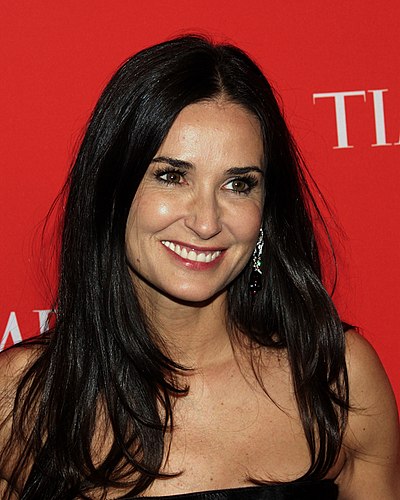
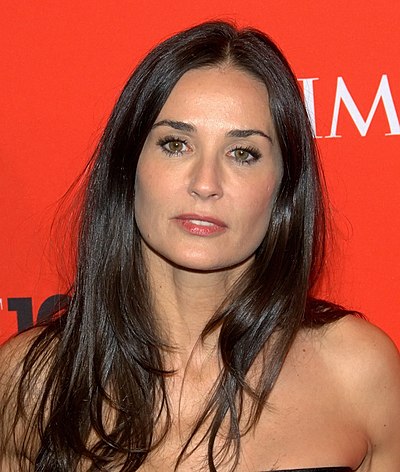
Beyond her acting achievements, Moore's influence extends to her pioneering role in advocating for women in Hollywood, particularly regarding pay equity and the portrayal of complex female characters. Her appearance on Time's 100 most influential people list and her upcoming star on the Hollywood Walk of Fame in 2026 are further testaments to her lasting legacy. Demi Moore remains a significant figure, celebrated for her groundbreaking career, her artistic evolution, and her enduring impact on the film industry.
See also
Frequently Asked Questions
Who is Demi Moore?+
What was her first TV show?+
Which movie made her super famous?+
Did she ever write a book?+
Has she acted in TV shows after her movie career?+
Based on content from Wikipedia · Licensed under CC BY-SA 4.0