

Cayambe (volcano)
Images
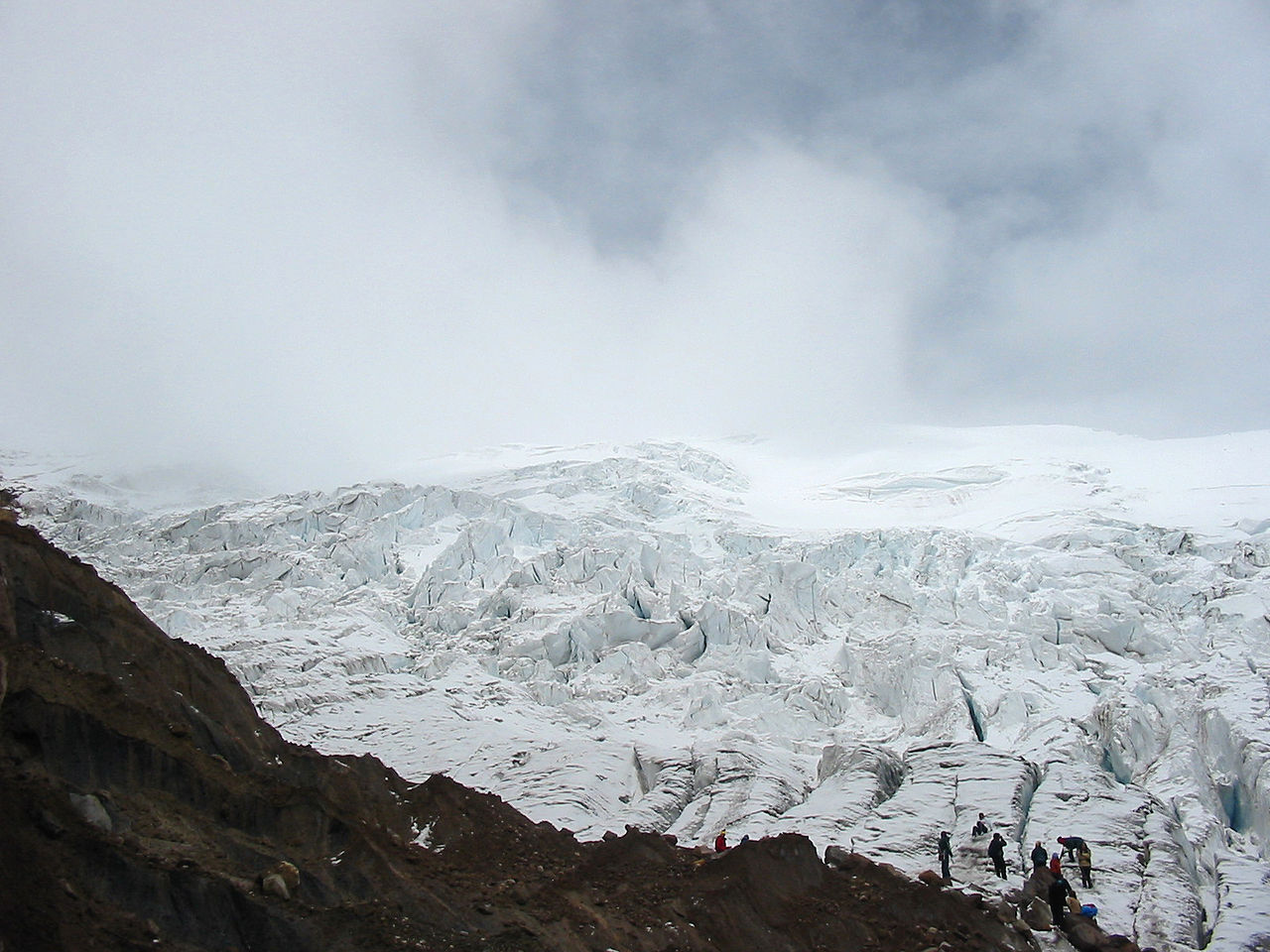
Cayambe-volcano 003


Geological Sentinel of the Equator
Cayambe, also known as Volcán Cayambe, is a prominent Holocene compound volcano situated in the Cordillera Central of the Ecuadorian Andes, approximately 70 km northeast of Quito. With an elevation of 5,790 meters (18,996 feet), it ranks as the third-highest mountain in Ecuador. Its summit is perpetually adorned with a substantial snow and ice cap, covering an area of roughly 22 km2 (8 sq mi).
This glacial feature is not merely aesthetic; it plays a crucial role in the regional hydrology. The glaciers on the eastern flank descend to approximately 4,400 meters (14,400 ft), while those on the drier western flank extend to about 4,700 meters (15,400 ft), illustrating microclimatic variations influenced by prevailing winds and solar radiation. The volcano and much of its slopes are encompassed within the Cayambe Coca Ecological Reserve, a vital protected area for biodiversity conservation.
The Equatorial Ice Crown
Cayambe holds a singular distinction in global geography: its south slope features the highest point on Earth's surface that is intersected by the Equator, and it is the only location on the Equator that experiences snow cover. This point, situated at an altitude of 4,690 meters (15,387 ft), represents a fascinating intersection of climatic zones and geological elevation. While the Equator is typically associated with tropical warmth, Cayambe demonstrates how extreme altitude can create polar-like conditions even at the planet's widest circumference.
This anomaly is a direct consequence of the Andes' dramatic uplift, creating a unique environment where equatorial and alpine conditions converge. The presence of snow at this latitude is a powerful indicator of the significant temperature drop with increasing elevation.
Volcanic Activity and Mountaineering Legacy
As a Holocene volcano, Cayambe has exhibited eruptive activity within the last 11,700 years, with its most recent eruption recorded in March 1786. Its geological structure is complex, characteristic of compound volcanoes formed by multiple eruption cycles. Despite its potential for activity, Cayambe is a popular destination for mountaineers.
The ascent, first successfully completed in 1880 by Edward Whymper and his Italian companions Jean-Antoine and Louis Carrel, remains a challenging endeavor. The standard route involves navigating a terrain with moderate inclines, punctuated by a formidable bergschrund at approximately 5,500 meters (18,000 ft). The final stages present significant obstacles, including crevasses and seracs, demanding technical skill and endurance.
The summit offers expansive views, a fitting reward for the arduous climb.
Cultural Resonance and Scientific Fascination
Cayambe has captured the imagination of explorers and artists alike. Alexander von Humboldt, the renowned naturalist, was deeply impressed by its beauty, and his writings subsequently inspired Frederic Edwin Church's iconic painting, 'The Heart of the Andes.' This artistic interpretation cemented Cayambe's image as a symbol of sublime natural grandeur. Scientifically, Cayambe presents intriguing phenomena.
Its peak is the point on Earth's surface farthest from its axis of rotation. Consequently, as the Earth spins, this point experiences the fastest rotational velocity. This fact, combined with its unique equatorial snow cover, makes Cayambe a subject of ongoing scientific interest in fields ranging from glaciology and climatology to geodesy and geography.
See also
Frequently Asked Questions
What makes Cayambe special compared to other mountains?+
Why does Cayambe have snow even though it is on the Equator?+
How tall is Cayambe and where is it located?+
Is Cayambe a dangerous volcano?+
What can people see from the top of Cayambe?+
Based on content from Wikipedia · Licensed under CC BY-SA 4.0