

Canadian Forces
Images

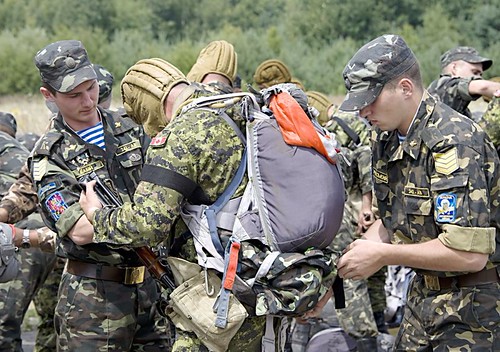
Canadian forces participate in airborne operations during Rapid Trident 2011




The Tri-Service Structure and Operational Reach
The Canadian Forces (CF) represent Canada's unified military instrument, comprising three distinct but integrated branches: the Royal Canadian Navy (RCN), the Canadian Army, and the Royal Canadian Air Force (RCAF). This tri-service structure allows for coordinated operations across land, sea, and air domains. The RCN operates a fleet of modern vessels, including frigates and patrol ships, tasked with maritime defence, sovereignty patrols, and international engagements.
The Canadian Army is the largest branch, focused on land combat and support operations, with specialized units trained for diverse environments. The RCAF provides air superiority, tactical airlift, intelligence, surveillance, and reconnaissance capabilities, operating a wide array of aircraft from fighter jets to transport planes. Together, these branches form a versatile force capable of responding to a spectrum of threats and fulfilling a broad mandate.
Evolution of Canada's Military Identity
The genesis of the Canadian Forces can be traced back to the colonial militias and naval services of the 19th century. The establishment of the Department of National Defence in 1923 marked a significant step towards unification, culminating in the official formation of the Canadian Forces in 1968 through the National Defence Act. This act unified the Army, Navy, and Air Force under a single command structure, streamlining operations and resource management.
Historically, Canadian military contributions have been pivotal in major global conflicts, including the South African War, World War I, World War II, and the Korean War. Post-war, Canada became a prominent player in international peacekeeping, deploying forces to numerous UN and NATO missions, shaping its identity as a nation committed to global stability and conflict resolution.
Beyond Defense
The mandate of the Canadian Forces extends significantly beyond traditional defence roles, encompassing a robust commitment to humanitarian assistance and disaster relief (HADR) operations, both domestically and internationally. When natural disasters strike, such as earthquakes, floods, or hurricanes, the CF are often deployed to provide critical support, including logistical assistance, medical aid, search and rescue, and the delivery of essential supplies. Furthermore, the CF actively participate in international military cooperation, engaging in joint exercises with allied nations like the United States, the United Kingdom, and France, as well as contributing to multinational coalitions and organizations such as NATO and NORAD.
This collaborative approach enhances interoperability, strengthens alliances, and projects Canadian values and interests globally.
Modern Challenges and Future Imperatives
In the contemporary geopolitical landscape, the Canadian Forces face evolving challenges, including cyber warfare, hybrid threats, and the need to maintain readiness in a complex global environment. The increasing reliance on technology necessitates continuous investment in advanced capabilities, from sophisticated surveillance systems to modern combat platforms. The CF are also adapting to the demands of operating in diverse and often austere environments, from the Arctic to arid regions. Future imperatives include ensuring adequate funding, recruiting and retaining skilled personnel, and modernizing equipment to meet emerging threats.
The ongoing strategic reviews and defence policy updates aim to position the Canadian Forces to effectively address these challenges and uphold Canada's national security and international commitments.
Go deeper
Frequently Asked Questions
What are the three parts of the Canadian Forces?+
Why did Canada create the Canadian Forces in 1968?+
How does the Canadian Forces help during natural disasters?+
Where does the Canadian Forces work with other countries?+
What kinds of jobs can people have in the Canadian Forces?+
Based on content from Wikipedia · Licensed under CC BY-SA 4.0