

Burn
Images
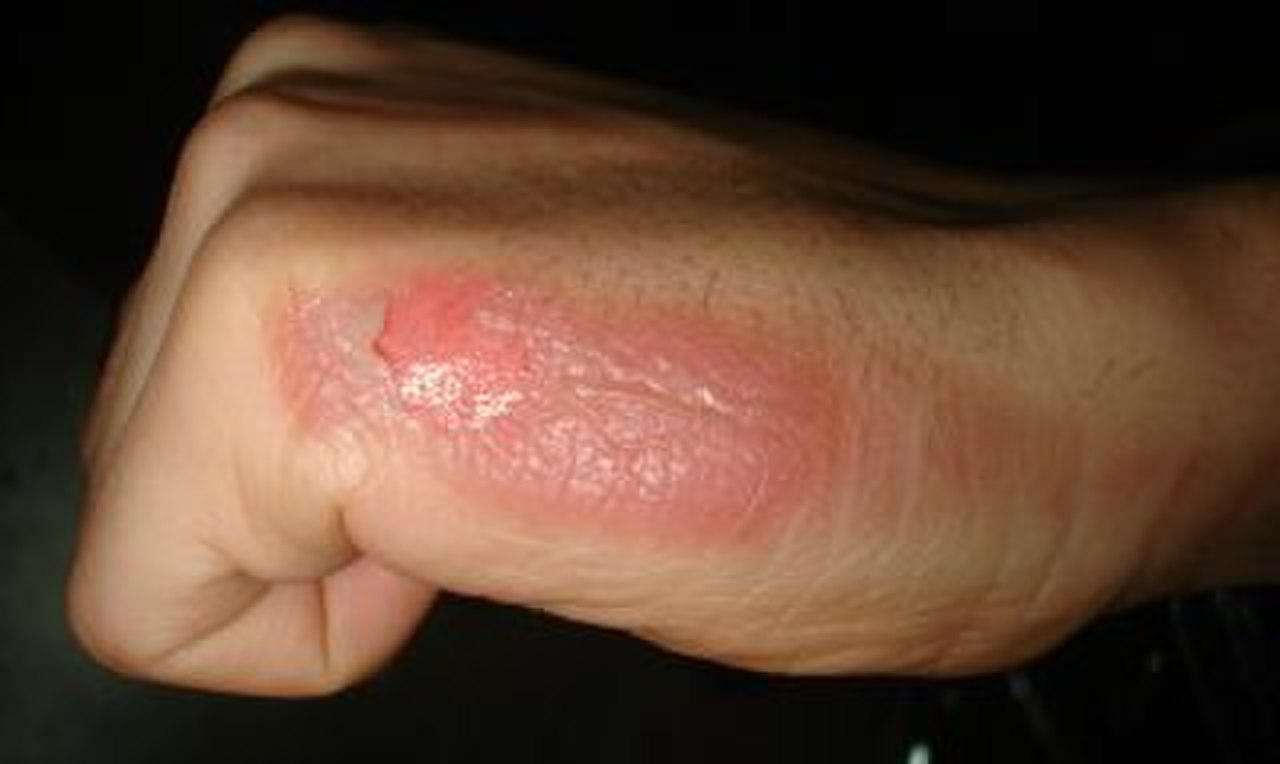
Burn
The Cellular and Tissue Impact of Thermal Injury
A burn is a complex injury resulting from the transfer of energy to tissues, most commonly from thermal sources, but also from chemical, electrical, or radiant energy. This energy transfer causes cellular damage by denaturing proteins and disrupting cell membranes. The severity of a burn is determined by the temperature, duration of exposure, and the specific agent involved.
Classification is based on depth: first-degree burns affect only the epidermis, causing redness and pain; second-degree burns extend into the dermis, leading to blisters and significant pain; third-degree burns destroy the full thickness of the skin, often resulting in a leathery, painless eschar due to nerve destruction. Deeper burns can extend into subcutaneous tissue, muscle, and even bone, posing systemic risks. The inflammatory response triggered by a burn can lead to widespread edema, hypovolemia, and, in severe cases, organ dysfunction, making burn management a critical medical challenge.
Evolution of Burn Care
The history of burn treatment spans millennia, reflecting humanity's ongoing struggle with this common injury. Ancient texts from Egypt, Greece, and Rome describe rudimentary treatments, often involving natural substances like honey, olive oil, and various plant extracts, demonstrating an early, albeit empirical, understanding of wound care. The Hippocratic Corpus, for instance, details methods for treating burns, emphasizing cleansing and the use of soft dressings.
Throughout the Middle Ages and Renaissance, burn management remained largely observational, with limited scientific understanding. The 19th and 20th centuries saw significant advancements, driven by the germ theory of disease, leading to sterile surgical techniques and the development of antiseptics. Pioneers like Sir Archibald McIndoe in the mid-20th century revolutionized reconstructive surgery for burn victims, particularly those injured in World War II.
Modern burn care integrates sophisticated wound dressings, advanced skin grafting techniques, fluid resuscitation protocols, and comprehensive pain management, transforming outcomes for even the most severe injuries.
The Multifaceted Significance of Burn Management
The significance of understanding and managing burns extends far beyond immediate wound healing. Severe burns represent a major trauma that can have profound and lasting physical, psychological, and social consequences for individuals. Physically, extensive burns can lead to chronic pain, disfigurement, loss of function, and increased susceptibility to infection, which remains a leading cause of mortality in burn patients.
Psychologically, survivors often grapple with body image issues, post-traumatic stress disorder (PTSD), and depression, necessitating long-term mental health support. Socially, the impact can affect relationships, employment, and overall quality of life. Therefore, effective burn management requires a multidisciplinary approach involving surgeons, nurses, therapists, psychologists, and social workers.
Furthermore, public health efforts focused on burn prevention, through education and regulation, are paramount in reducing the incidence and severity of these devastating injuries.
Contemporary Approaches to Burn Treatment and Prevention
Modern burn management is highly specialized, focusing on rapid wound closure, infection control, and functional restoration. Initial treatment involves immediate cooling with water (avoiding ice), assessment of burn depth and extent, and aggressive fluid resuscitation to counteract hypovolemia. Wound care includes debridement of dead tissue and the application of antimicrobial dressings or topical agents. Skin grafting, using autografts (from the patient's own body) or allografts/xenografts (from donors), is crucial for covering large defects and promoting healing.
Pain management is a critical component, often involving multimodal analgesia. Prevention remains a cornerstone of public health strategy, targeting common causes such as household fires (smoke alarms, fire-safe cigarettes), scalds (safe storage of hot liquids, temperature-limiting devices), chemical exposures, and electrical hazards. Educational campaigns and legislative measures play vital roles in reducing the incidence of preventable burns across all age groups.
See also
Based on content from Wikipedia · Licensed under CC BY-SA 4.0