

Black Forest gateau
Images

Black Forest Gateau




The Enigmatic Genesis of Schwarzwälder Kirschtorte
The Black Forest gateau, or Schwarzwälder Kirschtorte, stands as a testament to culinary artistry, yet its precise origin remains a subject of historical debate. While the name strongly suggests a connection to Germany's Black Forest region, renowned for its dense woodlands and abundant cherry orchards, definitive proof of its inventor is elusive. Several confectioners have been credited, leading to a rich tapestry of origin stories.
However, the existence of a documented recipe from 1927, meticulously preserved in the archives of Radolfzell, Germany, provides a tangible anchor for its historical timeline. This early record signifies that the cake, in a recognizable form, was established by the late 1920s. Its ascent to international fame, however, largely occurred in the latter half of the 20th century, transforming it from a regional specialty into a globally recognized dessert, a journey that speaks volumes about its inherent appeal and the power of culinary diffusion.
Anatomy of a Masterpiece
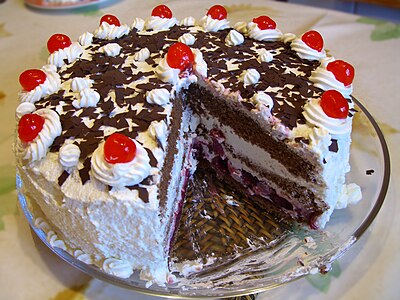
The construction of a Black Forest gateau is a deliberate orchestration of complementary flavors and textures. At its foundation lies a rich, dark chocolate sponge cake, typically made with high-quality cocoa powder, providing a robust base. This is then judiciously moistened, often with a syrup infused with Kirsch, a potent cherry brandy indigenous to the region.
This alcoholic component is crucial, imparting a subtle warmth and complexity that elevates the dessert beyond mere sweetness. Interspersed between the cake layers are generous quantities of light, airy whipped cream, offering a creamy contrast to the cake's density. The inclusion of cherries, often sour cherries preserved in syrup, adds bursts of tartness that cut through the richness.
The final flourish is the characteristic decoration of dark chocolate shavings, which not only enhance the visual appeal but also contribute a final layer of chocolate intensity, creating a harmonious and multi-dimensional sensory experience.
Beyond the Plate
The enduring popularity of the Black Forest gateau has cemented its status as more than just a dessert; it has become a cultural touchstone. The existence of a dedicated festival in Todtnauberg, Germany, underscores the deep affection and pride associated with this confection. Such events celebrate not only the taste but also the heritage and tradition it represents.
Furthermore, the cake's unexpected cameo in the 2007 video game Portal demonstrates its pervasive influence, reaching audiences through diverse media and reinforcing its iconic status. This ability to transcend its culinary origins and embed itself in popular culture highlights its universal appeal. In contemporary culinary landscapes, the Black Forest gateau continues to be a benchmark, inspiring reinterpretations and adaptations while remaining a beloved classic in patisseries and homes worldwide, a testament to its timeless design and flavor profile.
The Nomenclature of a Legend
The name 'Black Forest gateau' is intrinsically linked to its geographical namesake, the Schwarzwald, or Black Forest, in Germany. While the precise etymological link is debated, several compelling theories exist. One prominent hypothesis suggests the name refers to the cherries, a staple of the region, which are a key ingredient in the cake.
Another theory posits that the dark chocolate shavings used for decoration resemble the dense, dark foliage of the Black Forest's pine trees. The German term, Schwarzwälder Kirschtorte, directly translates to 'Black Forest cherry torte,' reinforcing the connection to both the location and its primary fruit component. This nomenclature not only provides a geographical identifier but also imbues the dessert with a sense of place and tradition, inviting consumers to connect with the rich history and natural beauty of its purported origin.
Global Reach and Culinary Evolution
The Black Forest gateau's journey from a regional German specialty to a global culinary phenomenon is a fascinating study in the diffusion of food culture. Its popularity surged significantly in the latter half of the 20th century, propelled by increased international travel and the growing appreciation for diverse cuisines. Today, it is a staple on dessert menus worldwide, from high-end restaurants to casual cafes.
While the classic recipe remains revered, modern interpretations have emerged, experimenting with variations in chocolate intensity, fruit types, and even the inclusion of alternative spirits or non-alcoholic flavorings. This adaptability ensures the Black Forest gateau's continued relevance, allowing it to resonate with new generations of dessert enthusiasts while honoring its rich heritage. Its presence in international markets and its capacity for creative reinvention solidify its position as an enduring culinary icon.
See also
Frequently Asked Questions
What is a Black Forest gateau?+
Why is it called Black Forest gateau?+
How is a Black Forest gateau made?+
Where did the Black Forest gateau come from?+
Does the Black Forest gateau have any special celebrations?+
Based on content from Wikipedia · Licensed under CC BY-SA 4.0