

Bismuth: The Rainbow Metal!
Images
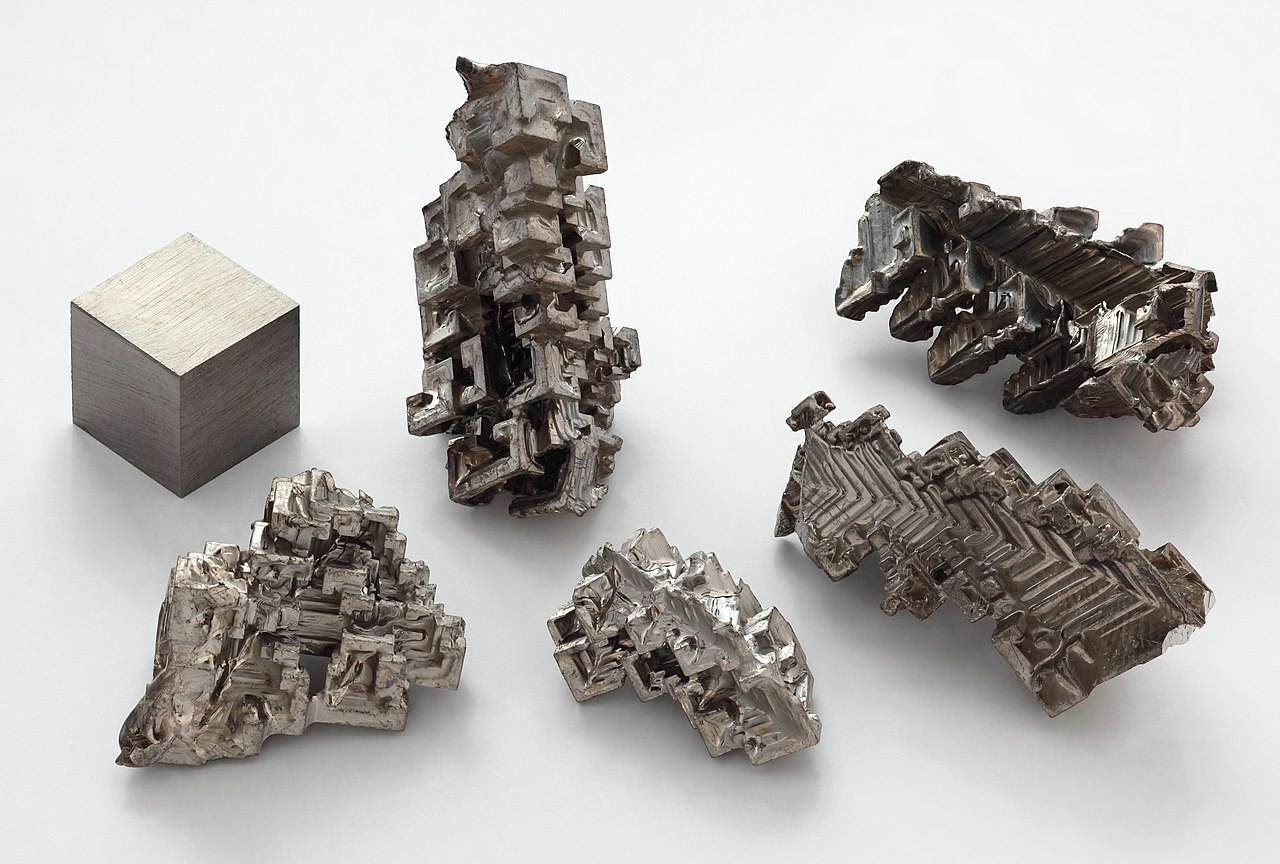
Bismuth
The Enigmatic Nature of Bismuth
Bismuth (Bi), atomic number 83, stands as a unique post-transition metal within the pnictogen group, exhibiting chemical behaviors that echo its lighter congeners, arsenic and antimony, yet with significantly reduced toxicity. Its elemental form is characterized by a brittle, silvery-white luster that readily develops a striking, iridescent patina upon oxidation, a phenomenon attributed to thin-film interference. This visual characteristic, coupled with its unusual physical properties, sets it apart.
Notably, bismuth is the most diamagnetic element known, meaning it is repelled by magnetic fields, a stark contrast to most metals. Furthermore, it possesses exceptionally low thermal conductivity, making it a poor conductor of heat. Its density is approximately 86% that of lead, positioning it as a lighter, more manageable alternative in various applications where lead's weight or toxicity is a concern.
A Journey Through Time
The history of bismuth is one of gradual recognition and evolving scientific understanding. Known since antiquity, its metallurgical similarities to lead and tin often led to its misidentification. The etymology of 'bismuth' is debated, with potential roots in 16th-century Neo-Latin translations of German terms like 'weiße Masse' or 'Wismuth,' signifying 'white mass.' For a long period, bismuth was believed to be the heaviest stable element.
However, groundbreaking research in 2003 revealed that its sole primordial isotope, bismuth-209, is, in fact, radioactive. It undergoes alpha decay, but with an astonishingly long half-life, estimated to be roughly a billion times the current age of the universe, rendering it effectively stable for all practical purposes and historical contexts.
Bismuth's Unique Physical Phenomena and Their Significance
Several of bismuth's physical properties are not only scientifically intriguing but also industrially significant. Its most peculiar trait is its anomalous expansion upon solidification, a characteristic shared by very few other substances, most notably water. This property is invaluable in casting applications, such as the creation of printing type, where the metal's expansion ensures a sharp and detailed impression.
The element's extreme diamagnetism has also spurred research into its potential applications in areas like magnetic shielding and advanced materials. Moreover, its low thermal conductivity, combined with its low toxicity, makes it an attractive component in alloys designed for safety-critical applications, especially in electronics and plumbing where lead has been phased out.
Diverse Applications
The utility of bismuth spans a wide spectrum, with its compounds playing a crucial role in modern industry and medicine. While elemental bismuth finds use in low-melting-point alloys and as a replacement for lead in plumbing and ammunition, its compounds are perhaps even more vital. Bismuth subsalicylate, a well-known pharmaceutical, is a key ingredient in over-the-counter medications for treating gastrointestinal ailments like diarrhea and indigestion.
Pigments and cosmetics also utilize bismuth compounds for their unique color and luster. The increasing global production of bismuth, with approximately one-third dedicated to replacing lead, underscores its growing importance as a safer, more environmentally sound material in a world increasingly conscious of the hazards posed by heavy metals.
Go deeper
Frequently Asked Questions
What does bismuth look like and why does it have rainbow colors?+
Why is bismuth safer than lead?+
How does bismuth help with medicine?+
Why does bismuth expand when it cools?+
Is bismuth magnetic?+
Based on content from Wikipedia · Licensed under CC BY-SA 4.0