

Diamagnetism: The Pushing-Away Power!
Images

Diamagnetism

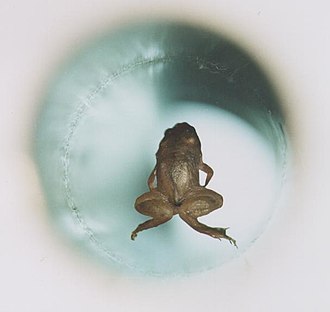


The Quantum Origins of Diamagnetic Repulsion
Diamagnetism is a fundamental quantum mechanical phenomenon that occurs in all matter. It arises from the orbital motion of electrons within atoms, ions, and molecules. When an external magnetic field is applied, it induces a change in the angular momentum of these orbiting electrons, as described by Lenz's Law.
This induced change generates a magnetic dipole moment that opposes the applied field, resulting in a net repulsive force. Unlike paramagnetism, which relies on the alignment of pre-existing magnetic moments due to unpaired electrons, diamagnetism is a universal response that is always present. In most materials, this diamagnetic effect is exceedingly weak and is typically overshadowed by stronger paramagnetic or ferromagnetic interactions.
The magnetic susceptibility (χ) of diamagnetic materials is always negative and very small, typically in the range of -10⁻⁵ to -10⁻⁶, indicating a slight opposition to the magnetic field. The magnetic permeability (μ) of diamagnetic materials is consequently less than the permeability of free space (μ₀).
A Historical Trajectory
The scientific journey into diamagnetism began with empirical observation. In 1778, Anton Brugmans noted the repulsive behavior of bismuth when placed in a magnetic field, marking the first recorded instance of diamagnetic observation. This discovery, however, remained somewhat of a curiosity until Michael Faraday's systematic investigations in 1845.
Faraday's groundbreaking work established diamagnetism as an intrinsic property of matter, demonstrating that all substances exhibit either diamagnetic or paramagnetic responses to magnetic fields. He proposed the term 'diamagnetic,' suggesting a magnetic influence that passes 'through' or 'across' the material in opposition. This foundational understanding paved the way for later quantum mechanical explanations.
The formalization of the term 'diamagnetism' itself is attributed to William Whewell, who suggested it to Faraday, solidifying its place in scientific nomenclature.
Electron Pairing
At the atomic and molecular level, the presence or absence of unpaired electrons is the key determinant of a material's dominant magnetic behavior. For diamagnetic materials, the defining characteristic is that all electrons within their constituent atoms, ions, or molecules exist in paired states. Each electron in a pair has an opposite spin, and these spins effectively cancel each other out, resulting in no net magnetic moment for the atom or molecule in the absence of an external field.
When a magnetic field is applied, the orbital motion of these paired electrons is perturbed, inducing a weak magnetic moment that opposes the field. In contrast, paramagnetic materials possess one or more unpaired electrons, each with its own magnetic moment. These moments tend to align with an applied magnetic field, resulting in a net attractive force that is typically much stronger than the diamagnetic repulsion.
Therefore, diamagnetism is often observed only in materials where paramagnetic and ferromagnetic effects are absent or negligible.
Superconductors
Superconductors represent an extraordinary manifestation of diamagnetism, exhibiting it with unparalleled strength through the Meissner effect. Below their critical temperature, superconductors become perfect diamagnets, completely expelling all external magnetic fields from their interior. This perfect diamagnetism is distinct from the weak diamagnetic response of ordinary materials and is a hallmark of the superconducting state.
The Meissner effect is not merely a scientific curiosity; it has profound technological implications. It is the principle behind magnetic levitation (maglev) trains, which use powerful superconducting magnets to float above tracks, enabling incredibly fast and efficient travel. Superconductors are also crucial components in high-field magnets used in Magnetic Resonance Imaging (MRI) machines, particle accelerators, and fusion research reactors, demonstrating the immense practical value derived from understanding and harnessing diamagnetic phenomena.
Go deeper
Frequently Asked Questions
What is diamagnetism?+
Why do some materials push away magnets instead of pulling them?+
How did scientists discover diamagnetism?+
Where can we see strong diamagnetism?+
Are diamagnetic materials common?+
Based on content from Wikipedia · Licensed under CC BY-SA 4.0