

The Gulf Stream: A Giant Ocean River!
Images
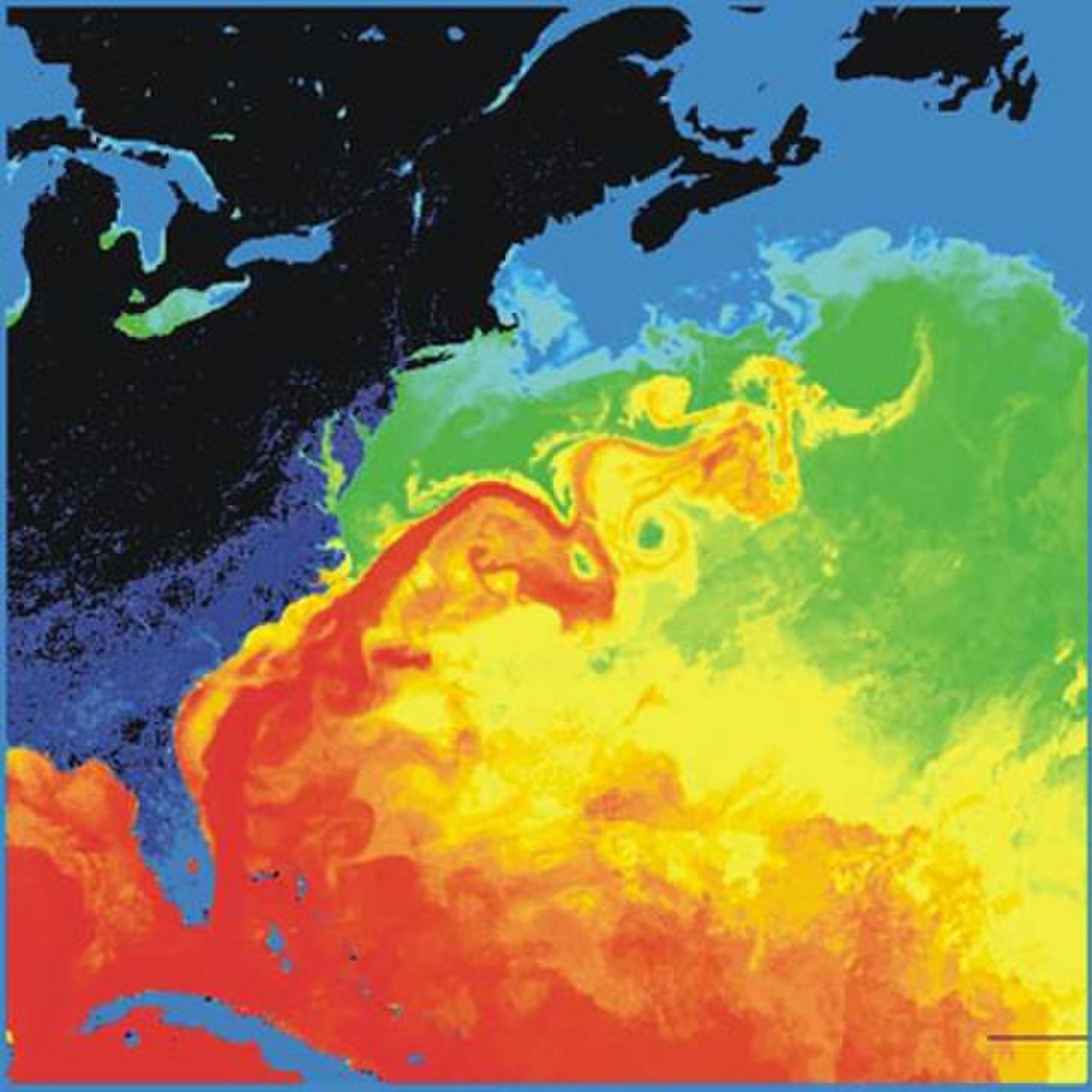
Gulf Stream
Genesis and Dynamics of a Thermohaline Superhighway
The Gulf Stream represents a crucial component of the Atlantic Meridional Overturning Circulation (AMOC), a large-scale system of ocean currents. Its origins are rooted in the warm, saline waters of the Gulf of Mexico, driven by prevailing westerly winds and the complex bathymetry of the Caribbean Sea. Upon exiting the Straits of Florida, it transforms into a powerful, swift current, characterized by its high velocity and significant heat transport.
The Gulf Stream is not merely a surface phenomenon; it’s a deep and wide flow, often exceeding 100 miles in width and hundreds of feet in depth, with speeds that can reach up to 5 miles per hour. Its energy is derived from a combination of wind-driven forces and density differences (thermohaline circulation), making it a dynamic and persistent feature of the Atlantic Ocean. The sheer volume of water it transports daily is staggering, dwarfing that of all the world's rivers combined, highlighting its immense power and influence on oceanic processes.
Transatlantic Journey and Climatic Impact
As the Gulf Stream courses northeastward across the Atlantic, it acts as a massive heat conveyor belt, transferring enormous quantities of thermal energy from the tropics towards higher latitudes. This oceanic warmth significantly moderates the climate of Western Europe, preventing it from experiencing the extreme cold typical of continental interiors at similar latitudes. For instance, the average winter temperature in London is considerably warmer than in St.
John's, Newfoundland, despite their comparable latitudes. This moderating effect extends to precipitation patterns and the reduction of sea ice formation along European coastlines. The current's influence also extends to marine ecosystems, affecting nutrient distribution, plankton blooms, and the migration patterns of commercially important fish species.
Its presence is a fundamental reason for the temperate climate that supports diverse flora and fauna in regions that would otherwise be far less hospitable.
The Gulf Stream's Role in Global Heat Distribution and Weather Systems
The Gulf Stream is a primary driver of global heat distribution, playing an indispensable role in regulating Earth's climate. By moving warm equatorial waters poleward, it helps to balance the planet's energy budget, preventing tropical regions from becoming excessively hot and polar regions from becoming excessively cold. This heat transfer is not uniform; the current's path and intensity can fluctuate, leading to variations in regional weather patterns.
Changes in the Gulf Stream's strength have been linked to significant climatic shifts throughout Earth's history. Furthermore, its interaction with the atmosphere influences storm formation and trajectory, impacting weather systems across the North Atlantic. Understanding these complex interactions is critical for developing accurate climate models and predicting future climatic changes, especially in the context of ongoing global warming.
Scientific Scrutiny and Future Implications
The scientific community dedicates considerable effort to monitoring and understanding the Gulf Stream and its associated currents within the AMOC. Advanced technologies, including satellites, autonomous underwater vehicles, and sophisticated oceanographic sensors, are employed to track its velocity, temperature, salinity, and volume. Research indicates that the AMOC, and by extension the Gulf Stream, may be weakening due to factors such as melting polar ice caps, which introduce freshwater into the North Atlantic, altering salinity and density.
A significant slowdown or collapse of the Gulf Stream could have profound and potentially abrupt consequences for global climate, leading to colder temperatures in Europe, altered precipitation patterns, and rising sea levels along the North American coast. Continued research is paramount for predicting these potential future scenarios and their impact on human societies and ecosystems.
Key Facts and Terminology
The Gulf Stream is a vital ocean current with specific characteristics. Its origin is in the warm, saline waters of the Gulf of Mexico, and it flows northeast across the Atlantic. Its primary function is the transport of heat, significantly moderating the climate of Western Europe.
The current's width can reach up to 100 miles, and its speed is substantial, contributing to its immense water transport capacity. This phenomenon is intrinsically linked to the Atlantic Meridional Overturning Circulation (AMOC), a larger system of ocean currents. Key scientific terms associated with its study include 'thermohaline circulation,' which describes density-driven currents influenced by temperature and salinity, and the 'Coriolis effect,' which dictates its curved path due to Earth's rotation.
Understanding these elements is crucial for comprehending its role in global climate regulation and predicting potential future changes.
Go deeper
Frequently Asked Questions
What is the Gulf Stream?+
How fast does the Gulf Stream flow?+
Why does the Gulf Stream make Europe warmer?+
Does the Gulf Stream affect the weather?+
How do scientists study the Gulf Stream?+
Based on content from Wikipedia · Licensed under CC BY-SA 4.0