

Armadillo: The Little Armored Explorer!
Images

Armadillo



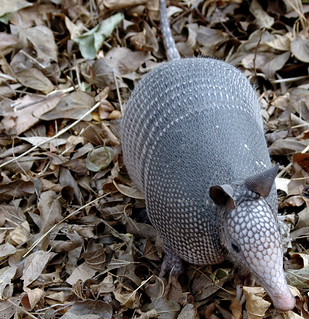

The Evolutionary Journey of the Armored Mammal
Armadillos represent a fascinating branch of mammalian evolution, belonging to the superorder Xenarthra, which also includes sloths and anteaters. Their most striking feature, the protective carapace, is a complex structure composed of dermal ossicles (osteoderms) covered by keratinized epidermis, arranged into bands that allow for flexibility. This armor is not merely defensive; it plays a role in thermoregulation and sensory perception.
Unlike the rigid shells of chelonians, the armadillo's armor is integrated with their musculature, enabling a surprising range of motion. Their evolutionary history is deeply rooted in South America, where they diversified significantly before some species expanded their range northward. The nine-banded armadillo's remarkable northward expansion across North America in the last century is a testament to their adaptability and resilience in changing environments.
Ecological Niches and Habitat Adaptations
Armadillos occupy a wide array of ecological niches across the Americas, demonstrating remarkable habitat plasticity. From the dense rainforests of the Amazon to the arid scrublands of Patagonia and the grasslands of North America, they have adapted to diverse climatic and geological conditions. Their primary adaptation is their fossorial lifestyle, characterized by powerful limbs and sharp claws adapted for rapid excavation of burrows.
These burrows serve multiple functions: providing refuge from predators, protection from extreme temperatures, and a stable environment for reproduction. The complexity and size of these burrows vary by species and habitat, with some creating extensive tunnel systems. Their nocturnal or crepuscular activity patterns help them avoid diurnal predators and the heat of the day, conserving energy and water.
Dietary Strategies and Ecosystem Impact
The armadillo's diet is predominantly insectivorous, with ants and termites forming the staple for many species. They are highly effective predators of social insects, utilizing their acute sense of smell to locate colonies and their powerful claws to breach nests. This foraging behavior has significant ecological implications, influencing insect population dynamics and soil aeration.
However, armadillos are not strictly insectivores; they are opportunistic omnivores. Their diet can include a variety of invertebrates, small vertebrates (such as amphibians, reptiles, and bird eggs), carrion, and even some plant matter, especially fruits and roots. This dietary flexibility is crucial for survival during periods of scarcity and contributes to their ability to inhabit diverse environments.
Their role as scavengers also aids in nutrient cycling.
Behavioral Repertoire and Conservation Challenges
Armadillo behavior is as varied as their species. While most species are solitary and territorial, some exhibit social behaviors. Their defense mechanisms are diverse: the majority rely on their armor and rapid burrowing, while the three-banded armadillos are unique in their ability to roll into a nearly impenetrable ball.
Aquatic locomotion is another fascinating adaptation, with some species capable of swimming across water bodies by inflating their digestive tracts or by 'paddling' with their limbs. Despite their resilience, many armadillo species face significant conservation challenges. Habitat loss and fragmentation due to agriculture and urbanization, road mortality, and hunting for food or traditional medicine are major threats.
Understanding their ecological roles and specific needs is vital for developing effective conservation strategies for these unique xenarthrans.
See also
Frequently Asked Questions
What makes an armadillo's armor special?+
How do armadillos dig their burrows?+
What do armadillos eat?+
Why can some armadillos roll into a ball?+
Where can armadillos live?+
Based on content from Wikipedia · Licensed under CC BY-SA 4.0