

Aoraki/Mount Cook
Images

Aoraki / Mount Cook


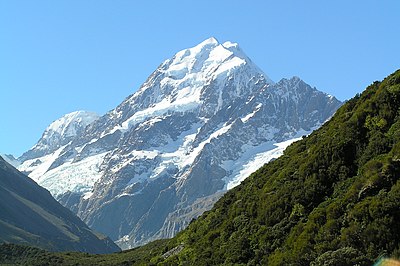


Geological Formation and Alpine Dynamics
Aoraki/Mount Cook, with its imposing elevation of 3,724 meters (12,218 feet), is a dramatic product of tectonic forces and glacial erosion. Situated within the Southern Alps, it is composed primarily of greywacke and schist, rock types characteristic of this geologically active region. The mountain's dramatic relief is a testament to the ongoing uplift from the Alpine Fault, a major strike-slip fault that runs along the western edge of the Southern Alps.
Simultaneously, the relentless action of glaciers, such as the vast Tasman Glacier, has carved out the surrounding valleys and shaped the mountain's formidable peaks. These glaciers, remnants of the last ice age, continue to influence the landscape, albeit at a reduced scale due to climate change. The dynamic interplay between tectonic uplift and glacial sculpting creates a constantly evolving alpine environment, characterized by steep faces, arêtes, and deep cirques.
The Ancestral Significance of Aoraki
For the Ngāi Tahu people, the indigenous Māori of the South Island, Aoraki/Mount Cook is far more than just a geographical landmark; it is a revered ancestral being. The name 'Aoraki' itself is deeply significant, often translated as 'cloud piercer,' reflecting the mountain's immense height and its connection to the celestial realm. The traditional narrative recounts Aoraki and his three brothers, sons of Raki (the Sky Father), who journeyed south in their waka (canoe).
When their canoe capsized, they were stranded, and their vessel became the Southern Alps. Aoraki, the tallest, rose to become the mountain that bears his name. This narrative underscores the Ngāi Tahu worldview, where the natural world is imbued with spiritual essence and ancestral connections.
The mountain remains a vital part of Ngāi Tahu identity and cultural heritage, influencing customary practices and place names throughout the region.
A Premier Destination for Mountaineering and Alpine Exploration
Aoraki/Mount Cook has long been a mecca for mountaineers, offering some of the most challenging and rewarding climbs in Australasia. The first successful ascent in 1894 by Tom Fyfe, Jack Clarke, and George Graham marked a significant achievement in New Zealand's mountaineering history. The mountain's technical routes, characterized by steep ice and rock, demand a high level of skill, experience, and preparedness.
Beyond the summit itself, the Aoraki/Mount Cook National Park provides extensive opportunities for alpine exploration. Activities range from guided glacier hikes and scenic flights offering panoramic views of the ice-clad peaks, to multi-day treks through stunning alpine valleys. The park's remote location and minimal light pollution also make it an internationally recognized destination for astronomical observation, particularly within the Aoraki Mackenzie International Dark Sky Reserve.
Conservation Challenges and Future Perspectives
The Aoraki/Mount Cook region faces contemporary challenges, most notably the impacts of climate change. Rising global temperatures are leading to accelerated glacial retreat, altering the iconic landscapes and potentially affecting water resources fed by glacial melt. Conservation efforts within the national park focus on preserving its unique alpine ecosystems, managing visitor impact, and protecting the cultural heritage sites. The collaborative management between the Department of Conservation and Ngāi Tahu ensures that the mountain's natural and cultural values are safeguarded for future generations.
As a UNESCO World Heritage site, Aoraki/Mount Cook serves as a critical indicator of environmental health and a powerful reminder of the need for global action on climate change, while continuing to inspire awe and adventure.
See also
Frequently Asked Questions
What is Aoraki/Mount Cook?+
Why is Aoraki/Mount Cook important to the Ngāi Tahu people?+
How do glaciers shape Aoraki/Mount Cook?+
What can visitors do at Aoraki/Mount Cook National Park?+
Why is climate change affecting Aoraki/Mount Cook?+
Based on content from Wikipedia · Licensed under CC BY-SA 4.0