

South Island: New Zealand's Wild Side!
Images
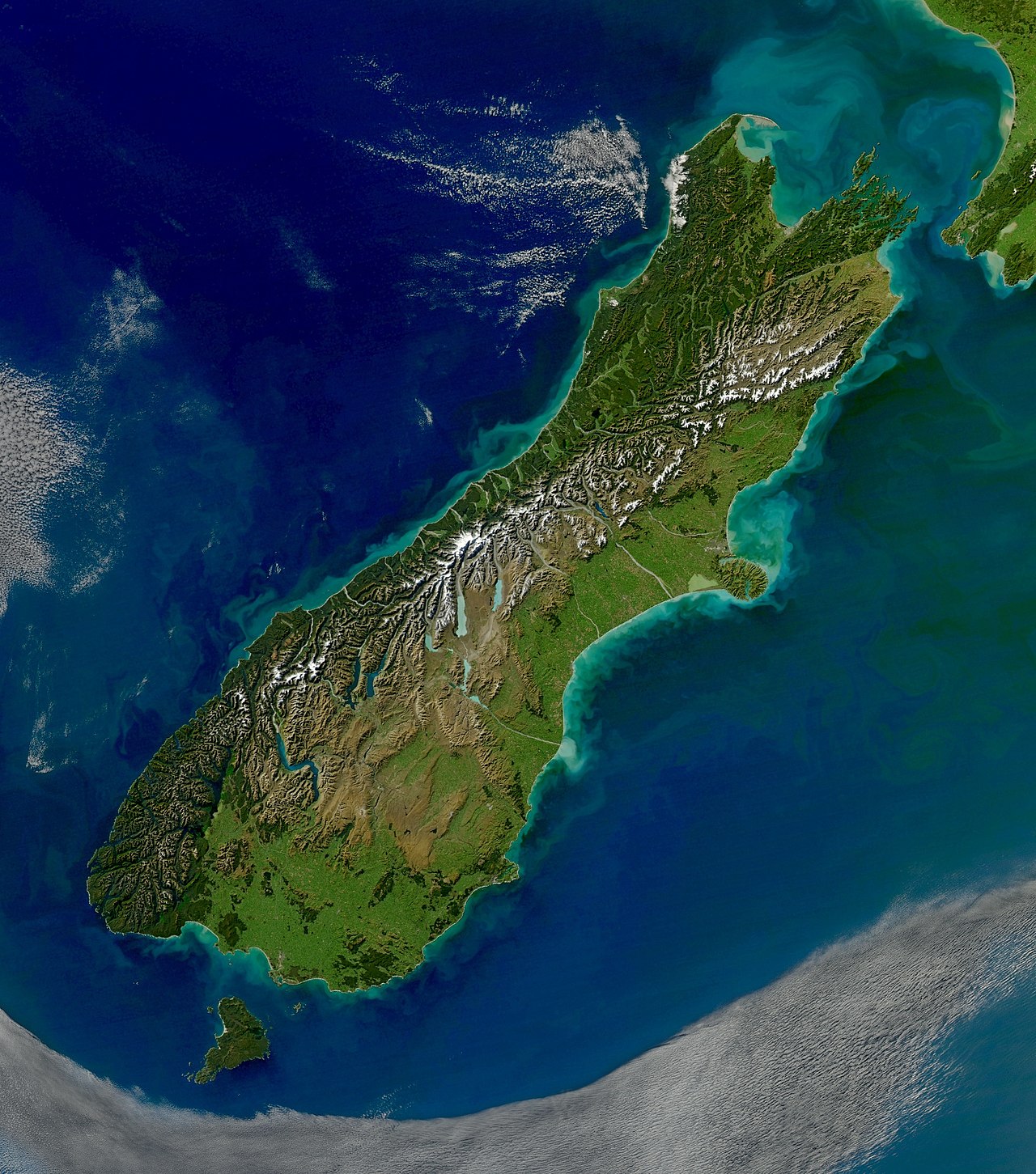
South Island
Geographical Dominance and Oceanic Context
South Island, or Te Waipounamu in Māori, stands as the larger of New Zealand's two principal islands by surface area, encompassing 150,437 square kilometers. This substantial landmass ranks it as the 12th largest island globally, constituting a significant 56% of New Zealand's total territory. Its geographical isolation is defined by the Cook Strait to the north, the vast Tasman Sea to the west, the Foveaux Strait and the formidable Southern Ocean to the south, and the expansive Pacific Ocean to the east.
At lower elevations, the island benefits from an oceanic climate, characterized by mild temperatures and ample rainfall, which supports its diverse ecosystems. Despite its size, the South Island is less populous than the North Island, home to approximately 24% of New Zealand's 5.3 million inhabitants. Its major urban centers, including Christchurch, Dunedin, Nelson, and Invercargill, serve as crucial economic and cultural nodes.
The Alpine Backbone and Coastal Extremes
The defining geological feature of South Island is the Southern Alps, a majestic mountain range stretching longitudinally across the island. This alpine spine culminates in Aoraki / Mount Cook, New Zealand's highest peak, reaching an impressive 3,724 meters (12,218 feet). The range's geological activity has sculpted a landscape of dramatic peaks, deep valleys, and glacial formations.
Complementing the Alps are the Kaikōura Ranges in the northeast, known for their rugged beauty. The eastern side of the island transitions into the vast Canterbury Plains, a significant agricultural region. In stark contrast, the West Coast is renowned for its wild, untamed coastlines, dense native rainforests, and the spectacular Fiordland National Park.
This region is also home to the iconic Fox and Franz Josef Glaciers, active glacial systems that offer a tangible connection to the island's geological past and ongoing processes.
Indigenous Heritage and the Scars of Settlement
Prior to European arrival, Te Waipounamu was inhabited by various Māori iwi, including the Kāi Tahu, Kāti Māmoe, and Waitaha. Their deep connection to the land is reflected in place names like Te Waipounamu, signifying the importance of pounamu (greenstone). Major settlements, such as Kaiapoi Pā near modern-day Christchurch, highlight sophisticated societal structures.
European colonization, beginning in earnest in the 19th century, dramatically altered the island's demographic and cultural landscape. The allure of gold during the 1860s Otago gold rush led to rapid urban growth in cities like Dunedin and attracted a diverse immigrant population, including a significant Chinese community. While this period brought prosperity, it also led to land disputes and cultural clashes.
The subsequent 'drift to the north' saw the North Island surpass the South in population, a trend that has continued throughout the 20th century.
Economic Drivers and Environmental Significance
South Island's economy is a dynamic interplay of natural resources and human enterprise. Tourism is a major industry, drawing visitors from around the globe to experience its unparalleled natural beauty, from the glaciers and mountains to the fjords and coastlines. Agriculture, particularly on the Canterbury Plains, remains vital, with sheep farming and dairy production being significant. The island also possesses valuable mineral resources and a growing renewable energy sector, leveraging its abundant water and wind power.
The preservation of its unique environment is a key concern, with extensive national parks and conservation efforts aimed at protecting its biodiversity. The island's distinct geographical features and cultural history continue to shape its identity and economic trajectory, balancing development with the imperative of environmental stewardship.
Governance and Societal Structure
As part of New Zealand, South Island operates under a parliamentary democracy and a constitutional monarchy. While there is no separate government for the South Island, its administration is integrated into the national framework. Local governance is managed through regional councils and territorial authorities, responsible for local services, infrastructure, and environmental management.
The island's population, though smaller than the North Island's, contributes significantly to the nation's political and economic discourse. The historical legacy of Māori settlement and subsequent European colonization continues to influence contemporary societal structures and governance, with ongoing efforts towards biculturalism and addressing historical grievances. The distribution of population and economic activity across the island informs regional development strategies and resource allocation.
Go deeper
Based on content from Wikipedia · Licensed under CC BY-SA 4.0