

Antimony: The Shiny Secret Element!
Images
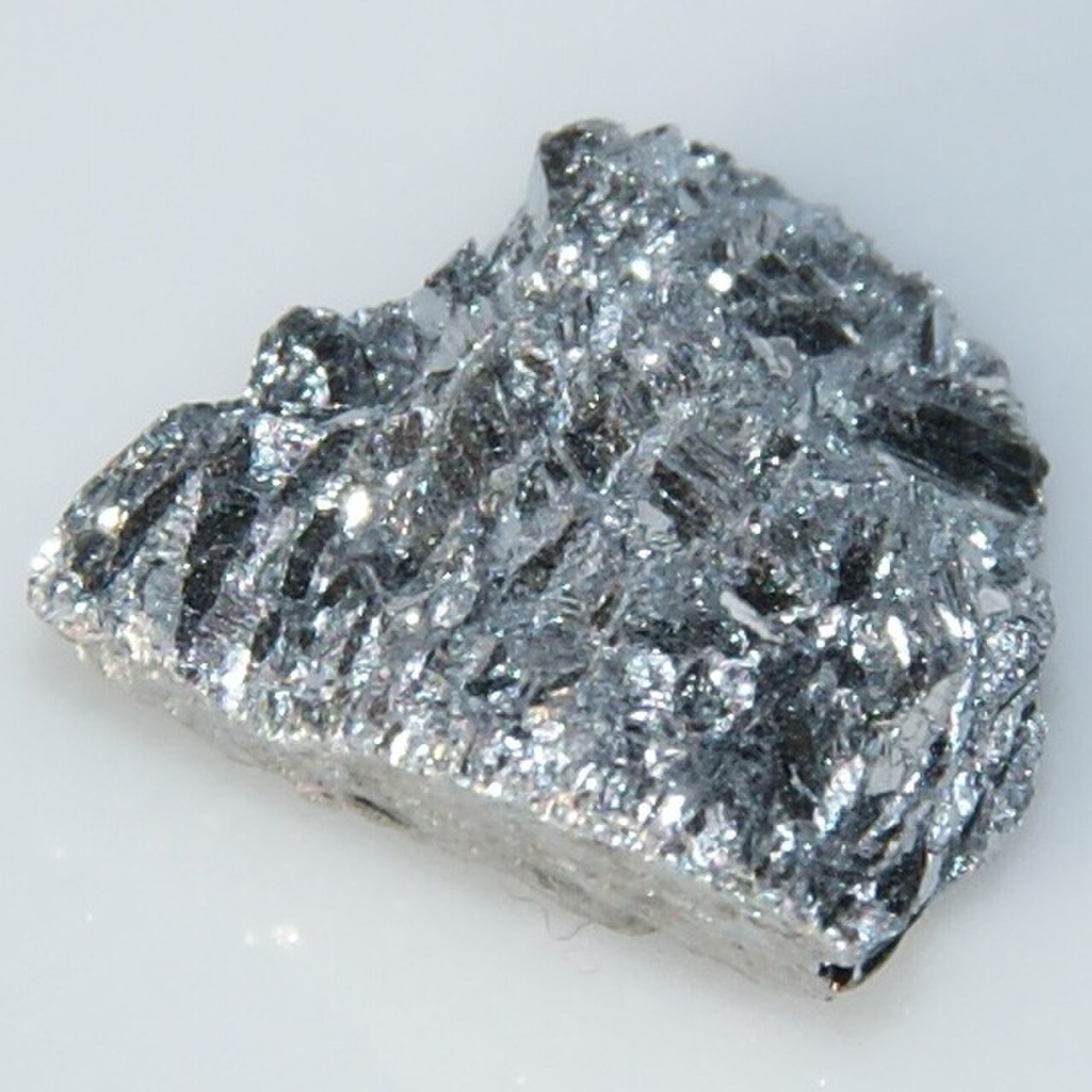
Antimony
Defining a Metalloid's Identity and Occurrence
Antimony, designated by the symbol Sb derived from its Latin name 'stibium,' is element number 51 on the periodic table. It is classified as a metalloid, exhibiting properties that bridge the gap between metals and nonmetals. In its pure form, Antimony presents as a lustrous, brittle, silvery-white solid.
However, it is rarely found in its elemental state in nature. Its primary terrestrial occurrence is as the sulfide mineral stibnite (Sb2S3), a dark gray, metallic-looking ore. Other less common antimony-bearing minerals also exist.
The unique electronic structure of Antimony contributes to its characteristic chemical behavior, making it reactive enough to form stable compounds yet possessing metallic conductivity. Understanding its classification as a metalloid is key to appreciating its diverse applications, as it allows Antimony to act as both a semiconductor and a potent additive in metallic alloys.
A Legacy of Use
The utilization of Antimony compounds dates back millennia, predating formal chemical classification. Ancient civilizations, particularly in Egypt and Mesopotamia, powdered stibnite to create kohl, a dark pigment used for eye makeup. This application was not merely aesthetic; kohl was believed to offer protection against the glare of the desert sun and possess antimicrobial properties, potentially preventing eye infections.
The transition of Antimony into Western scientific discourse was gradual. While its use was known, the first detailed written description of the metalloid in Europe is attributed to Vannoccio Biringuccio in his 1540 work 'De la pirotechnia.' This marked a significant step in understanding and documenting its properties and potential applications beyond its traditional uses, laying the groundwork for its later industrial exploitation.
Industrial Significance
Antimony's industrial importance is largely derived from its ability to enhance the properties of other materials. Its most prominent role is as an alloying agent, particularly with lead. Adding even small amounts of Antimony to lead significantly increases the hardness and mechanical strength of the resulting alloy.
This is critical for lead-acid batteries, where Antimony-hardened lead grids provide the necessary structural integrity to withstand repeated charge-discharge cycles, thereby extending battery lifespan and performance. Furthermore, Antimony trioxide (Sb2O3) is a widely used additive in flame retardant systems, especially in conjunction with halogenated compounds. When exposed to heat, these systems generate antimony halides, which interfere with the combustion process in the gas phase, effectively suppressing flames and enhancing fire safety in plastics, textiles, and electronics.
Global Production and Refining
The global supply of Antimony is heavily concentrated, with China dominating production. The Xikuangshan Mine in Hunan province is a world-renowned source, historically accounting for a substantial portion of global output. The extraction and refining of Antimony from stibnite involve sophisticated metallurgical processes.
Common methods include pyrometallurgical techniques, such as roasting stibnite to form antimony oxides followed by carbothermic reduction, or direct smelting with iron to displace Antimony from its sulfide. These industrial processes are essential for transforming raw ore into the purified Antimony metal and compounds required for various technological applications. The geopolitical and environmental considerations surrounding this concentrated supply chain are significant factors in the global market for Antimony.
Beyond Alloys and Retardants
While its roles in alloys and flame retardants are well-established, Antimony also finds application in more specialized fields. Its semiconductor properties make it useful as a dopant in the production of certain semiconductor devices, influencing their electrical conductivity. Antimony compounds are also employed in infrared detectors, bulletproof glass, and as catalysts in the production of PET (polyethylene terephthalate) plastics.
The ongoing research into novel materials and advanced manufacturing techniques continues to explore new potential uses for Antimony and its compounds, highlighting its enduring relevance in scientific and technological advancement. Its unique combination of properties ensures its continued importance across a spectrum of critical industries.
Go deeper
Frequently Asked Questions
What is antimony and why does it look shiny?+
How did people use antimony in the past?+
Why is antimony important in batteries?+
How does antimony help stop fires?+
Where is most antimony mined?+
Based on content from Wikipedia · Licensed under CC BY-SA 4.0