

Ameca the Amazing Robot!
Images
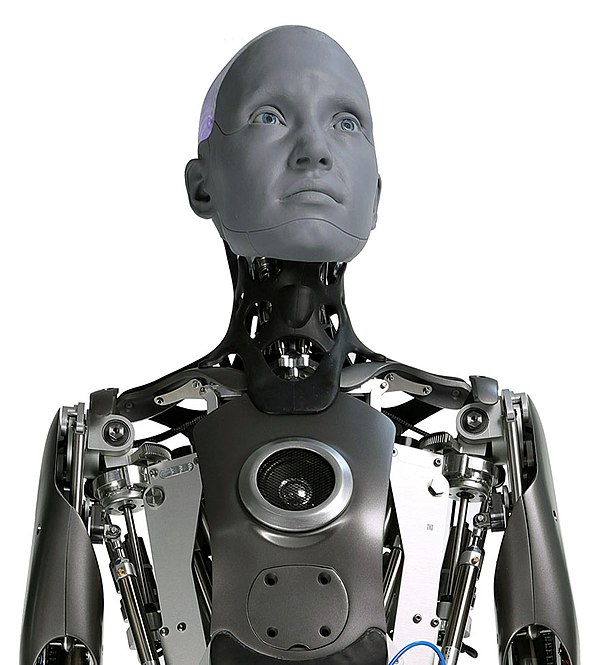
Ameca (robot)


The Genesis and Design Philosophy of Ameca
Ameca, conceived and developed by Engineered Arts starting in February 2021, stands as a testament to the evolving capabilities of humanoid robotics. Headquartered in Falmouth, Cornwall, UK, the company's objective was to create a robot that transcends mere functionality, aiming for genuine human-robot interaction. Ameca's physical design is a key element of this philosophy.
Its exterior, crafted from a specialized grey rubber, provides a tactile and visually appealing surface. Crucially, the robot is intentionally designed to be genderless, a deliberate choice to foster broader acceptance and reduce potential biases, allowing individuals to engage with it without preconceived notions. This approach is central to its role as an interface, whether for public engagement, research, or future applications.
The initial public unveiling at CES 2022 marked a pivotal moment, showcasing its advanced animatronics and AI capabilities to a global audience, setting the stage for its continued development and deployment.
Ameca's Evolutionary Trajectory and Strategic Placements
The development of Ameca is not a static event but an ongoing process of refinement and innovation. Following its debut, the robot has been strategically placed in environments conducive to research and public interaction. A notable example is its installation in 2024 at the National Robotarium in Edinburgh, UK.
This facility serves as a hub for cutting-edge robotics research, providing Ameca with a platform to be studied, tested, and showcased. Such placements are vital for understanding how humans perceive and interact with advanced AI-driven robots in real-world settings. The continuous iteration is evident with the release of Ameca generation 3, which was presented at ICRA 2025 alongside Ami, another development from Engineered Arts.
This progression highlights a commitment to pushing the boundaries of robotic expressiveness, mobility, and intelligence, signaling a future where such robots play increasingly integrated roles.
The Technological Underpinnings
Ameca's remarkable ability to mimic human expression and interaction is powered by a sophisticated integration of hardware and software. Its 'perception' relies on an array of advanced sensors, including cameras and microphones, which gather data about its environment and human interlocutors. This raw data is fed into a powerful onboard AI system, which functions as Ameca's 'brain.' This cognitive engine processes visual cues, auditory input, and pre-programmed algorithms to interpret situations and formulate responses.
The 'actuation' phase is where Ameca's physical form comes alive. A complex network of electric motors, servos, and pneumatic systems drives its movements. These systems control everything from subtle facial muscle twitches that convey emotion to the more significant movements of its limbs and torso.
The seamless coordination of these components allows Ameca to exhibit a wide range of gestures and facial expressions, contributing to its lifelike and engaging presence. This intricate design allows for dynamic and responsive interactions, moving beyond simple pre-programmed routines.
Ameca's Multifaceted Applications and Societal Implications
The utility of Ameca extends across several domains, primarily focusing on research, education, and public engagement. As a research platform, it provides invaluable insights into human-robot interaction (HRI), enabling scientists to study trust, communication, and social dynamics between humans and artificial agents. In educational contexts, Ameca serves as a tangible example of advanced technology, demystifying robotics and AI for students and the general public, potentially inspiring future innovators.
Its role in public spaces, such as museums or visitor centers, is to act as an engaging ambassador, enhancing visitor experiences and promoting interest in science and technology. Beyond these immediate uses, Ameca represents a stepping stone towards robots that could assist in more complex roles, such as customer service, healthcare support, or even companionship, raising important societal questions about the future of work, ethics, and human connection in an increasingly automated world. Its development prompts critical discussions about the integration of AI into daily life.
See also
Frequently Asked Questions
What is Ameca the Amazing Robot?+
Why does Ameca have a friendly face and show feelings?+
How does Ameca know what to say or do when people talk to it?+
Where can kids see Ameca in real life?+
Is Ameca a boy or a girl robot?+
Based on content from Wikipedia · Licensed under CC BY-SA 4.0