

Robots: Your Amazing Machine Friends!
Images
Robotics


Defining the Realm of Robotics
Robotics is a multidisciplinary field that integrates computer science, mechanical engineering, electrical engineering, and artificial intelligence to create machines capable of performing tasks autonomously. At its core, a robot is a programmable machine designed to carry out a sequence of actions automatically. This definition encompasses a vast spectrum of devices, from simple automated arms on an assembly line to complex humanoid robots and autonomous vehicles.
The primary objective is to develop systems that can interact with their physical environment, perceive it through sensors, make decisions based on programmed logic or learned behaviors, and execute actions using actuators. This pursuit of intelligent automation drives innovation across numerous sectors, pushing the boundaries of what machines can achieve.
The Architecture of Robotic Operation
The operational framework of a robot is a sophisticated interplay between perception, cognition, and action. Perception is achieved through a suite of sensors – cameras for vision, microphones for sound, lidar and sonar for distance measurement, tactile sensors for touch, and inertial measurement units (IMUs) for orientation and movement. This sensory data is fed into the robot's computational unit, often a powerful embedded computer or a network of processors.
Here, algorithms process the raw data, interpret the environment, and make decisions based on pre-programmed instructions, machine learning models, or real-time feedback. The 'action' phase is executed by actuators, typically electric motors, hydraulic systems, or pneumatic devices, which translate computational commands into physical movement of the robot's limbs, wheels, or end-effectors. This continuous feedback loop allows robots to adapt and respond to dynamic environments.
Evolutionary Trajectory
While the concept of artificial beings dates back to ancient myths and mechanical automata of the Renaissance, the field of modern robotics truly began to take shape in the mid-20th century. The invention of the programmable manipulator, such as the Unimate arm in the 1960s, marked a pivotal moment, ushering in the era of industrial automation. These early robots were primarily designed for repetitive, heavy-duty tasks in manufacturing, particularly in the automotive industry.
Subsequent decades witnessed exponential growth fueled by advancements in microprocessors, sensor technology, and computational power. The integration of artificial intelligence, machine learning, and sophisticated control systems has transformed robots from mere programmable tools into increasingly autonomous and intelligent agents capable of complex decision-making and adaptive behavior, expanding their applications into fields far beyond their industrial origins.
The Indispensable Role of Robotics in Society
Robotics plays a critical and ever-expanding role in modern society by addressing challenges and enhancing capabilities across diverse domains. In manufacturing, robots have revolutionized production lines, increasing efficiency, precision, and consistency while reducing human exposure to hazardous conditions. In healthcare, robotic systems are enabling minimally invasive surgeries with greater accuracy, assisting in rehabilitation, and automating laboratory processes.
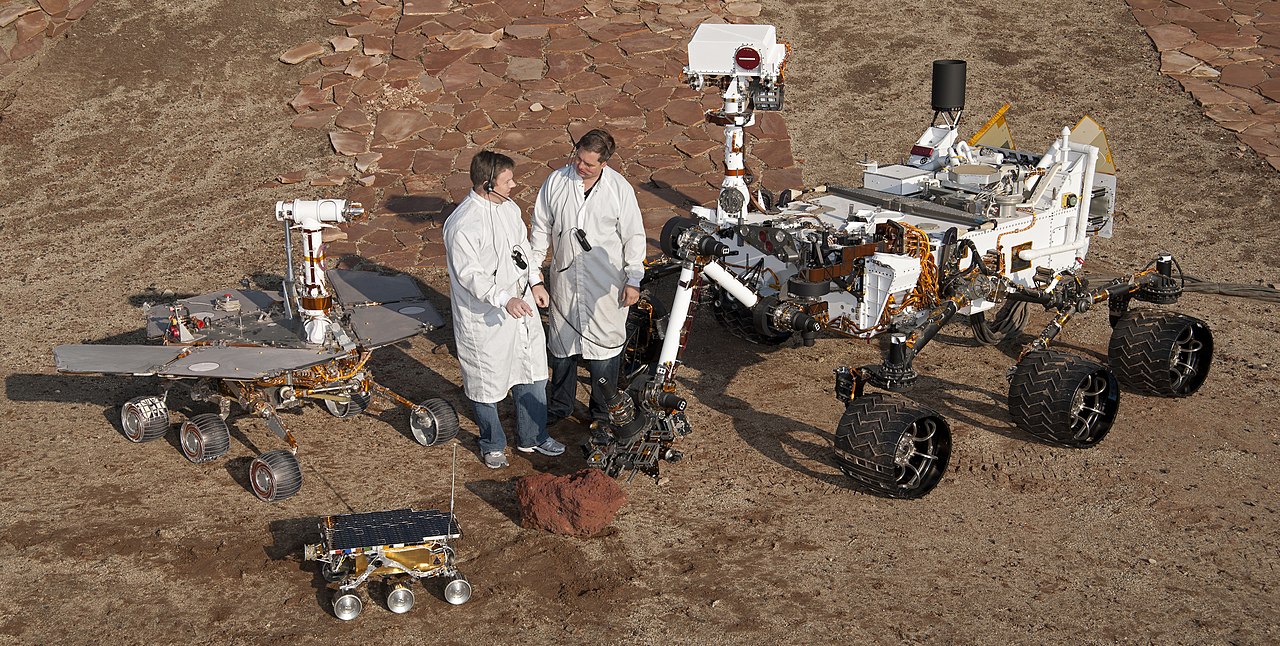
For exploration, robots are indispensable tools for venturing into extreme environments, from the depths of the ocean to the surfaces of other planets, gathering data and performing tasks beyond human reach. Furthermore, robots are increasingly finding applications in logistics, agriculture, security, and domestic assistance, promising to improve quality of life and productivity by taking on tasks that are dangerous, dull, or demand superhuman precision.
Contemporary Applications and Future Horizons
The practical applications of robotics are vast and continue to grow. Industrial robots, such as articulated arms and collaborative robots ('cobots'), are integral to modern manufacturing, performing tasks like welding, painting, and assembly with unparalleled speed and accuracy. Space exploration is heavily reliant on robotic probes and rovers, like the Mars rovers, which conduct scientific research in environments hostile to human life. In medicine, surgical robots enhance surgeon dexterity and enable complex procedures with smaller incisions. Consumer robots, including autonomous vacuum cleaners and advanced drones, are becoming commonplace.
Looking ahead, advancements in AI and human-robot interaction are paving the way for more sophisticated humanoid robots, autonomous transportation systems, and robots capable of complex problem-solving and creative tasks, suggesting a future where humans and robots collaborate even more closely.
Go deeper
Frequently Asked Questions
What is a robot?+
How do robots know what to do?+
Why do people use robots in factories?+
Can robots help doctors?+
Where do robots explore?+
Based on content from Wikipedia · Licensed under CC BY-SA 4.0