

Alkali Metals: The Super Reactive Buddies!
Images
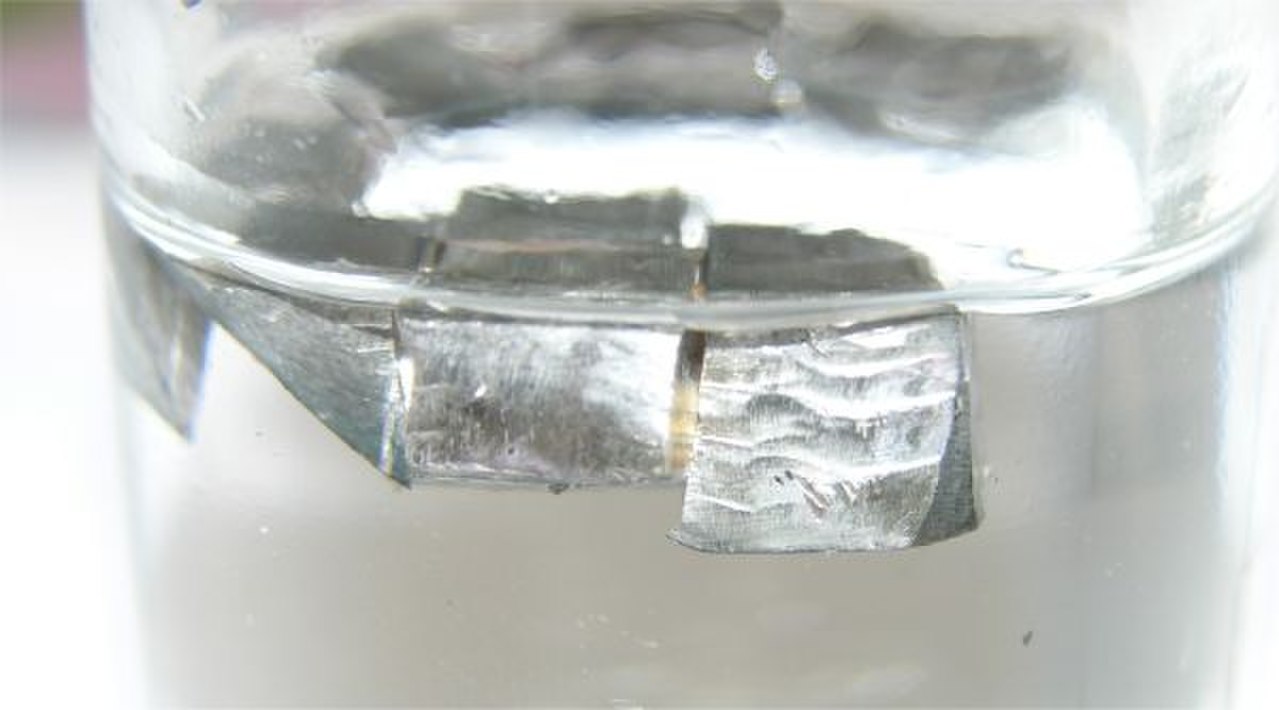
Alkali metal


The Genesis of Reactivity
The alkali metals, comprising lithium (Li), sodium (Na), potassium (K), rubidium (Rb), caesium (Cs), and the exceedingly rare and radioactive francium (Fr), form Group 1 of the periodic table, excluding hydrogen. Their defining characteristic stems from their electron configuration: each alkali metal atom possesses a single valence electron in its outermost s-orbital (ns¹).
This solitary electron is weakly bound and readily ionized, leading to the formation of cations with a +1 charge. This shared electronic structure is the bedrock of their remarkably similar chemical and physical properties, making them the quintessential example of group trends in the periodic table. This homologous behavior manifests in their softness, low melting points, low densities, and high reactivity.
At standard temperature and pressure, they are all shiny, silvery metals that tarnish rapidly upon exposure to air due to oxidation and reaction with atmospheric moisture. Their softness allows them to be easily cut with a knife, revealing a lustrous surface that quickly dulls. To preserve their pristine state and prevent hazardous reactions, they are typically stored under inert liquids like mineral oil.
A Spectrum of Reactivity
The reactivity of alkali metals escalates dramatically as one descends Group 1. This trend is a direct consequence of the increasing atomic radius and decreasing ionization energy. As atoms get larger, the outermost electron is further from the nucleus and shielded by more inner electrons, making it easier to remove.
Lithium, the smallest and lightest, reacts moderately with water, producing hydrogen gas and lithium hydroxide. Sodium's reaction is more vigorous, often igniting the hydrogen. Potassium's reaction is even more violent, with the heat generated instantly igniting the hydrogen.
Rubidium and caesium react explosively with water, and caesium, the fifth alkali metal, is the most reactive of all known metals, capable of reacting explosively even with ice. This extreme reactivity necessitates careful handling and storage, as they readily lose their single valence electron to form stable +1 cations, readily participating in ionic bonding.
Ubiquitous in Compounds, Elusive in Pure Form
Due to their intense reactivity, alkali metals are never found in their elemental state in nature. Instead, they exist as ionic compounds within minerals, salts, and dissolved in water. Sodium is the sixth most abundant element in Earth's crust and is a major component of seawater and the mineral halite (rock salt).
Potassium is also abundant, found in feldspars and other minerals, and is crucial for plant life. Lithium is less common but found in pegmatites and brines. Rubidium and caesium are trace elements, often found alongside potassium.
Francium, however, is exceedingly rare, with a half-life of only about 22 minutes for its most stable isotope, meaning it decays almost as soon as it forms. Scientists have attempted to synthesize element 119, which would theoretically be the next alkali metal, but relativistic effects are predicted to significantly alter its properties, potentially deviating from typical alkali metal behavior.
Indispensable Roles
The impact of alkali metals extends from the fundamental processes of life to cutting-edge technology. Sodium and potassium are vital electrolytes in biological systems, essential for maintaining fluid balance, nerve impulse transmission, and muscle contraction. Sodium ions are the primary extracellular cations, while potassium ions are the main intracellular cations.
Lithium compounds are widely used in psychiatric medicine to treat bipolar disorder, and lithium-ion batteries have revolutionized portable electronics and electric vehicles due to their high energy density and rechargeability. Sodium compounds are ubiquitous: sodium chloride is a fundamental seasoning and preservative, while sodium vapor lamps are highly efficient light sources. Rubidium and caesium are critical for the precision of atomic clocks; caesium atomic clocks form the international standard for the second, underpinning global navigation systems and scientific measurements.
These elements, despite their challenging reactivity, are thus cornerstones of both biological existence and modern technological advancement.
See also
Frequently Asked Questions
What are alkali metals?+
Why do alkali metals react so much?+
How do alkali metals react with water?+
Where can we find alkali metals in nature?+
Which alkali metal is the most reactive?+
Based on content from Wikipedia · Licensed under CC BY-SA 4.0