

Rubidium: The Shiny Red Sparkler!
Images
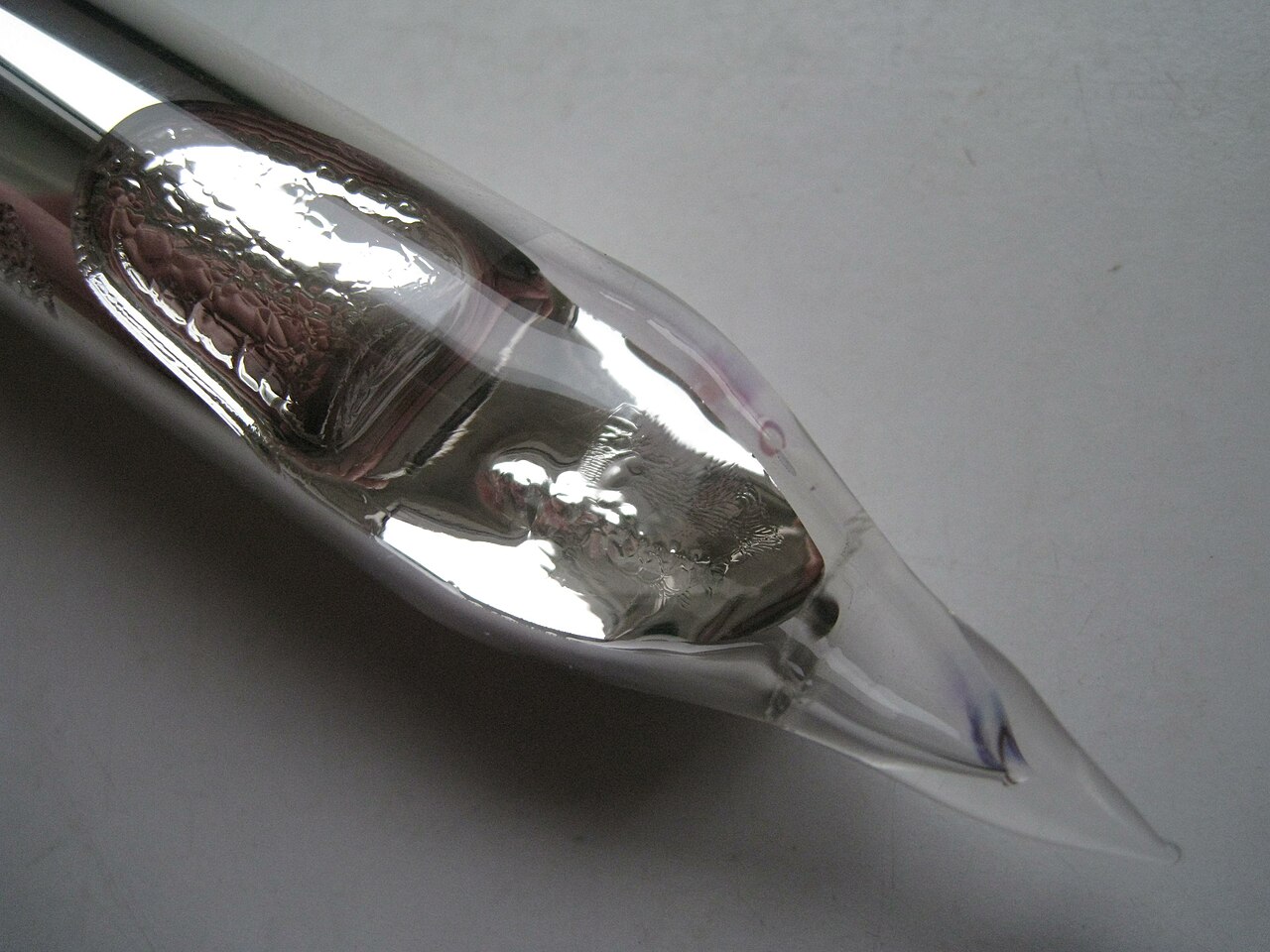
Rubidium
The Chemical Identity of Rubidium
Rubidium, symbolized as Rb with atomic number 37, is a member of the alkali metal group, positioned below potassium and above cesium in the periodic table. Its physical characteristics include being a very soft, whitish-grey solid at room temperature, easily malleable and cut. A significant physical property is its density; rubidium is the first alkali metal to possess a density greater than water, meaning it will sink.
Naturally occurring rubidium is composed of two primary isotopes: rubidium-85, which is stable and accounts for approximately 72% of natural rubidium, and rubidium-87, a slightly radioactive isotope making up the remaining 28%. The extreme longevity of rubidium-87's radioactivity, with a half-life of 48.8 billion years, far exceeding the universe's estimated age, makes it geologically significant for dating ancient rocks.
Illuminating Discovery
The discovery of rubidium in 1861 by German chemists Robert Bunsen and Gustav Kirchhoff marked a pivotal moment in elemental identification, largely due to their pioneering use of flame spectroscopy. This technique allowed them to analyze the light emitted by substances when heated in a flame. Rubidium's presence was revealed by a distinct, deep red emission line in its spectrum, a characteristic that directly inspired its name, derived from the Latin word 'rubidus,' meaning deep red.
This discovery not only added a new element to the known chemical repertoire but also underscored the power of spectroscopic analysis as a tool for scientific exploration, enabling the identification of elements based on their unique spectral fingerprints.
Rubidium's Atomic Behavior and Laser Interactions
Rubidium's compounds find diverse applications across chemical and electronic fields, stemming from its inherent reactivity and unique atomic properties. The metal itself is readily vaporized, and critically, it possesses a spectral absorption range that is highly convenient for manipulation by lasers. This characteristic makes rubidium a frequent and ideal target for laser cooling and trapping of atoms, a fundamental technique in modern atomic physics.
By using precisely tuned lasers, scientists can slow down and confine rubidium atoms with remarkable accuracy. This capability is not merely an academic curiosity; it forms the bedrock for developing ultra-precise atomic clocks, which are indispensable for global positioning systems (GPS), telecommunications, and advanced scientific research requiring exact timekeeping.
Biological Interactions and Technological Significance
While rubidium is not recognized as an essential nutrient for any known living organism, its ions share striking similarities with potassium ions, including charge and chemical behavior. Consequently, animal cells can actively absorb and process rubidium ions in ways analogous to potassium. This biological mimicry has implications in certain medical contexts and research, though it's not a dietary requirement.
Beyond biology, rubidium's technological importance is substantial. Its use in atomic clocks, for instance, highlights its role in enabling high-precision timing essential for navigation and communication networks. Furthermore, rubidium compounds are utilized in specialized applications such as in vacuum tubes to remove residual gas, and in certain types of glass to alter its optical properties.
The element's unique spectral absorption also makes it a key player in fundamental physics research, pushing the boundaries of our understanding of matter and energy.
Go deeper
Frequently Asked Questions
What is rubidium and why does it glow red?+
How does rubidium help make GPS and phones work?+
Is rubidium safe to touch or eat?+
Where can rubidium be found in nature?+
Why do scientists use lasers with rubidium?+
Based on content from Wikipedia · Licensed under CC BY-SA 4.0