

Akkadian Empire
Images
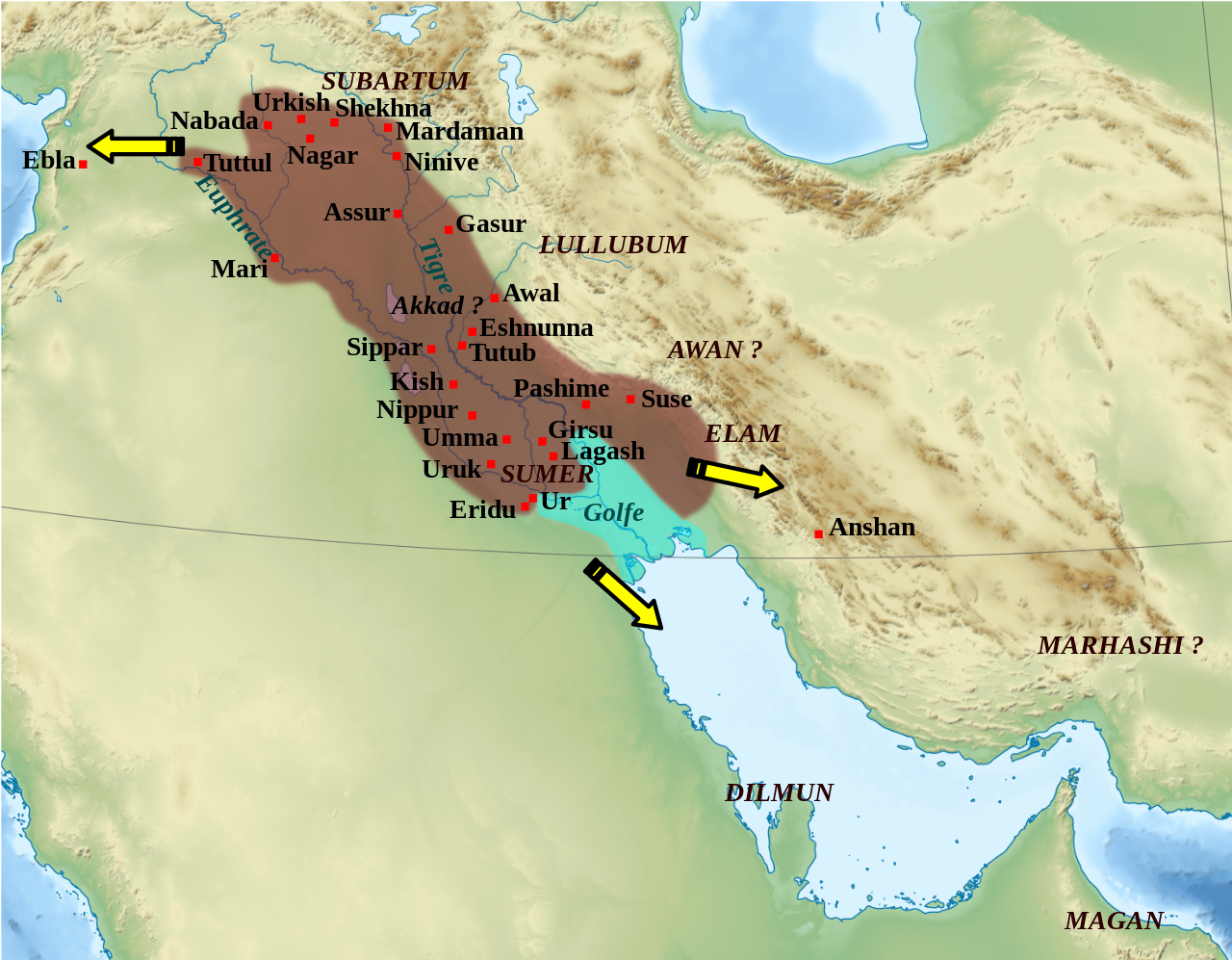
Akkadian Empire
The Akkadian Revolution
The Akkadian Empire, flourishing in Mesopotamia from roughly 2334 to 2154 BCE, represents a pivotal moment in human history: the creation of the world's first true empire. Prior to this, political organization was largely confined to independent city-states. Sargon of Akkad, a figure shrouded in legend, fundamentally altered this paradigm by conquering and consolidating numerous Sumerian and Akkadian city-states under a centralized administration.
His success was not merely military; it involved establishing a new political ideology where a single ruler and capital city held dominion over a vast, multi-ethnic territory. This concept of centralized imperial power, with a standing army and a bureaucracy capable of managing diverse populations and resources, was unprecedented and set a precedent for future empires.
Administrative and Cultural Innovations Under Akkadian Rule
The Akkadians inherited and significantly adapted the cuneiform script, developing the Akkadian language into a dominant administrative and literary medium. This facilitated communication and record-keeping across the empire, essential for effective governance. They implemented standardized weights and measures, crucial for regulating trade and taxation throughout their domain.
Furthermore, Akkadian rulers commissioned monumental art and architecture, such as the Victory Stele of Naram-Sin, which not only glorified their military achievements but also promoted a unified imperial identity and religious ideology, often elevating the king to divine or semi-divine status. This cultural synthesis blended Sumerian traditions with Akkadian elements, creating a distinct imperial culture that influenced the region for centuries.
The Enduring Significance of the Akkadian Model
The Akkadian Empire's significance extends far beyond its temporal existence. It demonstrated the feasibility and advantages of large-scale imperial administration, influencing subsequent Mesopotamian powers like the Babylonians and Assyrians, as well as empires in other regions. The Akkadian language's role as a diplomatic and scholarly lingua franca in the ancient Near East for over a millennium highlights its profound cultural impact.
Their legal and administrative practices, though not fully preserved, likely informed later legal systems. The very idea of a unified state encompassing multiple peoples and territories, a concept central to modern political thought, finds one of its earliest and most influential expressions in the Akkadian experiment.
Factors Contributing to the Empire's Demise
Despite its innovations and initial strength, the Akkadian Empire eventually succumbed to a combination of internal and external pressures. The vastness of the empire made it inherently difficult to govern effectively, leading to frequent revolts by subjugated city-states eager to regain autonomy. Sargon's successors, particularly Naram-Sin, faced significant challenges in maintaining control, exacerbated by environmental factors such as prolonged drought and agricultural decline, which weakened the economic base.
The incursions of nomadic groups, most notably the Gutians from the Zagros Mountains, exploited these weaknesses, eventually overwhelming the imperial defenses and leading to the empire's collapse around 2154 BCE. This decline illustrates the inherent fragility of early imperial structures when faced with internal dissent and external threats.
Echoes in Later Civilizations
The legacy of the Akkadian Empire resonated long after its fall. The concept of a unified Mesopotamian kingdom, first realized by the Akkadians, became a recurring aspiration for subsequent rulers. The administrative structures and bureaucratic practices they pioneered provided a blueprint for later empires.
Even the Akkadian language, though eventually supplanted by Aramaic, remained a language of scholarship and religious texts for centuries. The Akkadian period represents a crucial transition from a world of independent city-states to one dominated by large territorial empires, fundamentally shaping the trajectory of Near Eastern history and civilization.
Go deeper
Frequently Asked Questions
What was the Akkadian Empire and when did it exist?+
Who was Sargon of Akkad and what did he do?+
How did the Akkadians use writing and trade?+
Why did the Akkadian Empire fall?+
What is the lasting legacy of the Akkadian Empire?+
Based on content from Wikipedia · Licensed under CC BY-SA 4.0