

Air Canada
Images
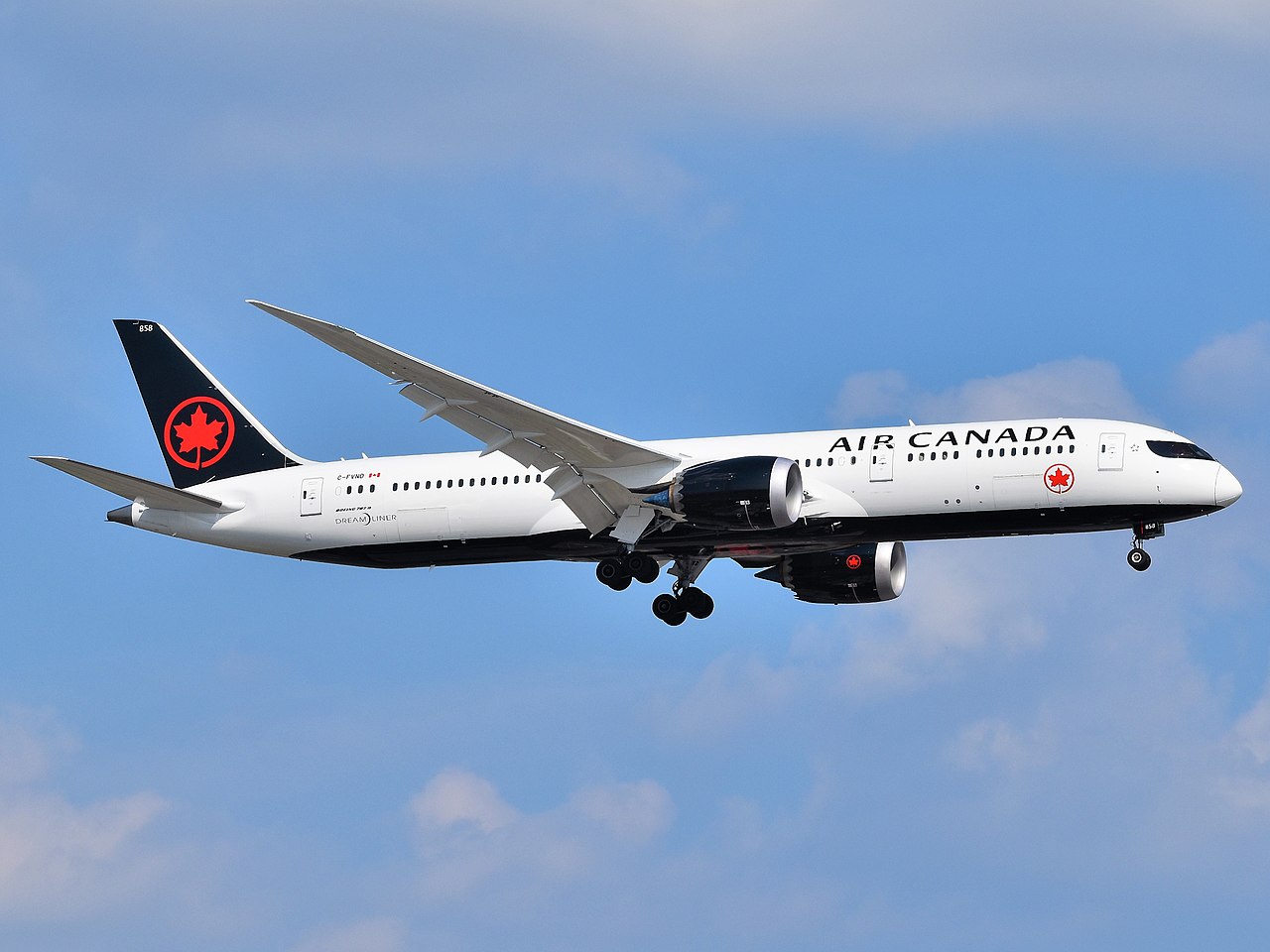
Air Canada Boeing 787 9 Dreamliner C FVND Approaching EWR Airport


Genesis and Evolution
Air Canada's origins trace back to the Canadian federal government's strategic decision in 1936 to establish Trans-Canada Air Lines (TCA) to unify a vast nation. Operational flights commenced in 1938, marking a pivotal moment in Canadian transportation infrastructure. The rebranding to Air Canada in 1965 signified a shift towards a more international identity, though its roots remained deeply embedded in serving Canadian interests.
The airline's trajectory was significantly reshaped by the deregulation of the Canadian airline market in the 1980s, culminating in its privatization in 1988. This period of liberalization allowed for greater competition and strategic consolidation. A landmark event occurred in 2000 with the acquisition of Canadian Airlines, its primary competitor, which dramatically altered the competitive landscape.
Despite facing severe financial challenges, including bankruptcy protection in 2003, Air Canada demonstrated remarkable resilience, emerging and reorganizing under ACE Aviation Holdings. This ability to adapt and overcome adversity underscores its enduring significance in the aviation industry.
Strategic Network Design
Air Canada's operational strategy is anchored by its major hubs: Montréal–Trudeau International Airport (YUL), Toronto Pearson International Airport (YYZ), and Vancouver International Airport (YVR). These hubs function as critical nodes in its extensive network, facilitating seamless connections for passengers and cargo across its 222 worldwide destinations. Toronto Pearson, in particular, serves as its largest hub and a gateway to international markets.
The airline's network is designed to maximize connectivity, leveraging its position as a founding member of the Star Alliance. This global partnership provides its passengers access to an even wider array of destinations and travel options, reinforcing Air Canada's role as a comprehensive global carrier rather than just a domestic one. The average of over 1,613 scheduled flights daily, operated in conjunction with regional partners, highlights the sheer scale and complexity of its network management.
Fleet Modernization and Operational Diversity
Air Canada maintains a sophisticated and diverse fleet, meticulously chosen to optimize performance across different route lengths and market segments. For its long-haul international routes, the airline deploys wide-body aircraft renowned for their range and passenger comfort, including the Airbus A330, Boeing 777, and the technologically advanced Boeing 787 Dreamliner. These aircraft are essential for connecting Canada to distant global markets.
On short-haul and medium-haul routes, Air Canada relies on a mix of fuel-efficient narrow-body aircraft. This includes the versatile Airbus A320 family (A319, A320, A321), the popular Boeing 737 MAX 8, and the modern Airbus A220-300. Beyond its mainline operations, Air Canada strategically utilizes operating divisions to cater to specific market needs: Air Canada Cargo handles freight logistics, Air Canada Express serves regional markets with smaller aircraft, Air Canada Jetz provides exclusive charter services for sports teams and corporate clients, and Air Canada Rouge operates as a leisure airline.
This multi-faceted approach allows for maximum market penetration and operational efficiency.
Economic Engine and National Symbolism
As Canada's flag carrier, Air Canada is more than just a transportation provider; it is a significant economic contributor and a symbol of national identity. In 2019 alone, it transported an impressive 51.5 million passengers, underscoring its substantial market share and economic impact. Its operations support numerous jobs directly and indirectly through its supply chain and associated industries.
The airline's role in facilitating international trade and tourism is paramount, acting as a crucial conduit for business and cultural exchange. The government's acquisition of a 6.4% stake in October 2021, in exchange for financial support during the COVID-19 pandemic, further emphasized its status as a critical national asset. This intervention highlighted the airline's systemic importance to Canada's connectivity and economic stability, especially during periods of global disruption.
Governance, Alliances, and Future Trajectory
Air Canada operates within a complex framework of corporate governance, international aviation regulations, and strategic alliances. Its status as a founding member of the Star Alliance is a cornerstone of its global strategy, enabling code-sharing agreements and integrated loyalty programs that enhance passenger experience and network reach. The airline's privatization in 1988 shifted its governance from public to private ownership, introducing market-driven decision-making.
However, its designation as the flag carrier means it often operates with a degree of national responsibility, as evidenced by government support during crises. The airline continuously navigates the dynamic global aviation market, balancing profitability with its role in national connectivity. Its ongoing fleet modernization and strategic partnerships are key to maintaining its competitive edge and fulfilling its mandate as Canada's premier international airline.
See also
Frequently Asked Questions
What is Air Canada and why is it important?+
When did Air Canada start flying?+
Where are Air Canada’s main airports?+
What kinds of planes does Air Canada use?+
How many places can you fly to with Air Canada?+
Based on content from Wikipedia · Licensed under CC BY-SA 4.0