

Airbus: Flying Giants!
Images

Delta's first Airbus A220




The Genesis of a European Aviation Powerhouse
The establishment of Airbus Industrie GIE in 1970 marked a pivotal moment in aviation history, born out of a strategic European initiative to challenge the dominance of American manufacturers in the commercial airliner market. This consortium, initially comprising Aérospatiale (France), Deutsche Aerospace (Germany), and CASA (Spain), was designed to pool resources and expertise, enabling the development of a competitive wide-body aircraft.
The early years were characterized by intense collaboration and the ambitious goal of producing the A300. The subsequent consolidation of its parent firms into the European Aeronautic Defence and Space Company (EADS) in 2000, and its eventual rebranding as Airbus SE in 2015, solidified its identity as a unified European aerospace leader. This evolution reflects a deliberate strategy of integration and synergy to foster innovation and global competitiveness.
A Multifaceted Aerospace Conglomerate
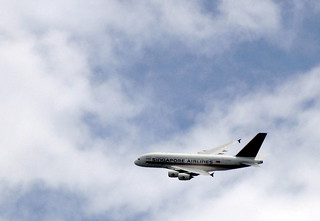
While Airbus is globally recognized for its groundbreaking commercial aircraft, such as the A320 family and the iconic A380, its operational scope extends far beyond passenger jets. The company holds the distinction of being the world's foremost helicopter manufacturer, producing a wide array of rotorcraft for civilian and military applications. Furthermore, its Defence and Space division is a significant player in the aerospace and defense industry, contributing to satellite technology, military aircraft, and space exploration initiatives.
This diversification showcases Airbus's comprehensive capabilities and its strategic positioning across various critical sectors of the aerospace industry, demonstrating a commitment to innovation and technological advancement in multiple domains.
The Intricate Symphony of Aircraft Manufacturing
The creation of an Airbus aircraft is a testament to sophisticated industrial organization and cutting-edge engineering. The process begins with extensive research and development, leveraging advanced simulation and design software to conceptualize and refine aircraft blueprints. Manufacturing is a global endeavor, with assembly plants strategically located in France, Germany, Spain, and the United Kingdom, complemented by a growing international footprint in Canada, Malaysia, the United States, Morocco, and India.
This distributed production model allows for specialized manufacturing processes and efficient supply chain management. The assembly itself involves the precise integration of thousands of components, from the fuselage and wings to the intricate avionics and propulsion systems, culminating in a meticulously tested and certified flying machine ready for service.
Airbus's Indispensable Role in Global Interconnectivity
Airbus's impact on the modern world is profound and multifaceted. Its commercial aircraft are the primary enablers of global tourism, international business, and cultural exchange, shrinking distances and fostering interconnectedness. By providing efficient and reliable air transport, Airbus facilitates economic growth, supports global trade, and allows for rapid humanitarian aid delivery.
The company's commitment to innovation, particularly in developing more fuel-efficient and environmentally conscious aircraft, also positions it at the forefront of addressing the challenges of sustainable aviation. Airbus is not merely a manufacturer; it is a key architect of the globalized society we inhabit, shaping how people and goods move across the planet.
Navigating the Future
Looking ahead, Airbus is actively engaged in pioneering the next generation of aerospace technology. The company is investing heavily in research and development focused on sustainable aviation, exploring concepts such as hydrogen-powered aircraft and advanced aerodynamic designs to reduce its environmental footprint. Innovations in digital manufacturing, artificial intelligence, and autonomous flight systems are also central to its future strategy.
Airbus's ongoing efforts to push the boundaries of what is possible in flight underscore its role as a forward-thinking leader, dedicated to shaping a more sustainable and efficient future for air travel and beyond.
Go deeper
Frequently Asked Questions
What is Airbus and why is it called "Flying Giants"?+
How did Airbus start and who were the original partners?+
What kinds of aircraft does Airbus make besides passenger planes?+
Where are Airbus planes built around the world?+
Why is Airbus important for the world and the environment?+
Based on content from Wikipedia · Licensed under CC BY-SA 4.0