

Addis Ababa–Djibouti Railway
Images

Ethiopian Railways

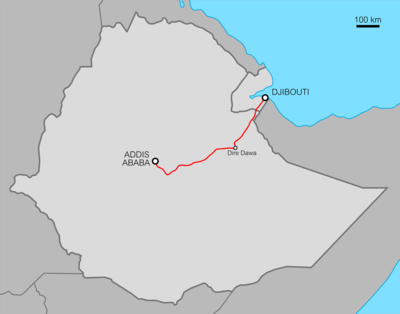


The Strategic Imperative
The Addis Ababa–Djibouti Railway is far more than a transportation link; it is a critical geopolitical and economic lifeline for landlocked Ethiopia. For decades, Ethiopia has relied heavily on the port of Djibouti for its international trade, with over 95% of its imports and exports passing through this East African nation. The construction of this standard gauge railway, inaugurated in 2018, represents a monumental step in solidifying and modernizing this vital connection.
It serves as the backbone of Ethiopia's nascent national railway network, designed to streamline the movement of goods and reduce transit times and costs. The railway's capacity of 24.9 million tonnes of freight annually underscores its ambition to be the primary conduit for Ethiopian commerce, directly linking its capital to a major international shipping hub and enhancing its economic resilience.
Operational Mechanics and Infrastructure Development
Operating on a standard gauge, the Addis Ababa–Djibouti Railway facilitates efficient and high-volume transport. The system is engineered to handle substantial freight loads, with projections for significant cargo volumes, such as 6 million tonnes expected annually in the near term. This operational capacity is complemented by ongoing infrastructure development, notably at the Port of Doraleh in Djibouti.
Plans to expand the port's annual cargo handling capacity from 6 to 14 million tonnes are crucial for accommodating the increased throughput from the railway. This integrated approach to infrastructure development, linking rail and port facilities, is designed to create a seamless logistics chain, optimizing the flow of goods and supporting Ethiopia's growing export-oriented industries and import needs.
Economic Impact and Operational Realities
The economic implications of the Addis Ababa–Djibouti Railway are profound. By providing a more efficient and reliable means of transport, it aims to lower the cost of doing business in Ethiopia, making its exports more competitive on the global market and reducing the price of imported goods. While the railway generated US$1.2 million from passenger services in 2019, transporting 84,073 passengers, its primary economic driver is freight.
However, the operational realities present challenges. In 2019, total revenue from both passenger and cargo services was US$40 million, falling significantly short of the operating costs of US$70 million. This financial deficit highlights the long-term investment required for such infrastructure projects and the need for strategies to optimize revenue generation and operational efficiency to achieve profitability.
A Modern Gateway
The Addis Ababa–Djibouti Railway is a testament to modern engineering and international cooperation, officially inaugurated on January 1, 2018. Its development addresses a historical challenge for Ethiopia, a nation striving for economic growth despite its landlocked geography. The railway is a tangible symbol of Ethiopia's commitment to modernizing its infrastructure and enhancing its connectivity to the global economy.
As it continues to operate and potentially expand its services, it is poised to play an even more significant role in regional trade dynamics. The ongoing efforts to manage its operational costs and maximize its revenue potential will be key to its long-term success and its continued contribution to Ethiopia's economic development and integration into world markets.
See also
Frequently Asked Questions
What is the Addis Ababa–Djibouti Railway?+
Why is the railway important for Ethiopia?+
How fast can the railway carry goods each year?+
Where does the railway connect to a port?+
How many passengers used the railway in 2019?+
Based on content from Wikipedia · Licensed under CC BY-SA 4.0