

Académie Française
Images

Académie Française


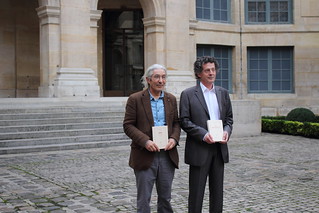


The Académie Française
The Académie Française stands as a unique and enduring institution, serving as the preeminent official council for matters concerning the French language. Established in 1635 by Cardinal Richelieu, the chief minister to King Louis XIII, its foundational purpose was to regulate and refine the French tongue, ensuring its clarity, precision, and elegance. This ambitious endeavor aimed to create a standardized form of French, free from the perceived impurities and regional variations that could hinder clear communication.
Although its existence was interrupted during the tumultuous French Revolution in 1793, the Académie was re-established in 1803 by Napoleon Bonaparte, who integrated it into the broader structure of the Institut de France. It proudly holds the distinction of being the oldest among the Institut's five constituent academies. The core mandate of the Académie remains the publication of an official dictionary, a monumental task that involves continuous review and adaptation of the language to reflect contemporary usage while maintaining its historical integrity.
This role positions the Académie as a crucial arbiter in linguistic evolution.
The Esteemed Ranks of 'Les Immortels'
The membership of the Académie Française is comprised of forty individuals, famously known as 'les immortels' or 'the immortals.' This evocative moniker stems from the lifelong tenure typically granted to its members. The selection process is rigorous and entirely internal; new members are elected by the existing academicians themselves, a testament to the academy's self-governing nature. This ensures that individuals admitted possess a profound understanding and appreciation of the French language and its literary traditions.
While the intention is for members to serve indefinitely, the statutes do allow for resignation or, in extreme cases, dismissal for serious misconduct, a provision that has been invoked historically. The lifetime appointment underscores the gravity and permanence associated with the academy's mission, fostering a deep commitment among its members to the long-term stewardship of the French language.
The Enduring Relevance of Linguistic Authority
In an era characterized by rapid globalization and the pervasive influence of digital communication, the role of the Académie Française remains surprisingly relevant. While some may view it as an archaic institution, its function as a guardian of linguistic consistency is vital for maintaining the richness and distinctiveness of the French language. By providing an authoritative dictionary and guidelines, the Académie facilitates clear and unambiguous communication across various domains, from literature and academia to government and international relations.
This standardization is crucial for preserving cultural identity and ensuring that the nuances of French thought and expression are not diluted. The Académie acts as a bulwark against linguistic drift, ensuring that French remains a vibrant and coherent language capable of expressing complex ideas with precision, thereby contributing to France's cultural heritage and global influence.
A Legacy Forged Through Centuries of Change
The genesis of the Académie Française lies in the strategic vision of Cardinal Richelieu, who sought to elevate French to a language of prestige and intellectual rigor, comparable to Latin. His establishment of the academy in 1635 marked a pivotal moment in the formalization of French grammar and vocabulary. The subsequent abolition during the French Revolution, a period of radical societal transformation, highlighted the academy's perceived association with the old regime.
However, its revival under Napoleon Bonaparte in 1803 signaled a recognition of its enduring value to the French state and culture. Napoleon's decision to place it within the Institut de France underscored its integration into the nation's intellectual infrastructure. This historical trajectory, from royal patronage to revolutionary upheaval and imperial restoration, demonstrates the Académie's resilience and its consistent importance in the French national consciousness as a symbol and protector of its language.
Contemporary Impact and Linguistic Debates
While the Académie Française is primarily known for its dictionary, its influence extends to contemporary linguistic debates. It often weighs in on the adoption of foreign words, particularly from English, advocating for French alternatives where possible. This stance has sometimes led to controversy, with critics arguing that the Académie can be overly conservative and hinder the natural evolution of language.
However, proponents argue that this protective role is essential for preventing linguistic homogenization and preserving the unique character of French. The academy's pronouncements, though not legally binding, carry significant cultural weight and often shape public discourse on language. For instance, debates surrounding the use of gender-neutral language or the incorporation of new technological terms often see the Académie offering its considered opinion, reflecting its ongoing engagement with the living language.
See also
Frequently Asked Questions
What is the Académie Française?+
Who started the Académie Française and when?+
How many people are in the Académie Française and what are they called?+
Why does the Académie Française make a dictionary?+
How can someone become a member of the Académie Française?+
Based on content from Wikipedia · Licensed under CC BY-SA 4.0