

French Language
Images
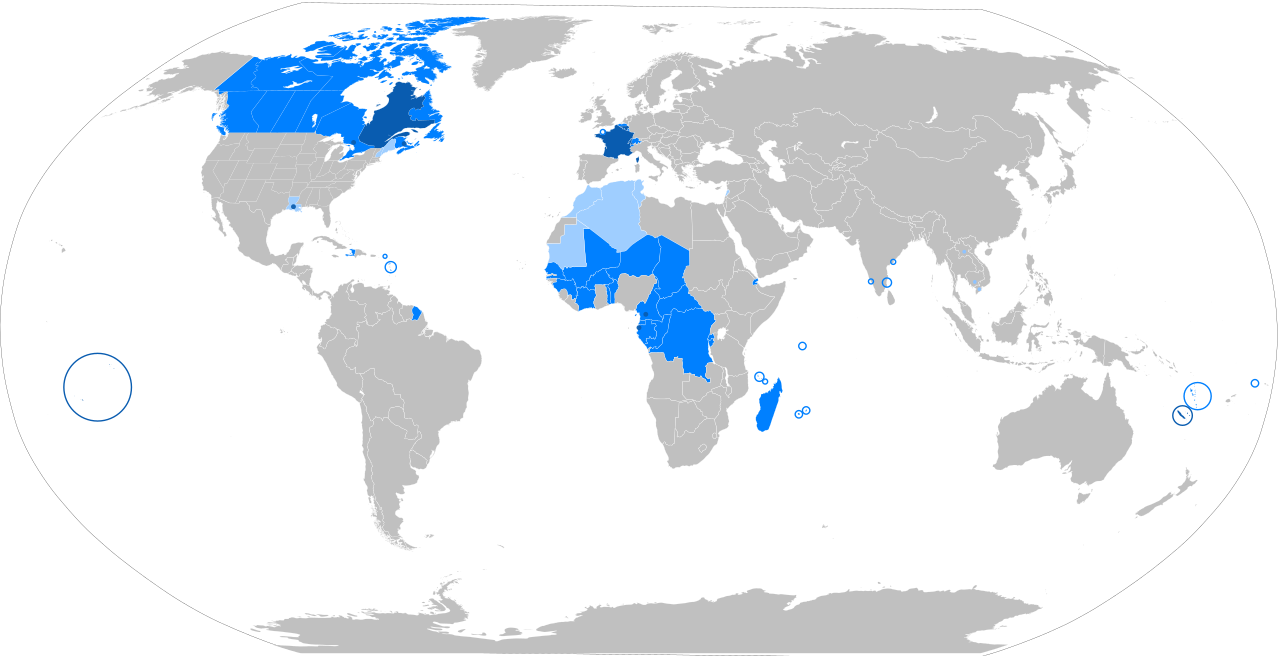
French language
From Gallo-Roman Dialects to Standardized French
The genesis of the French language lies in the Roman conquest of Gaul. Vulgar Latin, spoken by soldiers, merchants, and colonists, gradually supplanted the indigenous Celtic languages, though not without influence. Over centuries, regional variations of Latin emerged, influenced by local substrata and later by Germanic Frankish dialects following the fall of the Western Roman Empire.
This linguistic fusion gave rise to the langues d'oïl in the north and the langues d'oc in the south. Old French, primarily based on the dialect of the Île-de-France region around Paris, began to gain prominence due to the political and cultural ascendancy of the Capetian dynasty. The standardization process accelerated with the establishment of the Académie Française in 1635, tasked with regulating and preserving the purity of the language. This historical trajectory highlights French's evolution from a collection of dialects to a codified national language, shaped by conquest, regionalism, and deliberate institutional efforts.
Phonological and Grammatical Distinctiveness
French possesses a unique set of phonological and grammatical features that distinguish it from other Romance languages. Phonetically, it is characterized by nasal vowels (e.g., in 'vin', 'bon', 'main'), a uvular fricative 'r' sound produced at the back of the throat, and a tendency for final consonants to be silent unless followed by a vowel (liaison). The stress pattern in French is typically on the final syllable of a word or phrase, contributing to its distinct rhythmic quality.
Grammatically, French retains the Latinate system of noun gender (masculine and feminine) and complex verb conjugations that indicate tense, mood, person, and number. The use of auxiliary verbs ('avoir' and 'être') in compound tenses and the subjunctive mood are also key grammatical elements. These features, while presenting challenges for learners, contribute to the language's perceived elegance and precision.
Enduring Global Influence and Diplomatic Role
For centuries, French served as the primary international language of diplomacy, culture, and intellectual exchange, a status it continues to hold in significant international bodies. Its historical prestige, stemming from the political and cultural dominance of France, cemented its role in international relations. Today, French remains an official language of the United Nations, the European Union, NATO, the International Olympic Committee, the International Red Cross, and numerous other global organizations.
This continued prominence ensures its relevance in international law, trade, and multilateral negotiations. Beyond official capacities, French is spoken by approximately 300 million people across five continents, making it a vital lingua franca in diverse regions, particularly in Africa, and a crucial language for careers in international affairs, business, and cultural industries.
French as a Gateway to Global Culture and Thought
The French language is inextricably linked to a rich tapestry of global culture and intellectual heritage. It is the vehicle for seminal works of literature, philosophy, and art that have shaped Western thought and beyond. From the Enlightenment philosophers like Rousseau and Voltaire to literary giants like Victor Hugo and Albert Camus, and influential thinkers in sociology and psychoanalysis, French has been the medium for groundbreaking ideas.
Furthermore, French cuisine, fashion, cinema, and visual arts are globally recognized and influential. Learning French provides direct access to these cultural domains, enabling a deeper appreciation of their nuances and historical context. It also opens pathways to understanding the diverse Francophone world, encompassing cultures from Quebec to Senegal, each contributing unique perspectives and traditions.
Contemporary Relevance and Future Trajectory
In the 21st century, French maintains a significant global presence, particularly in education and international organizations. While English has become the dominant global lingua franca in many scientific and technological fields, French continues to be a crucial language for diplomacy, international law, and the arts. Its strong presence in Africa, a continent with a rapidly growing population, suggests a dynamic future for the language.
Educational initiatives and cultural exchange programs actively promote French learning worldwide. The digital age has also seen the proliferation of Francophone content online, further solidifying its contemporary relevance. Understanding French today means engaging with a vibrant, evolving language that bridges historical legacies with modern global interactions and diverse cultural expressions.
Go deeper
Based on content from Wikipedia · Licensed under CC BY-SA 4.0