

2020 United States Elections
Images
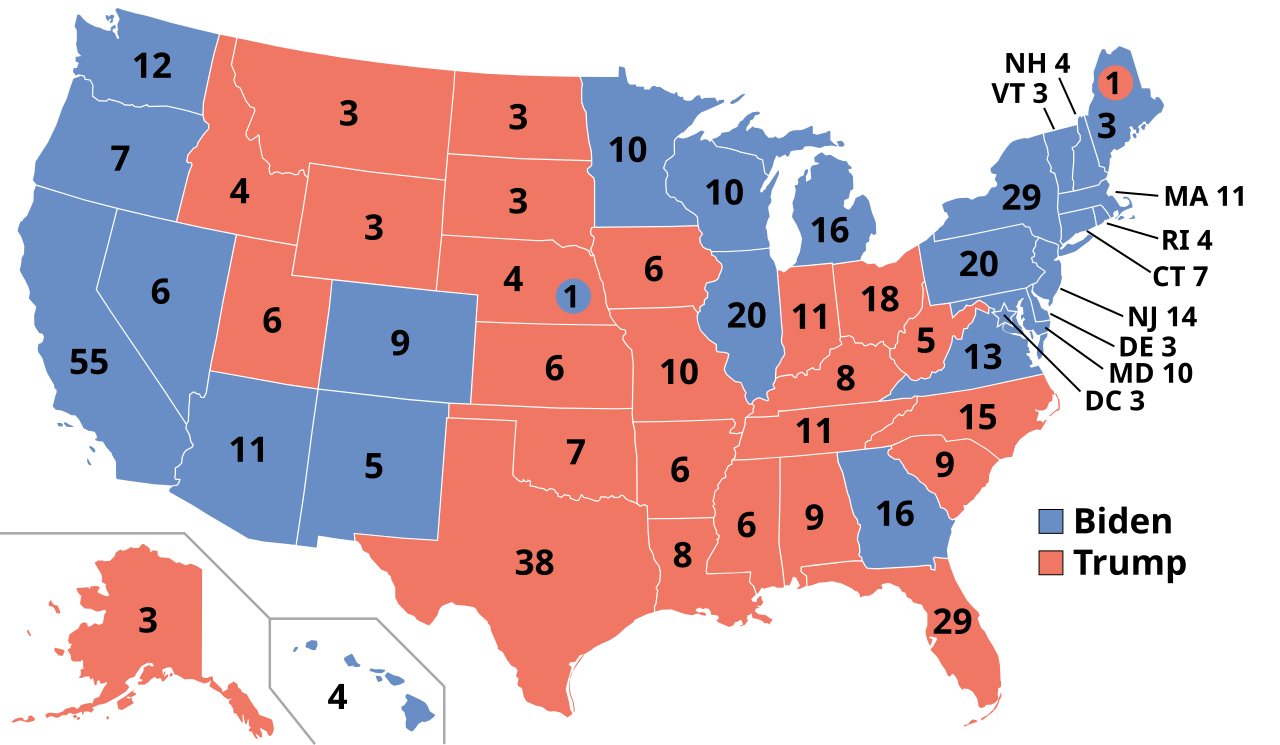
ElectoralCollege2020


The Presidential Mandate and the Challenge to Democratic Norms
The 2020 presidential election saw Joe Biden defeat incumbent Donald Trump, marking a significant transition of power. Biden's victory was the culmination of a hard-fought primary campaign and a general election that focused on Trump's presidency and the nation's response to the COVID-19 pandemic. What made this election particularly consequential was the unprecedented refusal of the incumbent president to concede the election results.
President Trump and his allies promoted unsubstantiated claims of widespread voter fraud, despite U.S. election security officials affirming the election's integrity. This challenge to democratic norms escalated, leading to the January 6th attack on the U.S. Capitol, Trump's second impeachment, and widespread debate about the future of electoral processes and the role of technology in disseminating information.
Navigating a Divided Congress
Control of the U.S. Congress was also fiercely contested in 2020. While Democrats maintained their majority in the House of Representatives, they did so with a reduced margin. The real drama unfolded in the Senate.
Democrats achieved a net gain of three seats, resulting in a 50-50 partisan split. This parity meant that the Vice President, Kamala Harris, would hold the deciding vote, effectively giving Democrats control. This 'trifecta' of presidential, House, and Senate control was the first for the Democratic Party since 2008, granting them significant legislative power.
This outcome was notable as partisan control of either chamber had not flipped in a presidential year since 1980, underscoring the rarity of such a shift.
The Issues That Mobilized a Nation
The 2020 election was shaped by a confluence of critical national issues. The overarching concern was the COVID-19 pandemic, which not only posed a public health crisis but also profoundly impacted the economy and necessitated new voting methods. Beyond the immediate health crisis, voters grappled with long-standing debates over healthcare access and affordability.
The nation was also experiencing significant social unrest, particularly concerning racial justice and equality, which mobilized many voters. Furthermore, the escalating threat of climate change remained a key issue for a substantial portion of the electorate. These complex and interconnected challenges fueled a highly engaged electorate.
Record-Breaking Turnout and Evolving Voting Methods
A defining characteristic of the 2020 election was the extraordinary level of voter participation. Driven by the urgency of the issues at stake and the adaptations made due to the pandemic, voter turnout reached historic highs. Social distancing guidelines and concerns about in-person voting led to a massive expansion of mail-in and early voting options.
This shift in how Americans cast their ballots resulted in a projected voter turnout by eligible population that surpassed any election since 1900. This surge in participation underscored a deep public engagement with the democratic process and a strong desire to influence the nation's direction.
Beyond the Presidency
While the presidential and congressional races garnered national attention, the 2020 election cycle also included a vast array of state and local contests. Eighty-six state legislative chambers held regularly scheduled elections, and eleven states conducted gubernatorial races. These elections, though often receiving less media coverage, are crucial for shaping policy at the state level.
Republicans, for instance, secured the governorship in Montana and gained control of both legislative chambers in New Hampshire. Numerous other state executive and judicial elections, along with referendums, tribal elections, and mayoral contests, also took place, demonstrating the breadth and depth of democratic participation across the United States.
See also
Frequently Asked Questions
What happened in the 2020 U.S. presidential election?+
Why was the 2020 election special?+
How did the Senate change after the 2020 election?+
What were some big problems people cared about in 2020?+
What happened on January 6, 2021?+
Based on content from Wikipedia · Licensed under CC BY-SA 4.0