

Zack de la Rocha
Images

Run the Jewels with Zack de la Rocha



The Genesis of a Voice
Zacharias Manuel de la Rocha, born January 12, 1970, emerged as a pivotal figure in alternative music, primarily recognized as the frontman and lyricist for Rage Against the Machine. His artistic journey began with a deep engagement in hip-hop culture, evident in his early spoken-word performances and his involvement with the influential underground hip-hop group Inside Out. This foundation in lyrical dexterity and rhythmic delivery would later be masterfully integrated with the aggressive, guitar-driven sound of rock music.
De la Rocha's unique ability to blend these genres created a sonic landscape that was both intellectually stimulating and viscerally impactful. He didn't merely adopt a musical style; he forged a new one, using it as a potent vehicle for his uncompromising political and social commentary, challenging the conventions of both genres and the music industry itself.
Rage Against the Machine
As the creative engine behind Rage Against the Machine's lyrical content, de la Rocha crafted anthems that directly confronted issues of corporate power, governmental oppression, and the military-industrial complex. His songwriting was characterized by its sharp, analytical critique and its unwavering solidarity with marginalized communities. Tracks like 'Bullet in the Head,' 'Testify,' and 'Guerrilla Radio' are not just songs; they are meticulously constructed arguments against injustice, delivered with a raw intensity that mirrored the urgency of his message.
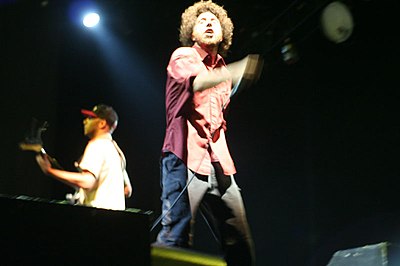
The band's refusal to conform to mainstream expectations, including their stance against selling merchandise with their image and their iconic protest at SNL, further amplified their anti-establishment ethos. De la Rocha's performance style was equally significant, marked by a fierce, almost shamanistic stage presence that conveyed the depth of his conviction and the power of collective resistance.
Beyond the Band
De la Rocha's activism is not a secondary pursuit but an intrinsic part of his identity, deeply interwoven with his artistic output. He has consistently lent his voice and support to a diverse array of social justice movements, including those advocating for indigenous rights, prison reform, and anti-imperialist causes. His involvement often extends beyond public statements, encompassing direct support for grassroots organizations and participation in protests and demonstrations.
This sustained dedication highlights a profound belief in the interconnectedness of art and action, demonstrating that cultural influence can and should be leveraged for tangible social and political change. His work serves as a powerful example of how artists can engage critically with societal structures and inspire others to do the same.
Enduring Relevance
In an era still grappling with issues of economic inequality, political polarization, and the pervasive influence of corporate entities, Zack de la Rocha's message remains remarkably resonant. His ability to articulate complex sociopolitical critiques with clarity and passion continues to inspire new generations of artists, activists, and listeners. The fusion of genres he championed has influenced countless musicians, while his unwavering commitment to his principles serves as a benchmark for artistic integrity and social responsibility.
De la Rocha's legacy is that of an artist who refused to be silenced, who used his platform to amplify the voices of the unheard, and who demonstrated the enduring power of music as a force for challenging the status quo and advocating for a more equitable world.
The Art of Opposition
Zack de la Rocha's impact extends beyond his musical contributions; he represents a paradigm of artistic opposition. His lyrical content is not merely protest music but a form of critical analysis, dissecting the mechanisms of power and control. He masterfully employs metaphors and direct language to expose hypocrisy and advocate for systemic change.
The band's deliberate rejection of conventional music industry practices, such as their refusal to play shows where they felt their message would be compromised, underscores their commitment to their ideals. This strategic approach to their career amplified their message, positioning them as authentic voices of dissent. Furthermore, de la Rocha's solo work and collaborations continue to explore these themes, demonstrating a consistent dedication to pushing boundaries and engaging with pressing global issues through his art.
See also
Frequently Asked Questions
Who is Zack de la Rocha?+
What kind of music does he make?+
Why does he sing about social issues?+
How did he start his music career?+
What does he do outside of music?+
Based on content from Wikipedia · Licensed under CC BY-SA 4.0