

Warmian–Masurian Voivodeship
Images

Gielądzkie Lake in Sorkwity, Warmian-Masurian Voivodeship, Poland, July 2020





Genesis of a Voivodeship
The Warmian–Masurian Voivodeship, established on January 1, 1999, represents a significant administrative restructuring within Poland. Its creation was not an arbitrary act but a deliberate consolidation of territories with distinct historical trajectories. The voivodeship's name itself is a direct nod to two of its most prominent historical regions: Warmia and Masuria.
Warmia, historically a part of Royal Prussia, was known for its ecclesiastical administration under the Prince-Bishops of Warmia, while Masuria, or 'Polish Prussia,' was predominantly inhabited by ethnic Poles who were Lutheran. However, the modern voivodeship is a more complex mosaic, incorporating portions of other historical lands such as Chełmno Land, Powiśle, Mazovia, Bartia, and Natangia. This amalgamation reflects a pragmatic approach to regional governance, aiming to create units that are both administratively viable and historically resonant, even if the constituent parts have diverse origins and past allegiances.
The 1998 Polish local government reforms, which led to its establishment, sought to create larger, more efficient regional entities from the previous, more numerous voivodeships.
The 1999 Reforms
The establishment of the Warmian–Masurian Voivodeship was a direct consequence of the comprehensive reform of Poland's administrative divisions in 1998, which came into effect in 1999. Prior to this reform, Poland was divided into 49 voivodeships. The new system aimed to create fewer, larger, and more economically and administratively robust regions.
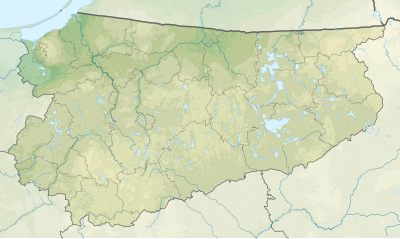
The Warmian–Masurian Voivodeship was formed by merging the entirety of the former Olsztyn Voivodeship with the western half of Suwałki Voivodeship and a part of Elbląg Voivodeship. This consolidation was driven by a desire for greater administrative efficiency, improved resource allocation, and potentially a stronger regional identity that could foster economic development. The process involved complex negotiations and considerations regarding historical boundaries, demographic distribution, and economic potential.
The impact on regional identity is multifaceted; while it unites diverse historical narratives under a single administrative umbrella, it also necessitates the creation of a new, shared regional consciousness that transcends older loyalties.
Geopolitical Crossroads
The geographical location of the Warmian–Masurian Voivodeship places it at a significant geopolitical crossroads. It shares borders with four other Polish voivodeships: Podlaskie to the east, Masovian to the south, Kuyavian-Pomeranian to the southwest, and Pomeranian to the west. Its northwestern frontier is defined by the Vistula Lagoon, a vital waterway connecting to the Baltic Sea, offering strategic maritime access.
However, its most striking border is to the north, where it abuts the Kaliningrad Oblast, an exclave of the Russian Federation. This proximity to a Russian territory, particularly one with a significant military presence, imbues the voivodeship with a unique strategic importance within both Polish and broader European security contexts. This border has historically been a zone of interaction and sometimes tension, influencing regional dynamics and necessitating careful diplomatic and security considerations.
Socio-Economic Landscape and Future Trajectories
With a population of over 1.4 million in 2019 and an area of 24,192 km², the Warmian–Masurian Voivodeship is a substantial entity within Poland. Its economy is diverse, with significant agricultural sectors, growing tourism (particularly around its numerous lakes), and developing industrial and service sectors centered in its capital, Olsztyn. The region faces challenges common to many peripheral areas, including demographic shifts and the need for continued investment in infrastructure and human capital.
However, its rich natural resources, historical heritage, and strategic location also present opportunities. The ongoing development of regional policies aims to leverage these strengths, foster innovation, and enhance its connectivity within Poland and the European Union. The voivodeship serves as a case study in how historical regions can be integrated into modern administrative structures to promote balanced national development.
Key Figures and Historical Context
While the creation of the Warmian–Masurian Voivodeship in 1999 was a result of governmental reforms, the historical regions it encompasses have been shaped by numerous influential figures over centuries. In Warmia, figures like Nicolaus Copernicus, who served as a canon in the cathedral chapter of Warmia, represent the intellectual and ecclesiastical importance of the region. The Prince-Bishops of Warmia, who held significant temporal and spiritual power, were also key figures in its history.
For Masuria, the history is deeply intertwined with the spread of Lutheranism following the Protestant Reformation, with pastors and community leaders playing crucial roles in preserving Polish language and culture under various political administrations, including the Teutonic Knights and later Prussian rule. While specific individuals from the reform era are less prominent in public discourse regarding the voivodeship's formation, the collective impact of these historical figures and movements has indelibly shaped the cultural and social fabric of the lands now united under the Warmian–Masurian banner.
See also
Based on content from Wikipedia · Licensed under CC BY-SA 4.0