

Władysław Sikorski
Images
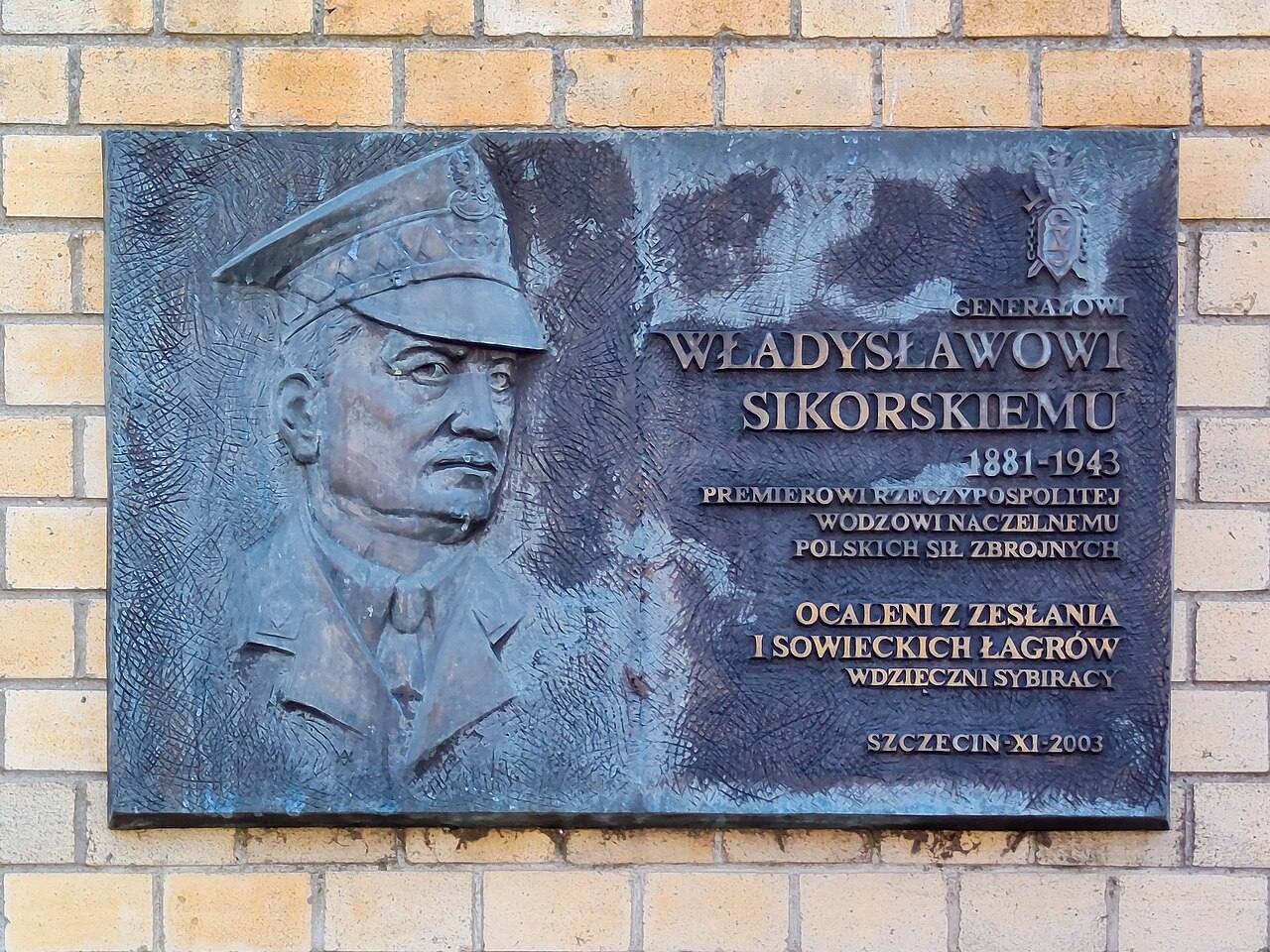
37 Sikorskiego Street in Szczecin, Władysław Sikorski memorial plaque, July 2022


Forging a Nation
Władysław Eugeniusz Sikorski (born May 20, 1881) emerged as a formidable figure in Polish history, deeply committed to restoring his nation's independence. In the pre-World War I era, he was instrumental in establishing and participating in clandestine organizations that laid the groundwork for Polish sovereignty. His military acumen was honed during the Great War, where he served with distinction in the Polish Legions.
Following the war, Sikorski's leadership was pivotal in the newly formed Polish Army during the Polish-Soviet War (1919-1921). His strategic contributions to the decisive Battle of Warsaw in 1920 were immense; this victory is widely credited with halting the Bolshevik advance into Europe and securing Poland's eastern frontier, a critical moment for the young republic's survival and identity.
Political Ascendancy and Subsequent Marginalization
In the nascent years of the Second Polish Republic, Sikorski ascended to the highest echelons of government. He held the esteemed position of Prime Minister from 1922 to 1923 and subsequently served as Minister of Military Affairs from 1923 to 1924. His tenure, however, was marked by the turbulent political landscape of interwar Poland.
After Józef Piłsudski's May 1926 coup d'état and the establishment of the Sanation regime, Sikorski found himself increasingly at odds with the new political order. This divergence led to his political marginalization, forcing him into a period of relative quietude from the center of power, though his influence and reputation remained significant among those who opposed the authoritarian drift.
The Beacon of Hope
The outbreak of World War II and the devastating invasion of Poland in September 1939 thrust Sikorski back into a position of paramount importance. He became the Prime Minister of the Polish government-in-exile, operating from London, and simultaneously assumed the role of Commander-in-Chief of the Polish Armed Forces. In this capacity, he became the most prominent and internationally recognized leader of the Polish cause.
Sikorski tirelessly worked to rally international support for Poland's liberation and to organize Polish military units fighting alongside the Allies. A key diplomatic initiative was his attempt to re-establish relations with the Soviet Union, recognizing the necessity of a united front against Nazi Germany, despite the historical animosity and the recent Soviet invasion.
A Fragile Alliance and a Mysterious Demise
The complex relationship between the Polish government-in-exile and the Soviet Union under Joseph Stalin proved fraught with tension. Sikorski's request for the International Red Cross to investigate the Katyn massacres, where thousands of Polish officers were executed by the Soviets, led to a severe diplomatic rupture. In April 1943, Stalin severed diplomatic ties, isolating Poland further.
Tragically, just three months later, on July 4, 1943, Władysław Sikorski perished when the aircraft carrying him crashed into the sea immediately after takeoff from Gibraltar. The exact circumstances of the crash remain a subject of intense debate and speculation, with various theories suggesting potential foul play. His untimely death represented a profound setback for the Polish cause, depriving the nation of its most prestigious leader during a critical juncture of the war and its subsequent geopolitical reordering.
See also
Frequently Asked Questions
Who was Władysław Sikorski?+
What was his role in the Battle of Warsaw?+
What did he do during World War II?+
Why did he try to talk to the Soviet Union?+
What happened to him in 1943?+
Based on content from Wikipedia · Licensed under CC BY-SA 4.0