

Vietnam National Football Team
Images

North Vietnam national football team opponents


Navigating Historical Divides
The introduction of football to Vietnam by the French in the late 19th century laid the groundwork for a national passion. However, the mid-20th century's political landscape profoundly impacted its development. The division of Vietnam led to the existence of two distinct national teams: the South Vietnamese team, governed by the Vietnam Football Association, which actively participated in FIFA (joining in 1952) and the Asian Football Confederation (AFC) (joining in 1954), even competing in the AFC Asian Cup.
In contrast, the Democratic Republic of Vietnam (North Vietnam) did not hold FIFA or AFC membership, primarily engaging in solidarity matches with other communist nations. This bifurcation meant that Vietnamese football talent was, for a time, divided, hindering the potential for a unified national strength on the international stage. The official reunification in 1975, followed by the merger of football associations in 1976, paved the way for a single, cohesive national entity, inheriting South Vietnam's FIFA status, though historical statistics acknowledge the separate legacies of both predecessor teams.
The Phoenix Rises
Following the complexities of reunification, Vietnam's senior national team observed a period of absence from major international competitions, choosing to focus on rebuilding its football infrastructure. The team's official reintegration into the regional football scene began with their participation in the 1991 SEA Games. This marked a pivotal moment, signaling Vietnam's renewed commitment to competitive football.
Over the subsequent decades, the 'Golden Dragons' have transformed from a developing force into one of Southeast Asia's undisputed powerhouses. Their consistent success is highlighted by three ASEAN Championship titles (2008, 2018, and 2024), a testament to strategic development, dedicated coaching, and the emergence of talented players who have elevated the team's standing significantly within the confederation.
Continental Aspirations
Vietnam's trajectory in continental competitions showcases a steady climb in quality and ambition. A landmark achievement was reaching the quarter-finals of the AFC Asian Cup in 2007, an event they co-hosted, capturing the nation's imagination and demonstrating their capability against established Asian footballing nations. This feat was replicated in the 2019 edition, underscoring the team's sustained competitiveness and tactical maturity.
Perhaps the most significant milestone in their quest for global recognition was achieving qualification for the third round of the FIFA World Cup qualifiers for the first time in the 2022 cycle. This historic advancement signifies Vietnam's arrival as a serious contender in Asian football, pushing the boundaries of what was previously thought possible and inspiring a nation.
The Cultural Significance and Future Trajectory of Vietnamese Football
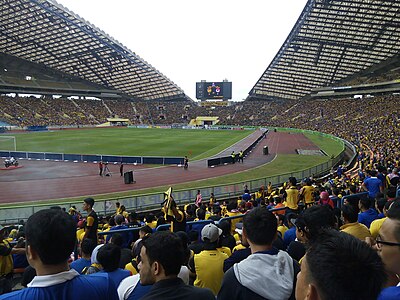
The Vietnam national football team transcends mere sport; it is a powerful symbol of national unity, resilience, and burgeoning pride. The fervent support from fans, characterized by vibrant stadium atmospheres and widespread national identification with the team's successes, underscores its deep cultural resonance. Victories are celebrated not just as sporting triumphs but as affirmations of national identity and progress.
The team's consistent performance in regional tournaments and its growing presence in continental competitions like the AFC Asian Cup are crucial for developing Vietnamese football's infrastructure, youth development programs, and overall global standing. As Vietnam continues to invest in its footballing future, the 'Golden Dragons' are poised to further challenge established hierarchies and inspire future generations, solidifying their place as a significant force in Asian football.
See also
Based on content from Wikipedia · Licensed under CC BY-SA 4.0