

Venera: Space Explorers to Venus!
Images
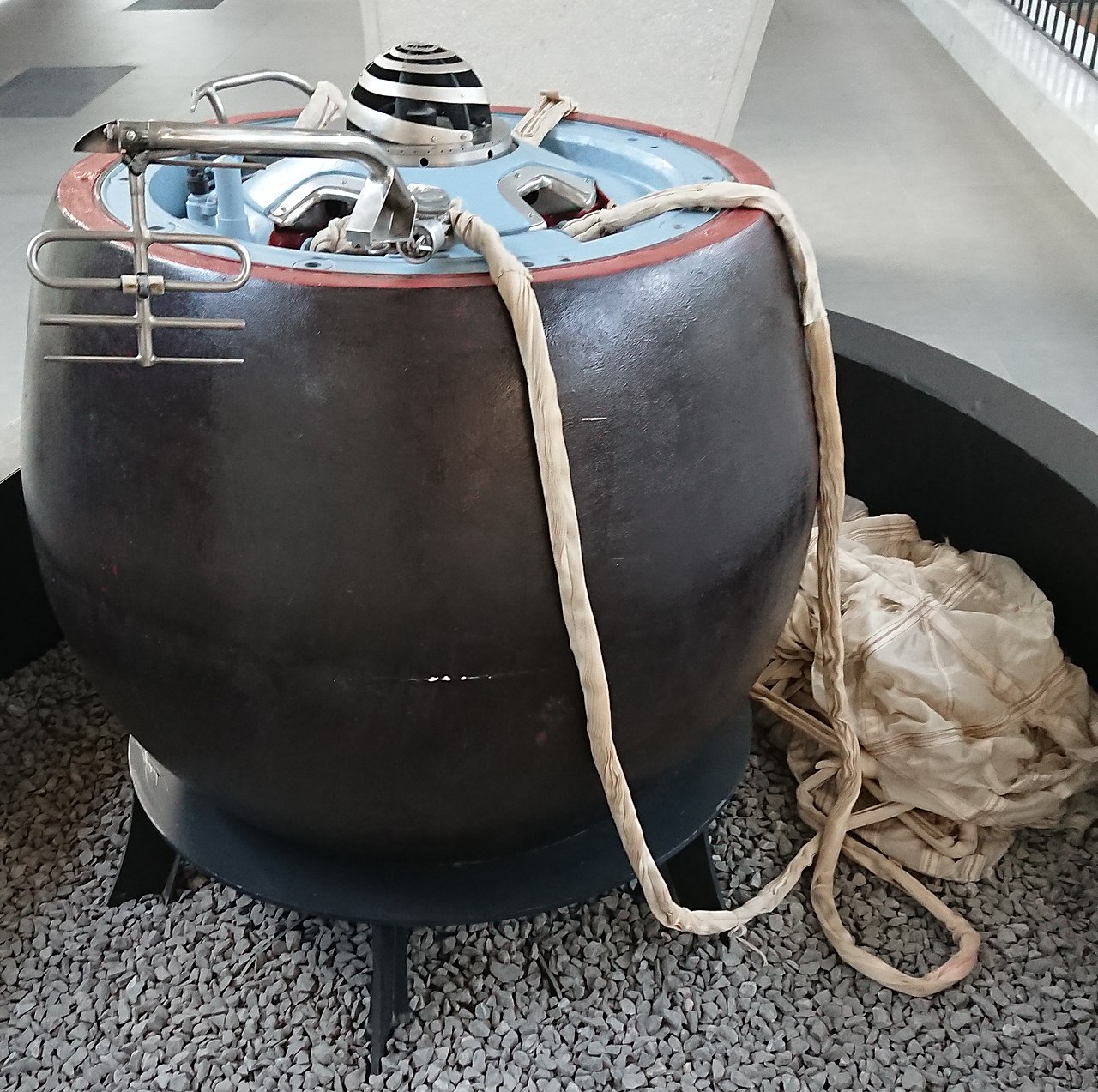
Venera-7





The Genesis of Venera
The Venera program, initiated by the Soviet Union, represents one of the most extensive and ambitious efforts to explore a single extraterrestrial body in the early era of space exploration. Launched between 1961 and 1984, the program comprised numerous missions, each building upon the successes and failures of its predecessors. The primary objective was to penetrate the dense, opaque atmosphere of Venus and gather scientific data about its surface conditions, composition, and atmospheric dynamics.
At the time, Venus was a tantalizing target; its similar size and mass to Earth led many to speculate it might harbor life, or at least conditions conducive to it. However, early missions quickly revealed the planet's extreme nature. The Venera probes were designed with this hostility in mind, pushing the limits of materials science and engineering to withstand immense pressures, corrosive atmospheres, and scorching temperatures.
The program’s sustained commitment over two decades underscores the strategic importance the Soviet Union placed on planetary science and its desire to achieve significant milestones in space exploration.
A Cascade of 'Firsts'
The Venera program etched its name in the annals of space history through a remarkable series of pioneering achievements. Venera 3, on March 1, 1966, became the first human-made object to impact the atmosphere of another planet, a crucial step in demonstrating interplanetary capability. This was followed by Venera 7's historic soft landing on December 15, 1970, marking the first time a probe successfully transmitted data from the surface of another world.
The significance of this cannot be overstated; it proved that landing on and operating from an alien surface was possible. The visual exploration began in earnest with Venera 9 on June 8, 1975, which transmitted the first panoramic images from Venus's surface, offering humanity its first direct visual evidence of an alien landscape. The auditory dimension was explored by Venera 13 on October 30, 1981, which recorded sounds on another planet, providing a unique sensory data point.
Furthermore, Venera 15 and 16, launched in 1983, employed sophisticated radar mapping techniques, creating detailed topographical maps of Venus's northern hemisphere, a feat essential for understanding its geological evolution beneath the perpetual cloud cover.
Engineering for Extremes
The engineering challenges faced by the Venera program were immense, primarily due to Venus's extreme surface environment. Surface temperatures average around 460 degrees Celsius (860 degrees Fahrenheit), hot enough to melt lead, and atmospheric pressure exceeds 90 bars, equivalent to being submerged nearly a kilometer deep in Earth's ocean. To combat these conditions, Venera landers were encased in heavily shielded, spherical pressure vessels made of titanium or specialized alloys.
They incorporated advanced cooling systems to dissipate heat and robust seals to prevent atmospheric ingress. Instruments were miniaturized and hardened against radiation and extreme temperatures. For instance, the cameras used on Venera 9 and 10 were designed to operate for only a short duration, capturing images within minutes of landing before the heat became insurmountable.
The drill and scoop mechanisms on Venera 13 and 14 were engineered to function under extreme pressure and temperature, allowing for soil analysis. The radar systems on Venera 15 and 16 utilized powerful transmitters and sensitive receivers to penetrate the thick cloud layer, achieving resolutions of a few kilometers, which was revolutionary for the time and provided unprecedented insights into Venus's geological features like volcanoes and impact craters.
Scientific Revelations and Enduring Relevance
The data returned by the Venera probes fundamentally reshaped our understanding of Venus. They confirmed Venus as a terrestrial planet with a surface environment far more hostile than previously imagined, characterized by a runaway greenhouse effect driven by a dense carbon dioxide atmosphere. The probes provided direct chemical analysis of the surface rocks and soil, revealing basaltic compositions and the presence of sulfur compounds.
The radar mapping missions revealed a geologically active planet with extensive volcanic plains, massive shield volcanoes, and tectonic features, suggesting a dynamic geological history. The scientific insights from Venera have enduring relevance. They serve as a critical case study for understanding planetary climate evolution, particularly the impact of atmospheric composition on surface temperature.
The data informs current models of Venus's past and future, including questions about whether it once harbored oceans. Furthermore, the technological solutions developed for Venera continue to influence the design of spacecraft intended for extreme environments, both within our solar system and beyond. The Venera program stands as a testament to human ingenuity and our persistent drive to explore the unknown, even in the face of overwhelming environmental challenges.
Go deeper
Based on content from Wikipedia · Licensed under CC BY-SA 4.0