

Atmosphere: Earth's Invisible Blanket!
Images
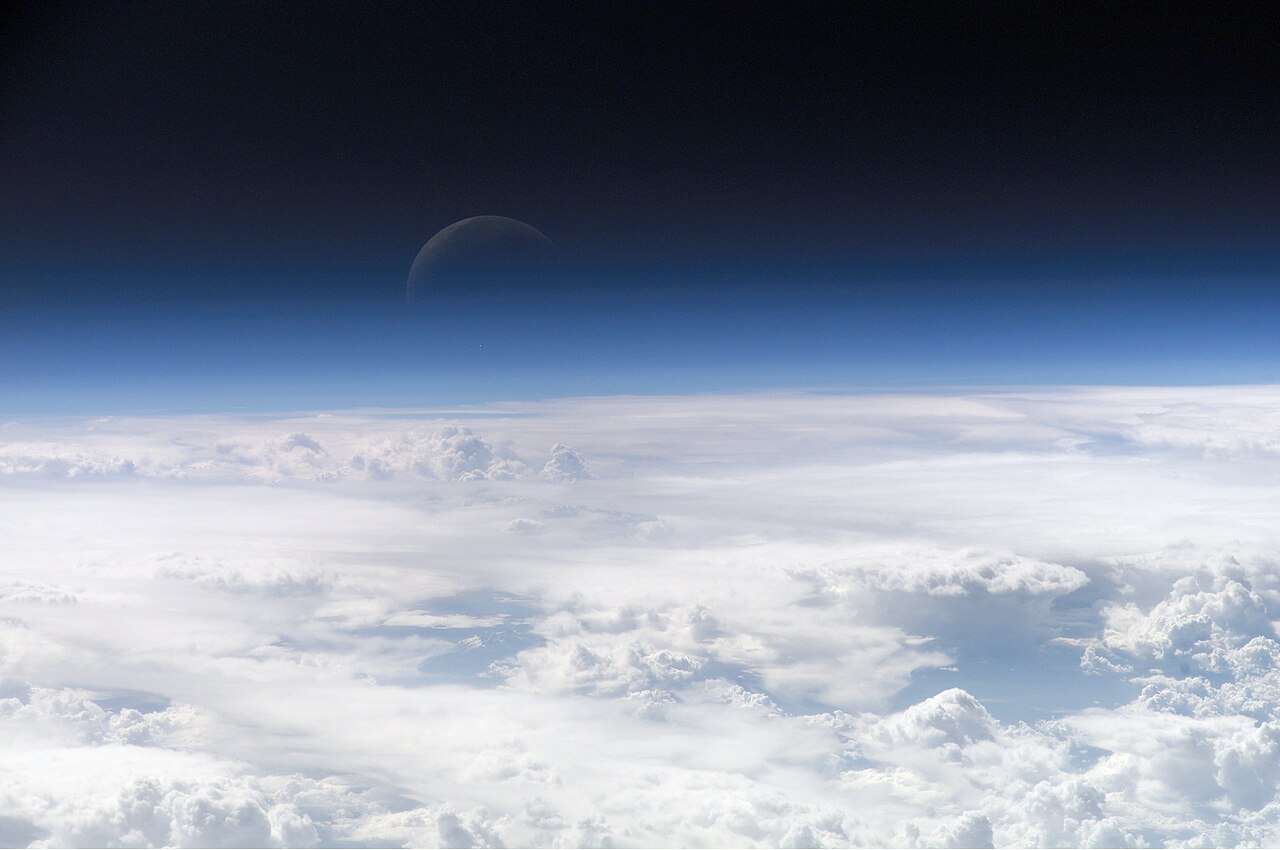
Atmosphere
Defining the Atmosphere
An atmosphere is defined as a layer of gases held to an astronomical object by its gravity. This definition applies to planets, moons, dwarf planets, and even stars. The origin of the term itself, from Greek 'atmós' (vapor) and 'sphaîra' (sphere), highlights its composition and shape.
A body's ability to retain an atmosphere is influenced by its gravitational pull and temperature; higher gravity and lower temperatures favor retention. The primordial epoch of a celestial body is critical for atmosphere acquisition, either through the accretion of nebular material or through the release of volatile compounds from its interior via outgassing. Subsequent chemical and photochemical interactions with the parent star can significantly alter atmospheric composition over geological timescales.
The solar wind poses a constant threat, stripping away lighter atmospheric gases, a process mitigated by a planetary magnetosphere and distance from the star.
Genesis of Atmospheres
The formation of an atmosphere is a multi-stage process deeply tied to the history of a celestial body. Initially, during its formation, a planet accretes gases from the protoplanetary disk. For terrestrial planets like Earth, significant atmospheric replenishment occurs through outgassing from the planet's mantle, driven by volcanic activity.
This releases gases such as water vapor, carbon dioxide, and nitrogen. Over time, interactions with the environment play a crucial role. Photochemical reactions, driven by stellar radiation, can break down molecules and create new ones.
Chemical reactions between the atmosphere and the planet's surface can alter atmospheric composition, for instance, by locking up carbon dioxide in rocks. The presence and evolution of life, as seen on Earth with the rise of oxygenic photosynthesis, can dramatically reshape an atmosphere, demonstrating a profound feedback loop between biology and atmospheric chemistry.
Atmospheric Significance
The atmosphere is arguably the most critical factor in determining a planet's habitability. It provides essential elements for life, most notably oxygen for respiration and carbon dioxide for photosynthesis. Beyond sustenance, it acts as a crucial shield, absorbing harmful high-energy radiation from space, particularly the Sun's ultraviolet rays, which can damage biological molecules.
The atmosphere also plays a pivotal role in regulating planetary temperature through the greenhouse effect, trapping heat and maintaining a range suitable for liquid water. Weather patterns, driven by atmospheric circulation and energy transfer, shape planetary surfaces and influence the distribution of resources. Furthermore, atmospheric pressure is essential for maintaining liquid water on the surface. The absence or extreme nature of an atmosphere, as seen on Mercury or Venus, renders a planet inhospitable.
A Cosmic Census
Our solar system showcases a diverse array of atmospheres. The gas giants-Jupiter, Saturn, Uranus, and Neptune-possess massive atmospheres dominated by hydrogen and helium, owing to their immense gravity and formation location far from the Sun. Terrestrial planets exhibit more varied compositions: Venus and Mars have dense atmospheres primarily of carbon dioxide, while Earth's nitrogen-oxygen atmosphere is unique.
Even some moons, like Saturn's Titan, boast substantial atmospheres, rich in nitrogen and methane. Beyond our solar system, the study of exoplanet atmospheres is a rapidly advancing field. Observations of exoplanets like HD 209458 b and Kepler-7b have revealed diverse atmospheric compositions and structures, offering insights into planetary formation and evolution across the galaxy.
Stellar atmospheres, the outer layers of stars, also exist, containing molecules in cooler stars.
Go deeper
Frequently Asked Questions
What is Earth's atmosphere?+
How does Earth keep its atmosphere?+
Where does the air in Earth's atmosphere come from?+
Why is Earth's atmosphere important for life?+
What happens if a planet has no atmosphere?+
Based on content from Wikipedia · Licensed under CC BY-SA 4.0