

Valais: The Land of High Peaks and Snowy Adventures!
Images

Inside of the church of Hérémence, Canton Valais, Switzerland




Geomorphological Significance
Valais occupies a unique and dominant geographical position within the Swiss Alps, essentially coextensive with the upper valley of the Rhône River. This valley serves as a critical corridor, separating the formidable Pennine Alps to the south from the Bernese Alps to the north. The scale of these mountain ranges is immense, with Valais hosting some of Switzerland's highest peaks, including Monte Rosa and the Finsteraarhorn.
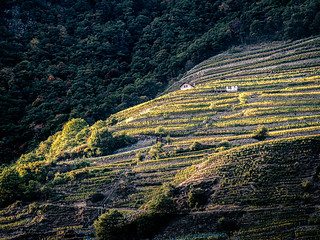
This dramatic topography profoundly influences the canton's climate and hydrology. While the high-altitude regions are characterized by extensive glaciation, heavy snowfall, and significant rainfall, leading to substantial runoff, the central Rhône valley experiences a rain shadow effect. This creates one of the driest microclimates in Switzerland, fostering a distinct ecosystem and enabling intensive viticulture.
The interplay between these extreme climatic conditions, driven by altitude and topography, is a defining characteristic of Valais, shaping its natural resources and human activities.
Linguistic and Cultural Mosaic
As one of Switzerland's three large southern Alpine cantons, Valais presents a fascinating cultural duality, being officially bilingual with French and German as its official languages. This linguistic division is not merely administrative but deeply rooted in the canton's historical development and geography. Traditionally, Valais is divided into Lower, Central, and Upper regions.
The Upper Valais, historically and predominantly German-speaking, contrasts with the Lower and Central Valais, which are French-speaking. This division reflects historical settlement patterns and the geographical barriers within the canton. The resistance of Valais to the Protestant Reformation, remaining faithful to Roman Catholicism, further solidified its distinct cultural identity within the Swiss Confederation.
This enduring cultural dichotomy contributes to the rich tapestry of traditions, dialects, and perspectives found within the canton.
Economic Pillars
Valais' economy is remarkably diversified, resting on several key pillars. Tourism is arguably its most visible industry, with world-renowned Alpine resorts such as Zermatt (home to the iconic Matterhorn), Saas Fee, Verbier, and Crans-Montana attracting millions of visitors annually for skiing, mountaineering, and other outdoor pursuits. The dramatic mountain scenery and extensive infrastructure support this thriving sector.
Complementing tourism is a significant wine industry. The dry, sunny climate of the central Rhône valley is ideal for cultivating grape varieties like Petite Arvine and Fendant, producing distinctive Swiss wines. Perhaps less visible to the average tourist but critically important to the nation is Valais' role as a major hydroelectricity producer.
The vast water resources generated by its high-altitude precipitation and glacial melt are harnessed through numerous dams and power stations, supplying a substantial portion of Switzerland's clean energy needs. This combination of natural beauty, agricultural potential, and energy resources makes Valais a vital economic contributor to Switzerland.
Historical Integration and Infrastructure Development
Valais' journey to becoming a full canton within the Swiss Confederation was a gradual process. It first became an associate member in 1529 and later a republic under the prince-bishop of Sion in 1628, maintaining its Catholic identity. It finally entered the Confederation as a full canton in 1815.
For much of its history, its mountainous terrain presented significant challenges to connectivity. The development of modern transportation infrastructure was transformative. The construction of the Simplon Railway, completed in 1878, was a monumental engineering feat that connected the canton more directly with the urban centers of the Swiss Plateau.
This was further enhanced by the opening of the Lötschberg Railway in 1913, significantly improving access and facilitating economic exchange. These railways not only boosted tourism and trade but also integrated Valais more fully into the national fabric, overcoming the historical isolation imposed by its formidable Alpine geography.
Go deeper
Based on content from Wikipedia · Licensed under CC BY-SA 4.0