

Cities That Get Too Hot!
Images

Chicago Tribune: Chicago seeking 'smart-city' tech solutions to improve city life


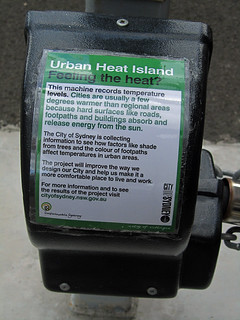


The Genesis of Urban Thermal Anomalies
Urban areas globally exhibit a distinct thermal anomaly known as the Urban Heat Island (UHI) effect, where ambient temperatures are measurably higher than in adjacent rural landscapes. This phenomenon is primarily driven by the alteration of natural land surfaces. The replacement of vegetation with impervious materials like asphalt and concrete, which possess lower albedo and higher thermal capacity, leads to increased absorption and retention of solar radiation.
Furthermore, the complex geometry of urban canyons, with tall buildings, can trap heat through multiple reflections and reduced sky view factor, limiting radiative cooling. Waste heat from human activities, including transportation, industrial processes, and building energy consumption (heating, ventilation, and air conditioning), acts as a significant secondary contributor, particularly in densely populated areas. While cities occupy a small fraction of the Earth's land surface, their concentrated human populations generate substantial localized heat.
Cascading Environmental and Societal Repercussions
The UHI effect triggers a cascade of environmental and societal consequences. Elevated urban temperatures can lengthen the growing season for some plants, but they also exacerbate air quality issues. Higher temperatures accelerate the chemical reactions that produce ground-level ozone and other harmful pollutants, leading to increased respiratory problems and reduced public health. Water quality is also compromised as warmer surface runoff flows into local streams and rivers, stressing aquatic ecosystems by reducing dissolved oxygen levels and increasing metabolic rates of aquatic organisms.
Moreover, the amplified heat intensifies heat waves, posing significant risks to vulnerable populations, increasing energy demand for cooling, and potentially impacting urban infrastructure. The UHI effect is not uniform; its intensity and characteristics are strongly influenced by the city's geographic location, background climate, and urban morphology.
Mitigation Strategies
Addressing the UHI effect requires a multi-faceted approach integrating urban planning, architectural design, and green infrastructure. Increasing vegetation cover through parks, street trees, and green roofs is a cornerstone strategy. Trees provide shade, reducing surface temperatures, and engage in evapotranspiration, a natural cooling process.
Green roofs, essentially living vegetation layers on buildings, insulate structures and reduce the urban heat load. The use of high-albedo materials, such as cool pavements and reflective roofing membranes, can significantly reduce solar energy absorption. These materials reflect more sunlight and absorb less heat, lowering surface and ambient temperatures.
Designing cities with ventilation corridors, which are open spaces that facilitate wind flow, can help dissipate built-up heat. Passive radiative cooling technologies, which emit thermal radiation into space, are also being explored. These strategies aim to re-engineer urban environments to be more resilient to heat and improve the quality of life for their inhabitants.
The Interplay with Climate Change and Future Urbanism
While climate change does not cause the UHI effect, it acts as a powerful amplifier. Global warming leads to more frequent and intense heat waves, which in turn magnify the UHI effect in cities. This creates a feedback loop where cities become even hotter, increasing their vulnerability to extreme heat events.
Compact and dense urban development, often promoted for efficiency, can also exacerbate the UHI effect by increasing the concentration of heat-retaining surfaces and reducing airflow. Future urban planning must therefore consider the synergistic impacts of UHI and climate change. This involves not only implementing mitigation strategies but also adapting urban systems to withstand higher temperatures and more extreme weather.
Understanding the intricate dynamics of the UHI effect is crucial for developing sustainable and livable cities in a warming world.
See also
Frequently Asked Questions
Why do cities feel warmer than the countryside?+
How does the extra heat in cities affect people and nature?+
What can cities do to keep cool?+
What is an urban heat island?+
Does global warming make the city heat worse?+
Based on content from Wikipedia · Licensed under CC BY-SA 4.0