

United States Virgin Islands
Images

United States Virgin Islands Police Department



Geographic Identity
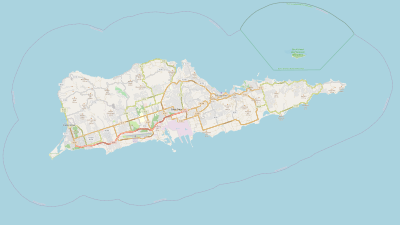
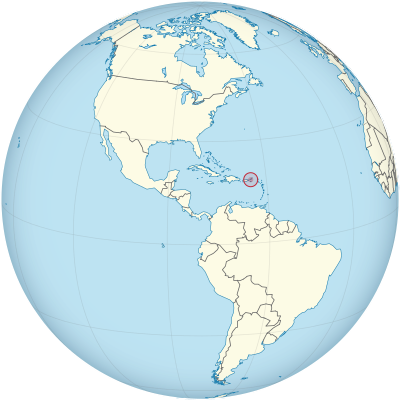
The United States Virgin Islands (USVI) are strategically located in the northeastern Caribbean Sea, forming part of the Virgin Islands archipelago, which is itself a segment of the Lesser Antilles. Geographically, they lie east of Puerto Rico and the main island of Hispaniola, and west of the British Virgin Islands.
The territory comprises three major islands Saint Croix, Saint John, and Saint Thomas, along with approximately 50 smaller islands and cays. The total land area of 133.73 square miles is characterized by a tropical marine climate, with average temperatures ranging from the mid-70s to the mid-80s Fahrenheit year-round, moderated by trade winds. Saint Croix, the largest and southernmost island, is geologically distinct from the mountainous, coral-limestone islands of Saint Thomas and Saint John.
This varied topography supports diverse ecosystems, from dry scrublands on some cays to lush rainforests on the higher elevations of Saint John, making it a biodiversity hotspot within the region. The capital, Charlotte Amalie on Saint Thomas, is a historic port city and a major hub for commerce and tourism.
A Shifting Sovereignty
The historical narrative of the U.S. Virgin Islands is one of shifting colonial powers. Initially inhabited by indigenous peoples, the islands later became a Danish colony, known as the Danish West Indies, from 1754.
This period saw the development of plantation economies, heavily reliant on enslaved labor, followed by emancipation and subsequent economic challenges. In 1917, during World War I, the United States purchased the islands from Denmark for $25 million, a sum equivalent to over $614 million in 2024. This acquisition was partly strategic, aimed at preventing German naval access to the Panama Canal.
The treaty also involved the U.S. recognizing Danish sovereignty over Greenland. Since the purchase, the USVI have been an organized, unincorporated territory of the United States, governed under the Revised Organic Act of the Virgin Islands of 1954. This status means the islands have a degree of self-governance but are ultimately under U.S. federal authority, and residents are U.S. citizens who cannot vote in presidential elections.
The territory has convened five constitutional conventions, reflecting ongoing efforts to define its political relationship with the U.S.
Cultural Mosaic
The culture of the U.S. Virgin Islands is a vibrant fusion, shaped by centuries of interaction between indigenous peoples, European colonizers, and enslaved Africans, along with later waves of immigration. This rich heritage is expressed through a unique blend of languages, music, cuisine, and traditions.
While English is the official language, Virgin Islands Creole English, with its distinct vocabulary and grammar, is widely spoken and serves as a vital marker of cultural identity. Music plays a central role, with genres like quelbe, calypso, and reggae deeply embedded in the social fabric. Festivals, such as the annual Crucian Christmas Festival and the St.
Thomas Carnival, are major cultural events featuring parades, elaborate costumes, and lively music, showcasing the islands' celebratory spirit. The cuisine reflects the diverse influences, featuring fresh seafood, tropical fruits, and dishes like 'fricassee' and 'fungee'. The concept of 'island time' also permeates daily life, emphasizing a more relaxed pace and strong community bonds, though this can sometimes contrast with the demands of a globalized economy.
Economic Pillars
The economy of the U.S. Virgin Islands is overwhelmingly dominated by tourism and related services. The islands' pristine beaches, clear turquoise waters, and historical sites attract millions of visitors annually, primarily from cruise ships and air travel.
This sector provides a significant portion of the territory's employment and revenue. Key economic activities include hospitality (hotels, resorts), food and beverage services, retail, and transportation. Beyond tourism, the islands have historically had other economic drivers, including rum distilling and some light manufacturing.
However, the reliance on tourism makes the economy vulnerable to external factors such as global economic downturns, natural disasters (like hurricanes), and shifts in travel trends. Efforts are ongoing to diversify the economy, exploring sectors like renewable energy, information technology, and niche agriculture, to build greater economic resilience and sustainability for the territory.
Governance and Representation
As an unincorporated territory of the United States, the U.S. Virgin Islands operates under a unique governmental structure defined by federal law and local statutes. The Revised Organic Act of 1954 serves as the islands' constitution, outlining the framework for their government.
The territory has an elected governor and lieutenant governor, who head the executive branch. The legislative branch is a unicameral body, the Legislature of the Virgin Islands, composed of 15 senators elected from the three main islands. The judicial branch includes local courts, with final appeals often going to the U.S. federal court system.
While U.S. citizens residing in the territory have the rights and responsibilities of citizenship, they cannot vote in U.S. presidential elections and have only a non-voting delegate in the U.S. House of Representatives. This limited representation is a recurring point of discussion regarding the territory's political status and its relationship with the federal government, with ongoing debates about potential statehood, enhanced autonomy, or other forms of self-determination.
See also
Frequently Asked Questions
What are the main islands of the U.S. Virgin Islands?+
Why did the United States buy the Virgin Islands from Denmark?+
What is the capital city of the U.S. Virgin Islands?+
What languages do people speak in the U.S. Virgin Islands?+
What kinds of music and festivals are popular in the U.S. Virgin Islands?+
Based on content from Wikipedia · Licensed under CC BY-SA 4.0