

Turbine
Images
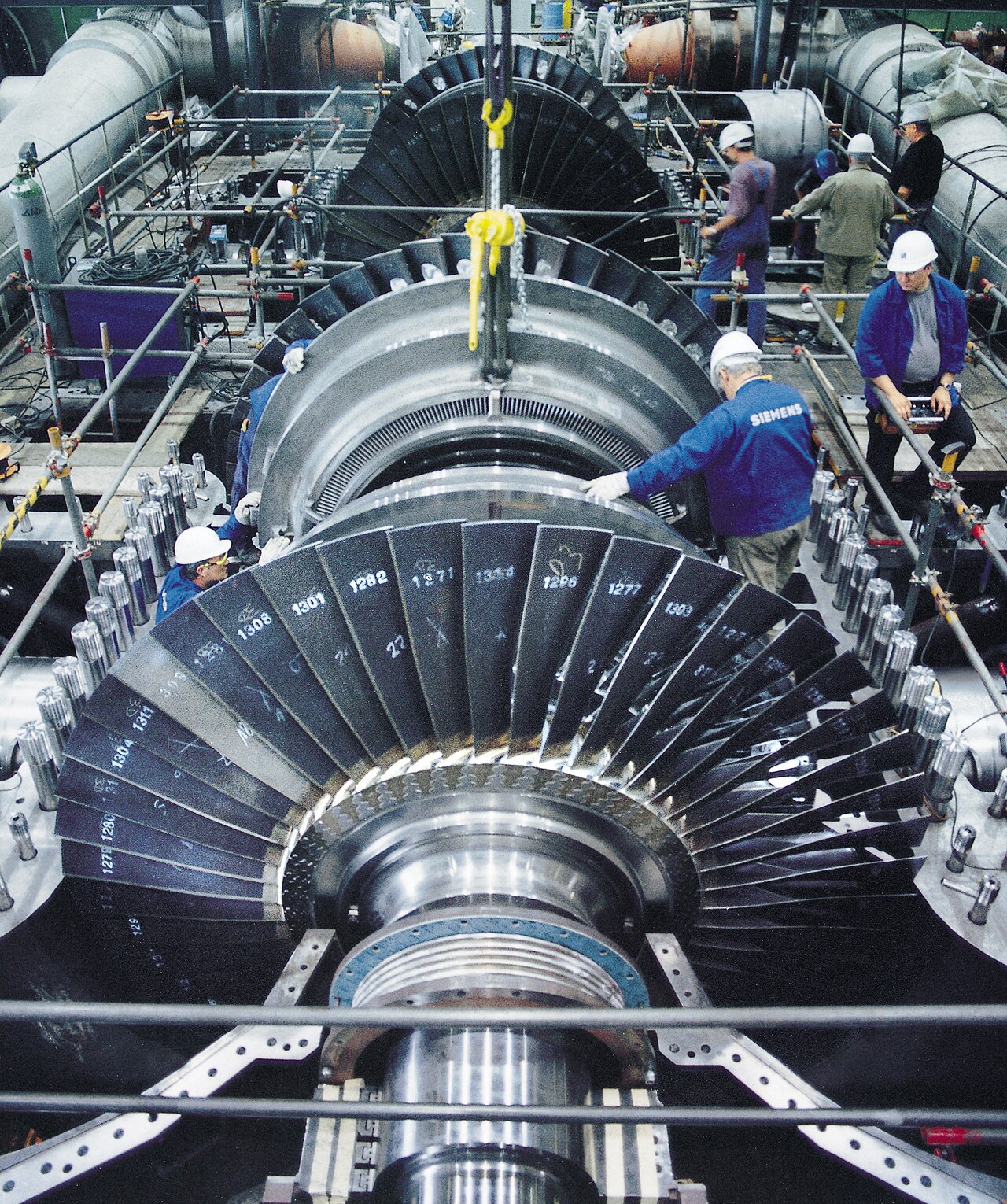
Turbine


The Thermodynamics and Mechanics of Turbine Operation
At its core, a turbine is a thermodynamic or hydrodynamic machine designed to extract energy from a moving fluid and convert it into mechanical work. The fundamental principle relies on the transfer of momentum from the fluid to the turbine's rotating blades. In steam and gas turbines, this involves thermodynamic cycles where a working fluid (steam or combustion gases) expands through a series of stages, each containing stationary nozzles and rotating blades.
The expansion causes a pressure drop and an increase in fluid velocity, which then impinges on the blades, imparting torque to the rotor. This process is governed by principles of thermodynamics, particularly the laws of energy conservation and entropy, and fluid dynamics, including Bernoulli's principle and momentum transfer. The efficiency of a turbine is paramount, influenced by blade design, flow rates, pressure differentials, and operating temperatures.
Modern turbines are highly optimized to maximize energy extraction while minimizing losses due to friction and turbulence, often achieving efficiencies exceeding 90% in optimal conditions. The rotational energy produced is then typically used to drive an electrical generator.
A Historical Trajectory
The lineage of turbines stretches back millennia, with early examples like the aeolipile, a steam-powered device described by Hero of Alexandria in the 1st century AD, showcasing the principle of reaction-driven rotation. More practical applications emerged with water wheels, used extensively in ancient and medieval times for mechanical power. The true revolution, however, began in the late 19th century.
While Leonardo da Vinci sketched designs for a steam turbine, it was Charles Parsons' invention of the compound reaction steam turbine in 1884 that proved transformative. His turbine was significantly more efficient and capable of higher speeds than previous designs, enabling it to directly drive dynamos for electricity generation. This innovation was pivotal for the Second Industrial Revolution, powering factories and ships.
Subsequent developments included the invention of the impulse turbine and advancements in materials science and aerodynamics, leading to the highly efficient gas turbines and wind turbines that are critical today.
The Indispensable Role of Turbines in Global Energy Infrastructure
Turbines are the backbone of global energy production. In thermal power plants, steam turbines, driven by heat generated from burning fossil fuels, nuclear reactions, or concentrated solar energy, produce the vast majority of the world's electricity. Gas turbines, often used in conjunction with steam turbines in combined-cycle power plants, offer rapid startup times and high efficiency, making them crucial for meeting peak electricity demand. Hydropower turbines, utilizing the potential energy of water stored in reservoirs or flowing in rivers, provide a significant source of renewable electricity worldwide.
Wind turbines, arguably the most visible form of renewable energy generation, harness kinetic energy from atmospheric winds, with advancements in blade technology and turbine design leading to increasingly large and powerful installations. Geothermal turbines tap into the Earth's internal heat, and tidal turbines are emerging technologies for harnessing ocean currents. Their versatility and scalability make them indispensable for both conventional and renewable energy strategies.
Turbine Technologies
The term 'turbine' encompasses a wide array of machines, each tailored to specific energy sources and applications. Key types include:
- Steam Turbines: Used in thermal and nuclear power plants, they convert the thermal energy of steam into mechanical energy. They can be impulse or reaction types, with multiple stages for efficiency.
- Gas Turbines: Employed in power generation and jet engines, they burn fuel to produce hot, high-pressure gases that expand through turbine blades. They are known for their high power-to-weight ratio.
- Water Turbines: Found in hydroelectric dams, these include Francis, Pelton, and Kaplan turbines, designed to efficiently capture the energy of flowing or falling water.
- Wind Turbines: Convert the kinetic energy of wind into electricity. Modern designs feature large, aerodynamically optimized blades, often in horizontal-axis configurations.
- Other Types: Include tidal turbines (harnessing ocean currents), geothermal turbines (using steam from the Earth's heat), and turbochargers (using exhaust gases to increase engine power).
Future Frontiers
The future of turbine technology is deeply intertwined with the global pursuit of sustainable energy solutions. Research and development are focused on enhancing efficiency, reducing environmental impact, and integrating turbines into a more resilient energy grid. For wind turbines, this means developing larger, lighter, and more durable blades, exploring offshore floating platforms for deeper waters, and improving grid integration to manage intermittency. In thermal power, advancements aim at higher operating temperatures for increased efficiency and the use of hydrogen or other carbon-neutral fuels in gas turbines.
Hydropower is exploring smaller, modular turbines and pumped-storage solutions. Emerging technologies like airborne wind energy systems and advanced tidal and wave energy converters represent exciting frontiers. Furthermore, the lifecycle impact of turbines, from manufacturing to decommissioning, is gaining attention, driving innovation in materials science and recycling processes to ensure a truly sustainable energy future powered by these remarkable machines.
Go deeper
Frequently Asked Questions
What is a turbine?+
How does a turbine make electricity?+
Why are turbines important for power?+
Where do turbines get their energy from?+
How efficient are turbines?+
Based on content from Wikipedia · Licensed under CC BY-SA 4.0