

Triglyceride
Images

Triglyceride halogen addition


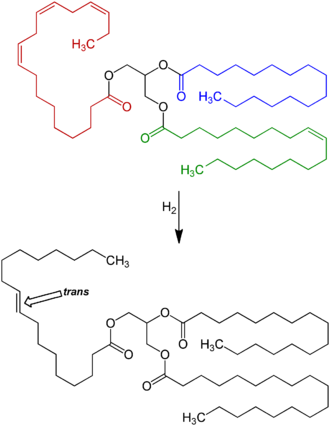


Biochemical Foundation
Triglycerides, scientifically known as triacylglycerols (TAGs), are esters formed from one molecule of glycerol and three molecules of fatty acids. Glycerol is a simple alcohol with three hydroxyl groups, each of which can form an ester linkage with the carboxyl group of a fatty acid. The nature of these fatty acids dictates the properties of the triglyceride.
Fatty acids can be saturated, meaning they have no carbon-carbon double bonds, or unsaturated, containing one or more double bonds. The length of the hydrocarbon chain and the degree of unsaturation significantly influence the physical state (solid or liquid) and metabolic fate of the triglyceride. These molecules are the principal constituents of body fat in vertebrates and vegetable fat, serving as a highly efficient form of energy storage due to their reduced state, yielding more energy per gram upon oxidation than carbohydrates or proteins.
Metabolic Pathways
Triglycerides are synthesized primarily in the liver and adipose tissue. In the liver, they are assembled from glycerol-3-phosphate and activated fatty acids (fatty acyl-CoA). Excess dietary carbohydrates and proteins can be converted into triglycerides through de novo lipogenesis, a process that contributes to fat accumulation.
Once synthesized, triglycerides are packaged into very-low-density lipoproteins (VLDL) by the liver and released into the bloodstream to be transported to peripheral tissues, such as muscle and adipose tissue, for storage or immediate energy use. In adipose tissue, triglycerides are stored within lipid droplets. Their mobilization, or breakdown, occurs via lipolysis, an enzyme-catalyzed process stimulated by hormones like glucagon and epinephrine, releasing free fatty acids and glycerol into the circulation to fuel cellular respiration when energy is needed.
Physiological Roles Beyond Energy Storage
The importance of triglycerides extends beyond their role as an energy reserve. They are crucial for thermal insulation, helping to maintain core body temperature by trapping heat within the subcutaneous fat layer. Triglycerides also provide mechanical protection, cushioning vital organs from physical shock.
Furthermore, they are a major component of the skin's natural oils (sebum), which act as a protective barrier, preventing excessive water loss and providing lubrication. In the bloodstream, triglycerides are transported in lipoproteins and are essential for the delivery of energy substrates to tissues. Imbalances in blood triglyceride levels are associated with various health conditions, highlighting their critical physiological function.
Structural Diversity and Health Implications
The classification of triglycerides into saturated and unsaturated types is fundamental. Saturated triglycerides, derived from saturated fatty acids, are typically solid at room temperature due to the linear structure of their fatty acid chains, allowing for tight packing. Examples include the fats found in animal products and some tropical oils like coconut oil.
Unsaturated triglycerides, containing fatty acids with one or more double bonds, are generally liquid at room temperature because the kinks in the fatty acid chains prevent close packing. These include monounsaturated (one double bond) and polyunsaturated (multiple double bonds) fats found in vegetable oils like olive oil and fish oil. While essential for health, elevated levels of blood triglycerides, particularly those rich in saturated fats, are a significant risk factor for cardiovascular disease, contributing to atherosclerosis.
Modern Relevance
Triglycerides are central to nutritional science and public health recommendations. Dietary guidelines often focus on moderating saturated fat intake and emphasizing unsaturated fats for cardiovascular health. The study of triglycerides also has implications in biotechnology and industry.
For instance, triglycerides from plant and animal sources are the raw materials for biodiesel production, a renewable energy source. They are also used in the manufacturing of soaps, cosmetics, and pharmaceuticals. Understanding the structure-function relationship of different triglycerides allows for targeted applications, from formulating specialized dietary supplements to developing advanced biomaterials. Research continues to explore the complex interplay between dietary triglycerides, gut microbiota, and metabolic health.
Go deeper
Frequently Asked Questions
What is a triglyceride?+
How do triglycerides give us energy?+
Where are triglycerides made in our body?+
Why do we need triglycerides for warmth?+
What happens when we need energy and triglycerides break down?+
Based on content from Wikipedia · Licensed under CC BY-SA 4.0