

Toyota Prius
Images

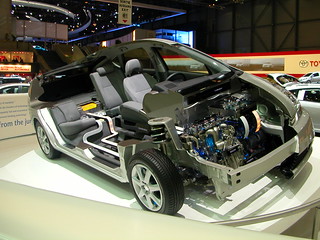
2019 Toyota Prius (ZVW50R) 1.8 Hybrid liftback (2018-12-19) 01




The Genesis of a Green Revolution
The Toyota Prius emerged not merely as a new car model, but as a deliberate response to anticipated environmental challenges and evolving consumer demands for the 21st century. Toyota's commitment to developing a sustainable vehicle led to its inception in 1997, marking a monumental achievement as the world's first mass-produced hybrid automobile. This pioneering status was crucial; it moved hybrid technology from experimental labs into the hands of everyday consumers, fundamentally altering perceptions of what a car could be.
Initially offered as a subcompact saloon, its design was later refined into the more practical and aerodynamically efficient five-door liftback body style that has become its hallmark since 2003. The Prius's global rollout, beginning in 2000, was a strategic effort to introduce this groundbreaking technology to a worldwide audience, laying the groundwork for future advancements in eco-friendly transportation and challenging the dominance of traditional internal combustion engines.
Synergistic Powertrain
At the heart of the Prius's enduring success is its sophisticated hybrid synergy drive system. This intricate engineering feat seamlessly integrates a fuel-efficient internal combustion engine with a powerful electric motor, creating a powertrain that optimizes performance and minimizes environmental impact. The system intelligently manages power delivery, allowing the vehicle to operate solely on electric power at lower speeds, resulting in silent operation and zero tailpipe emissions.
During acceleration or when higher power is required, the gasoline engine engages, often working in tandem with the electric motor for enhanced efficiency and responsiveness. A key innovation is its regenerative braking system, which converts the kinetic energy typically lost as heat during deceleration and braking into electrical energy, feeding it back to the battery. This continuous cycle of energy capture and reuse significantly boosts fuel economy and reduces the overall carbon footprint, making the Prius a benchmark for hybrid technology.
Evolution and Diversification
Toyota's strategic vision extended beyond a single model, recognizing the potential to broaden the appeal and application of hybrid technology. This led to the expansion of the Prius family, offering distinct variants to meet diverse consumer needs. In 2011, the Prius v was introduced as a larger MPV, providing increased passenger and cargo capacity without compromising the core hybrid benefits, making it a practical choice for families.
Concurrently, the Prius c debuted as a subcompact hatchback, targeting urban dwellers and those prioritizing maximum fuel efficiency in a smaller, more agile package. Further pushing the envelope, Toyota launched the Prius Plug-in Hybrid in 2012, enabling drivers to recharge the battery from an external power source, thereby extending electric-only driving range significantly. The subsequent release of the second-generation Prius Prime in 2016 solidified Toyota's commitment to plug-in hybrid technology, offering even greater electric range and efficiency, and demonstrating a clear pathway towards electrification.
A Catalyst for Change
The Toyota Prius holds a profound and lasting significance in the automotive landscape, acting as a catalyst for the widespread adoption of hybrid and, subsequently, electric vehicle technologies. Its status as the first mass-produced hybrid democratized advanced eco-friendly transportation, proving its viability and desirability to a global market. By January 2017, cumulative global sales of the Prius family had surpassed an impressive 6.1 million units, accounting for a substantial 61% of all Toyota's hybrid sales since 1997.
This remarkable market penetration not only solidified Toyota's leadership in hybrid technology but also exerted considerable influence on other automotive manufacturers, compelling them to accelerate their own research and development in sustainable powertrains. The Prius has consistently demonstrated that environmental responsibility and automotive innovation can coexist, driving forward the industry's transition towards a more sustainable future and inspiring a generation of eco-conscious consumers.
Go deeper
Frequently Asked Questions
What is the Toyota Prius?+
Why does the Prius use both a gasoline engine and an electric motor?+
How does the Prius get energy when it brakes?+
When did the Prius first come out?+
Are there different kinds of Prius cars?+
Based on content from Wikipedia · Licensed under CC BY-SA 4.0