

Tokyo International Airport
Images

JALways B747-436SR (JA8187) departing Tokyo International Airport






Geostrategic Location and Environmental Considerations
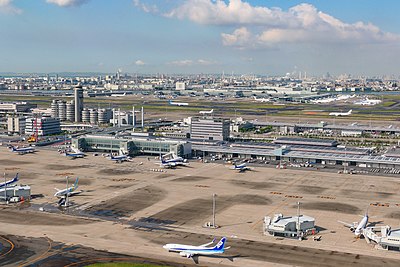
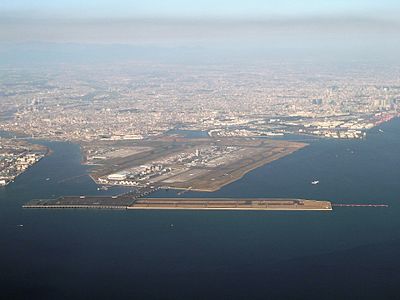
Tokyo International Airport (HND), colloquially known as Haneda Airport, occupies a critical geostrategic position within the Tokyo metropolitan area. Situated on approximately 600 hectares of reclaimed land in Ota Ward, its coastal location on Tokyo Bay offers extensive space for expansion, a necessity for a major international aviation hub. This proximity to the sea, however, also presents environmental challenges, including susceptibility to storm surges and the need for ongoing land management.
The airport's flat topography is ideal for aviation infrastructure, featuring multiple runways designed for high-capacity operations. The climate is temperate, characterized by distinct seasons, but fog, particularly during cooler months, can significantly impact visibility and necessitate reliance on advanced navigation systems. Haneda's integration into the urban fabric of Tokyo is remarkable, serving not only as a transit point but also as a significant economic and logistical node within one of the world's largest megacities.
Its development reflects a careful balance between urban planning, environmental engineering, and the demands of global air travel.
Evolution from Municipal Airfield to Global Hub
The genesis of Haneda Airport dates back to August 12, 1931, when it was established as Tokyo's first municipal airport. Its initial capacity was modest, designed for the nascent aviation industry of the era. The airport's trajectory shifted dramatically during the mid-20th century.
During World War II, it was militarized and operated by the Imperial Japanese Army Air Force. Post-war, it was occupied by the Allied forces, serving as a vital transport hub. Upon its return to Japanese administration, Haneda underwent significant expansion and modernization.
A pivotal moment in its history was the opening of Narita International Airport (NRT) in 1978, which was intended to absorb the majority of Tokyo's international traffic, leading Haneda to primarily serve domestic routes. However, increasing air traffic demand and the strategic advantages of its urban location prompted a re-evaluation. In recent decades, Haneda has experienced a significant revival in international operations, bolstered by infrastructure upgrades and a strategic push to reclaim its status as a major global gateway, often competing with Narita for international routes.
Socio-Cultural Dynamics and Operational Workforce
Haneda Airport is a microcosm of global interaction, facilitating the movement of millions of people annually. The operational workforce comprises a diverse array of professionals, from highly trained pilots and air traffic controllers to ground crew, security personnel, and customer service agents. The airport's multilingual environment, with Japanese and English being predominant, reflects its role as a bridge between Japan and the world.
It serves as a critical point of cultural exchange, where Japanese traditions meet international customs. The efficiency and safety of Haneda are paramount, demanding rigorous training, advanced technology, and seamless coordination among various stakeholders, including airlines, airport authorities, and government agencies. The constant influx and outflow of passengers contribute to a dynamic atmosphere, underscoring the airport's significance not just as a transport facility but as a vibrant social space.
Economic Engine and Logistical Linchpin
Economically, Haneda Airport is a powerhouse. It functions as a critical logistical linchpin for both domestic and international commerce, supporting the flow of high-value goods, perishable items, and time-sensitive cargo. Its extensive domestic network strengthens inter-regional economic ties within Japan, while its growing international capacity facilitates global trade and investment.
The airport is a major source of employment, generating jobs across a spectrum of industries, including aviation services, hospitality, retail, and transportation. Furthermore, its accessibility and efficiency contribute to Tokyo's attractiveness as a global business destination, supporting tourism and foreign direct investment. The continuous investment in infrastructure and operational improvements at Haneda underscores its strategic importance to Japan's national economy and its position in the global aviation market.
Governance, Regulation, and Future Trajectories
The governance of Tokyo International Airport is a complex interplay of public and private entities. While originally a government-operated facility, its management and operations have evolved through various models, including concessions and public-private partnerships. The Ministry of Land, Infrastructure, Transport and Tourism (MLIT) plays a significant regulatory role, overseeing safety standards, operational efficiency, and development plans.
Airlines operating at Haneda are subject to stringent regulations regarding flight schedules, noise abatement, and passenger services. The airport's future development is guided by national aviation policies aimed at enhancing capacity, improving passenger experience, and maintaining competitiveness in the global aviation landscape. Challenges include managing noise pollution for surrounding communities, adapting to evolving environmental regulations, and leveraging technological advancements, such as AI and automation, to optimize operations and passenger flow.
Haneda's ongoing evolution reflects the dynamic nature of modern aviation and its integral role in national and international connectivity.
See also
Frequently Asked Questions
What is Tokyo International Airport also called?+
Where is Haneda Airport located?+
When did Haneda Airport first open?+
Why did Haneda Airport start handling more international flights again?+
How many people travel through Haneda each year?+
Based on content from Wikipedia · Licensed under CC BY-SA 4.0