

The Scream: A Painting That Shouts!
Images
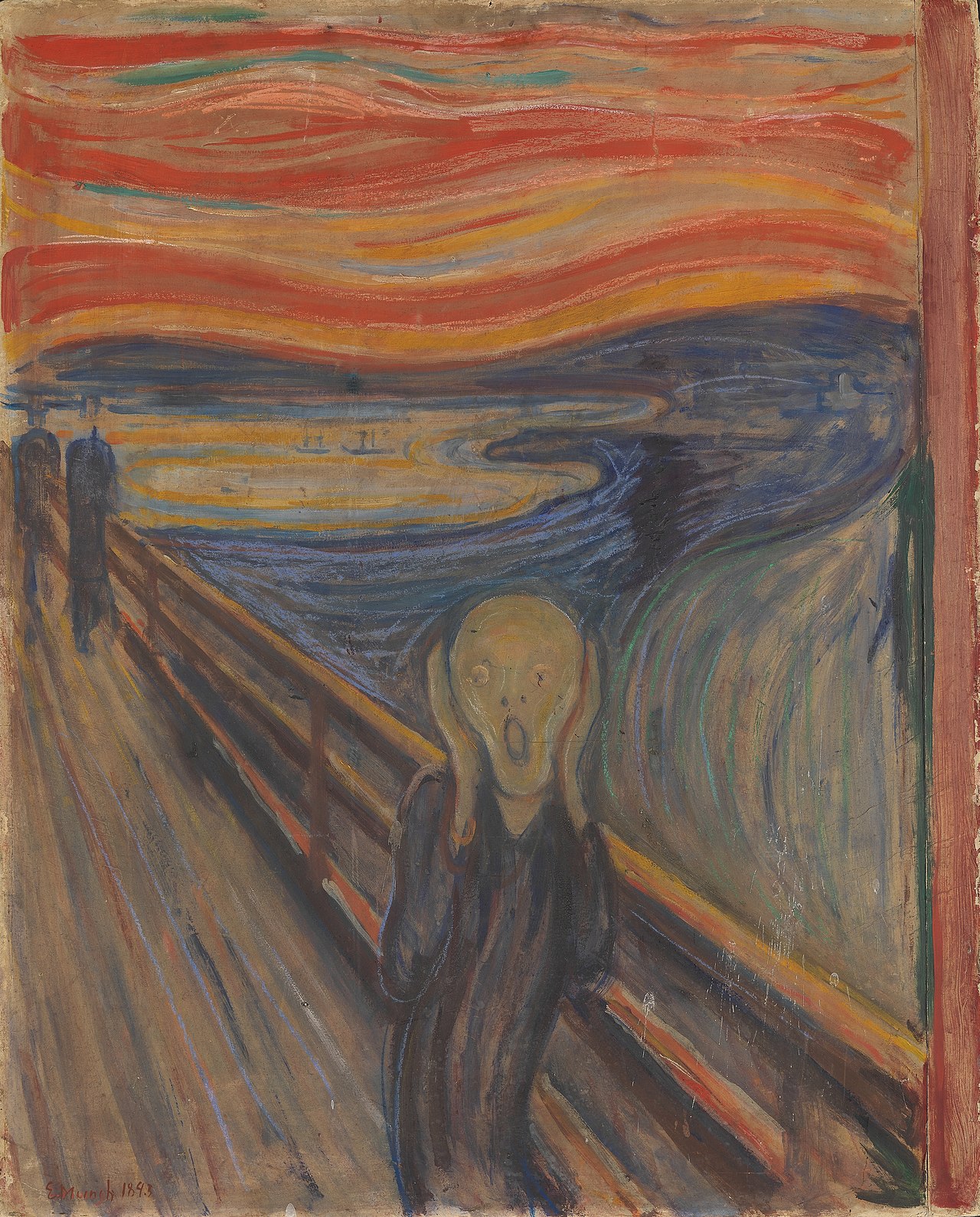
The Scream
Visualizing the Unseen
Edvard Munch's 'The Scream' is not merely a depiction of a person in distress; it is a profound visual manifestation of internal psychological states, a hallmark of the Expressionist movement. Created in 1893, the most famous version exemplifies Munch's desire to move beyond objective reality and convey subjective emotional experience. The distorted figure, with its skull-like visage and hands pressed against its ears, is a universal symbol of alienation and existential dread.
The swirling, blood-red sky and the unnerving perspective of the bridge create a disorienting atmosphere, reflecting the artist's own reported experience of feeling a 'great scream in nature' during a sunset walk. This powerful evocation of inner turmoil, rather than external observation, is what gives 'The Scream' its enduring impact and its place as a pivotal work in modern art history.
Munch's Artistic Evolution and 'The Scream' Series
The creation of 'The Scream' was not a singular event but part of Edvard Munch's broader artistic exploration of themes like love, death, anxiety, and melancholy, often referred to as his 'Frieze of Life.' Munch produced at least four significant versions of 'The Scream' between 1893 and 1910. The earliest, a tempera and crayon on cardboard from 1893, is housed in the National Gallery of Norway. Another 1893 version, using pastel on cardboard, is in the Munch Museum.
He also created a lithograph stone, from which numerous prints were made, allowing the image to be disseminated more widely. The final painted version, also in tempera, dates from around 1910. This iterative process highlights Munch's persistent engagement with the subject matter, refining his visual language to capture the essence of his overwhelming emotional experience.
Cultural Resonance and Enduring Symbolism
'The Scream' has transcended the art world to become a global cultural phenomenon, symbolizing modern anxiety, fear, and psychological distress. Its raw emotional power resonates across different cultures and generations, making it instantly recognizable. The painting's depiction of overwhelming internal states speaks to the human condition in an increasingly complex and often stressful world.
This universal appeal has led to its ubiquitous presence in popular culture, from film and television to advertising and political commentary, often used to signify panic, shock, or extreme discomfort. Its status as an icon is a testament to Munch's ability to translate a deeply personal experience into a universally understood visual language.
The Dramatic Trajectory of a Priceless Artwork
The immense value and fame of 'The Scream' have unfortunately made it a target for audacious art thieves. The painting has been stolen on two separate occasions, underscoring its status as a highly coveted masterpiece. In 1994, the National Gallery of Norway's version was stolen, only to be recovered a few months later.
A more brazen theft occurred in 2004 when masked robbers stormed the Munch Museum and took both 'The Scream' and Munch's 'Madonna.' Both artworks were eventually recovered, albeit with some damage that required restoration. These incidents, while unfortunate, have only added to the legend and public awareness surrounding this extraordinary work of art.
Go deeper
Frequently Asked Questions
What does the painting "The Scream" look like?+
Who painted "The Scream" and when?+
Why does the figure in the painting have a skull‑like face and hands on ears?+
How many versions of "The Scream" are there and where can we see them?+
Has "The Scream" ever been stolen?+
Based on content from Wikipedia · Licensed under CC BY-SA 4.0