

The Land of Far-Beyond
Images
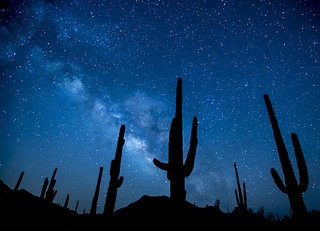
February #conservationlands15 Social Media Takeover: Top 15 Places on National Conservation Lands for Night Sky Viewing


Mapping the Psyche
'The Land of Far-Beyond,' created by Paul Klee in 1927, transcends its status as a mere painting to become a profound conceptual cartography of the human imagination. Klee, a pivotal figure in 20th-century art and an influential teacher at the Bauhaus, envisioned this 'land' not as a geographical location but as a symbolic representation of the inner world of creativity. The artwork’s meticulously structured composition, characterized by geometric forms, architectural elements, and a deliberate arrangement of pathways, suggests a deliberate construction of thought and feeling.
It invites viewers to embark on an intellectual journey, navigating a landscape where logic and fantasy intertwine. Klee’s use of color is not merely decorative; it functions as an emotional and structural component, guiding the viewer through the complex topography of the mind. This piece is a testament to Klee’s belief that art could serve as a vehicle for exploring the subconscious and articulating abstract ideas, positioning 'Far-Beyond' as a visual manifesto for the boundless potential of human creativity and a precursor to later explorations in conceptual art.
The Bauhaus Influence and Klee's Artistic Philosophy
Paul Klee's tenure at the Bauhaus school profoundly influenced his artistic philosophy, and 'The Land of Far-Beyond' (1927) stands as a prime example of this synthesis. The Bauhaus championed a holistic approach to art, design, and architecture, emphasizing functionality, form, and the integration of various artistic disciplines. Klee, with his background in music and his deep theoretical understanding of color and form, brought a unique perspective to the school.
In 'Far-Beyond,' we see the Bauhaus principles of geometric order and structural clarity applied to an imaginary realm. The painting’s architectural motifs and systematic arrangement reflect Klee’s interest in the underlying principles of creation, much like an architect designs a building. His teaching at the Bauhaus involved rigorous exploration of color theory and form, which is vividly manifest in this work.
The artwork is not just a depiction of a place but an exploration of the very process of artistic creation, a visual dialogue between the artist's inner vision and the tangible medium of paint, embodying the Bauhaus ideal of uniting art and craft.
The Enduring Resonance of an Imaginary Realm
The significance of 'The Land of Far-Beyond' lies in its enduring capacity to provoke contemplation on the nature of art, reality, and the human condition. Paul Klee’s creation challenges viewers to question the boundaries between the external world and the internal landscape of the mind. It underscores art's vital role in fostering empathy, critical thinking, and imaginative exploration.
In an era increasingly dominated by digital interfaces and curated realities, Klee’s abstract vision serves as a powerful reminder of the raw, unmediated power of human creativity. The artwork’s structured yet fantastical elements encourage a deeper engagement with visual language, prompting us to consider how artists construct meaning and evoke emotion. 'Far-Beyond' is more than an aesthetic object; it is an invitation to participate in the ongoing dialogue between artist and audience, highlighting art’s unique ability to offer new perspectives and enrich our understanding of ourselves and the world around us.
Its conceptual depth continues to inspire artists and thinkers alike.
Deconstructing the Visual Syntax of Far-Beyond
To fully appreciate 'The Land of Far-Beyond,' one must deconstruct its sophisticated visual syntax. Paul Klee employs a deliberate palette, often utilizing contrasting hues to create dynamic tension and guide the viewer's gaze through the composition. The geometric precision of the forms-squares, rectangles, and lines-establishes an underlying order, reminiscent of architectural blueprints or musical notation, reflecting Klee’s synesthetic tendencies.
These elements are juxtaposed with more fluid or ambiguous shapes, creating a dialectic between structure and spontaneity. The spatial organization is equally complex; Klee masterfully manipulates perspective, sometimes flattening the pictorial plane and at other times suggesting depth through overlapping forms and subtle shifts in color intensity. This deliberate ambiguity contributes to the dreamlike, otherworldly quality of the depicted land.
The interplay of light and shadow, even in an abstract context, adds a layer of dynamism, preventing the composition from becoming static. Understanding these formal elements is crucial to grasping Klee’s conceptual intent and the rich symbolic language embedded within the artwork.
See also
Frequently Asked Questions
What is "The Land of Far-Beyond"?+
Who painted it and when?+
Why is it called a "land" if it isn’t a real place?+
How does the painting use colors and shapes?+
What does the painting teach us about imagination and art?+
Based on content from Wikipedia · Licensed under CC BY-SA 4.0