

The Hague: A Royal City by the Sea!
Images
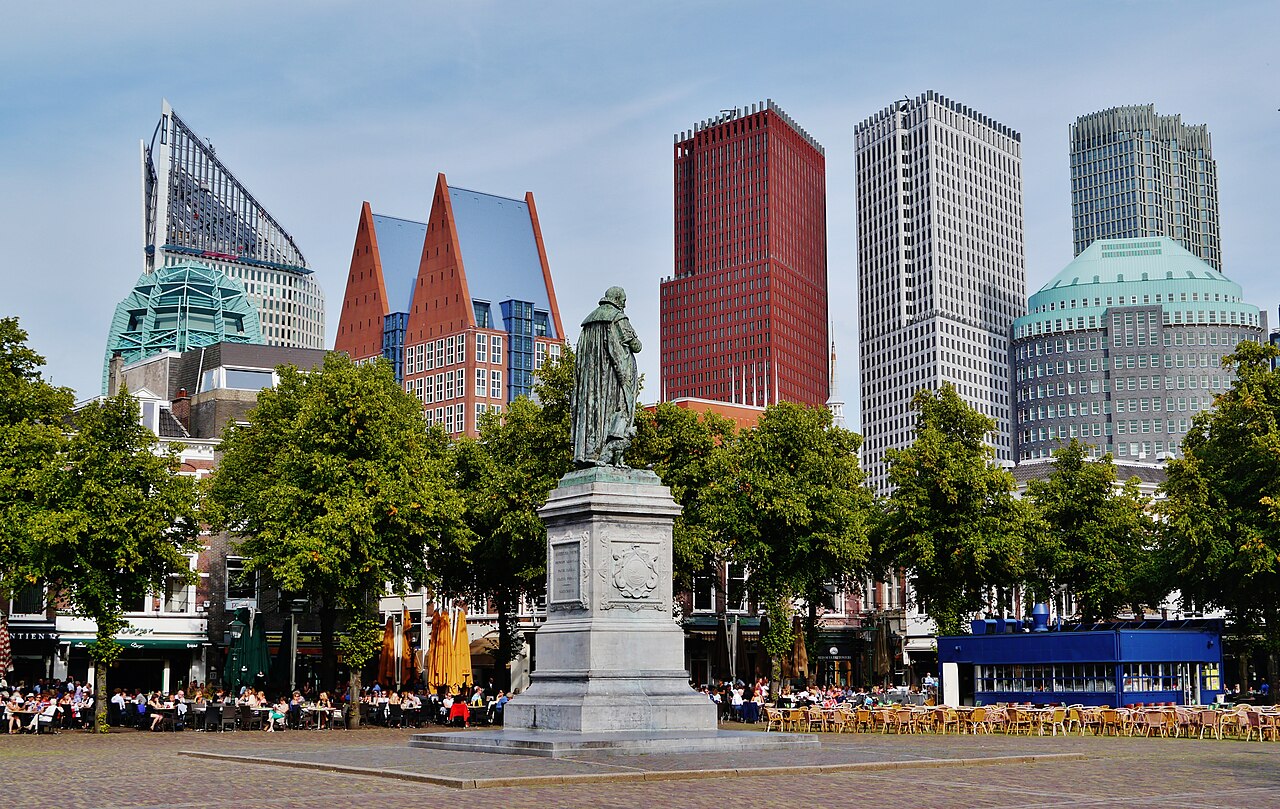
The Hague
The Dual Identity
The Hague, known locally as 'Den Haag,' presents a fascinating duality in its role within the Netherlands. While Amsterdam holds the constitutional title of capital, The Hague functions as the de facto administrative and royal center. It is the permanent residence of the Dutch monarch, King Willem-Alexander, and the location of the royal working palace, Huis ten Bosch, and the parliamentary complex, the Binnenhof.
This historic site, originating from a 13th-century hunting lodge, has evolved into the nerve center of Dutch political life, housing the chambers of the States General (parliament) and various ministries. The city's infrastructure and atmosphere are deeply shaped by its governmental functions, fostering a unique environment where national policy is debated and enacted amidst a backdrop of historical grandeur and modern efficiency. The presence of numerous embassies further solidifies its status as a diplomatic hub.
The Hague's Ascendancy as a Global Legal Nexus
The Hague's global renown extends far beyond its national governmental role, primarily due to its designation as the 'International City of Peace and Justice.' This title is earned through its hosting of critical international judicial bodies. The Peace Palace, an iconic symbol of international law, is home to the International Court of Justice (ICJ), the principal judicial organ of the United Nations, tasked with adjudicating disputes between states. Adjacent to it is the International Criminal Court (ICC), established to prosecute individuals for genocide, war crimes, crimes against humanity, and the crime of aggression when national courts are unable or unwilling to do so.
The presence of these institutions, alongside numerous other international organizations and tribunals, positions The Hague as a vital forum for conflict resolution, international cooperation, and the advancement of global justice, making it a unique city on the world stage.
A Tapestry of History
The historical trajectory of The Hague is one of remarkable transformation. Its origins trace back to the mid-13th century with the construction of a castle by Count William II of Holland on a sandy ridge. This strategic location facilitated its growth into the administrative center for the Counts of Holland and later, the Stadtholders of the Dutch Republic.
The city witnessed pivotal moments in Dutch history, including the formation of the Union of Utrecht in 1579, a foundational act for the Dutch state. Over centuries, The Hague evolved from a modest administrative town into a sophisticated urban center, characterized by its elegant architecture, including grand 18th and 19th-century mansions and palaces. This historical depth is palpable as one navigates its streets, offering a tangible connection to the nation's past while coexisting with contemporary urban development and a vibrant cultural scene.
Cultural Richness and Coastal Allure
The Hague offers a rich cultural landscape that complements its political and legal significance. The Mauritshuis museum houses an unparalleled collection of Dutch Golden Age masterpieces, including Vermeer's 'Girl with a Pearl Earring' and Rembrandt's 'The Anatomy Lesson of Dr. Nicolaes Tulp.' The Gemeentemuseum Den Haag (now Kunstmuseum Den Haag) is renowned for its extensive collection of Piet Mondrian's works, showcasing the evolution of abstract art.
Complementing its cultural offerings is the proximity to the North Sea coast, particularly the popular seaside resort of Scheveningen. This district provides a recreational counterpoint to the city's serious endeavors, featuring a wide sandy beach, a vibrant pier, and numerous restaurants and entertainment venues. The Hague thus provides a multifaceted experience, blending profound historical and legal importance with artistic excellence and coastal leisure.
Go deeper
Based on content from Wikipedia · Licensed under CC BY-SA 4.0