

Piet Mondrian: The Master of Straight Lines!
Images
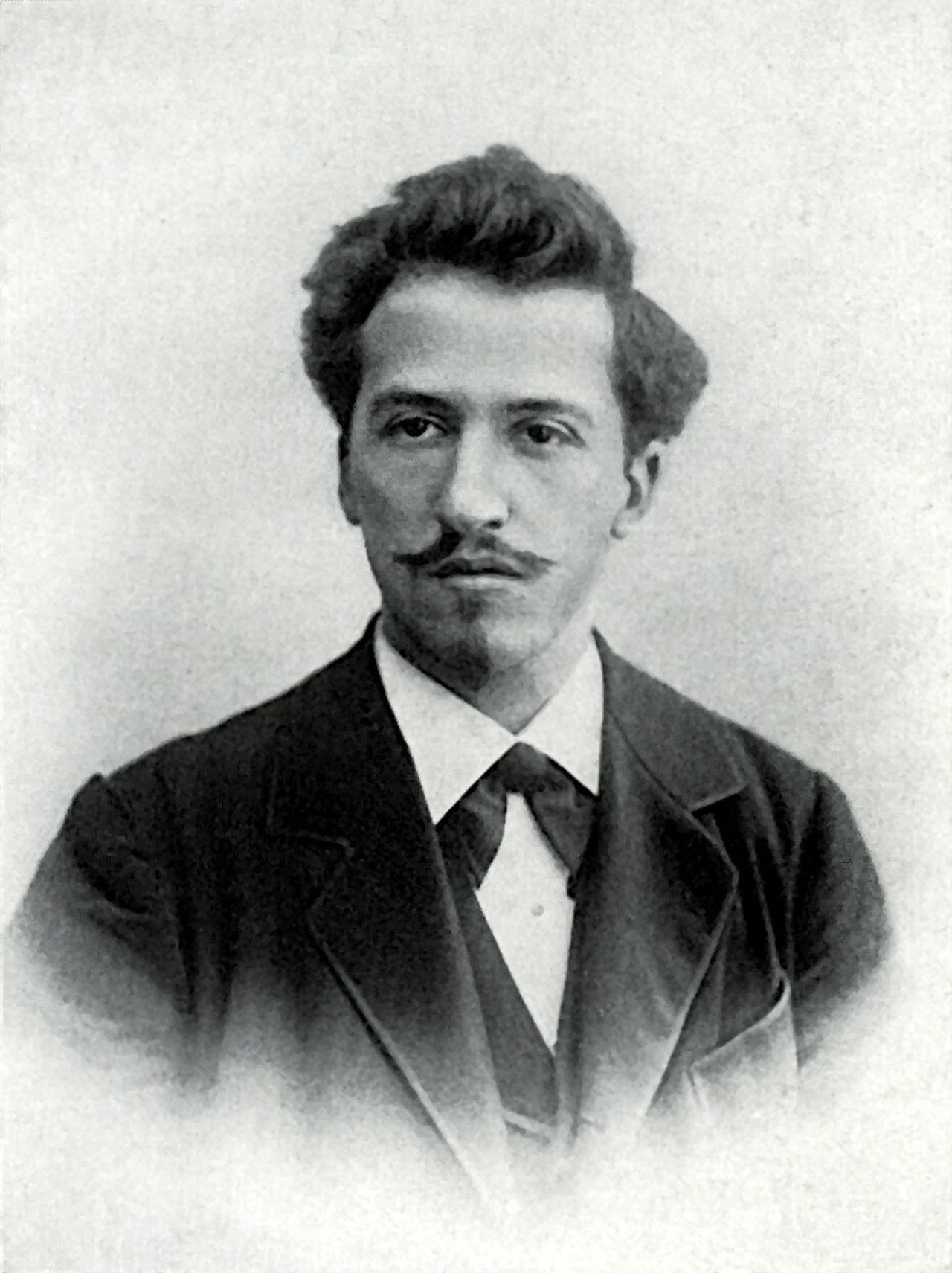
Piet Mondrian
The Spiritual Quest
Piet Mondrian's artistic trajectory was deeply intertwined with his spiritual and philosophical explorations. Initially a figurative painter, his exposure to Theosophy, a mystical philosophy, profoundly influenced his belief in underlying universal truths and spiritual realities. He sought to move beyond the superficial appearance of the material world to express a more profound, spiritual essence.
This quest led him to progressively abstract his style, stripping away representational elements to reveal fundamental structures. His early landscapes, while beautiful, were seen by him as too tied to the 'accidental' nature of reality. He theorized that by reducing his artistic vocabulary to its most basic components-horizontal and vertical lines, and primary colors-he could create art that resonated with a universal, spiritual harmony, transcending individual perception and cultural specificity.
This was not merely an aesthetic choice but a deeply philosophical one, aiming to connect the viewer to a higher, more ordered reality.
De Stijl and Neoplasticism
Mondrian's collaboration with Theo van Doesburg in founding the De Stijl movement was instrumental in disseminating his ideas. De Stijl aimed to create a new, harmonious visual language that could rebuild society after the devastation of World War I. Mondrian's specific contribution to this movement was Neoplasticism, a rigorous system of abstract art.
He meticulously defined its principles: the exclusive use of horizontal and vertical lines to represent opposing forces (male/female, spiritual/material) in dynamic equilibrium, and the restriction to primary colors (red, yellow, blue) and non-colors (black, white, gray). He believed this limited palette and geometric structure eliminated subjective emotion and accidental form, leading to a pure, objective aesthetic. His iconic grid compositions, such as 'Composition with Red, Blue and Yellow,' are not merely decorative but are visual manifestos of this philosophy, embodying balance, order, and universal beauty.
The Evolution of the Grid
Mondrian's signature grid style evolved over decades. Early abstract works still retained some subtle curves or diagonal lines, remnants of his figurative past or explorations into Cubism. However, his move to Paris in 1912 and subsequent engagement with the avant-garde solidified his commitment to pure horizontals and verticals.
His paintings from the 1920s and 1930s showcase this mature style, with increasingly bold and expansive grids. The black lines became more prominent, and the color planes, while limited to primaries, were often applied with a subtle variation in tone or texture, creating a dynamic interplay of color and form. Even in his final works, like 'Broadway Boogie Woogie,' created in New York, where he introduced more vibrant, fragmented color blocks, the underlying grid structure remained a fundamental organizing principle, demonstrating the enduring power of his Neoplastic vision.
Mondrian's Enduring Impact
Piet Mondrian's influence on 20th and 21st-century art, design, and architecture is immeasurable. He is considered one of the most important abstract artists of all time. His radical simplification of form and color provided a foundational language for numerous subsequent art movements, including Abstract Expressionism and Minimalism.
Beyond painting, his aesthetic principles permeated fields like graphic design, fashion (famously inspiring Yves Saint Laurent's 1965 'Mondrian dress'), and architecture, where his emphasis on clean lines and functionalism resonated deeply. Art historian Stephen Bayley aptly described Mondrian as 'totemic' for Modernism, symbolizing its ideals of order, rationality, and universalism. His work continues to be studied, admired, and reinterpreted, proving the lasting power of his vision for a harmonious and ordered world.
Go deeper
Frequently Asked Questions
Who was Piet Mondrian?+
Why did Mondrian use only straight lines and primary colors?+
What is De Stijl and how did Mondrian help it?+
What is Neoplasticism?+
What are some famous paintings by Mondrian?+
Based on content from Wikipedia · Licensed under CC BY-SA 4.0