

Tennessine
Images
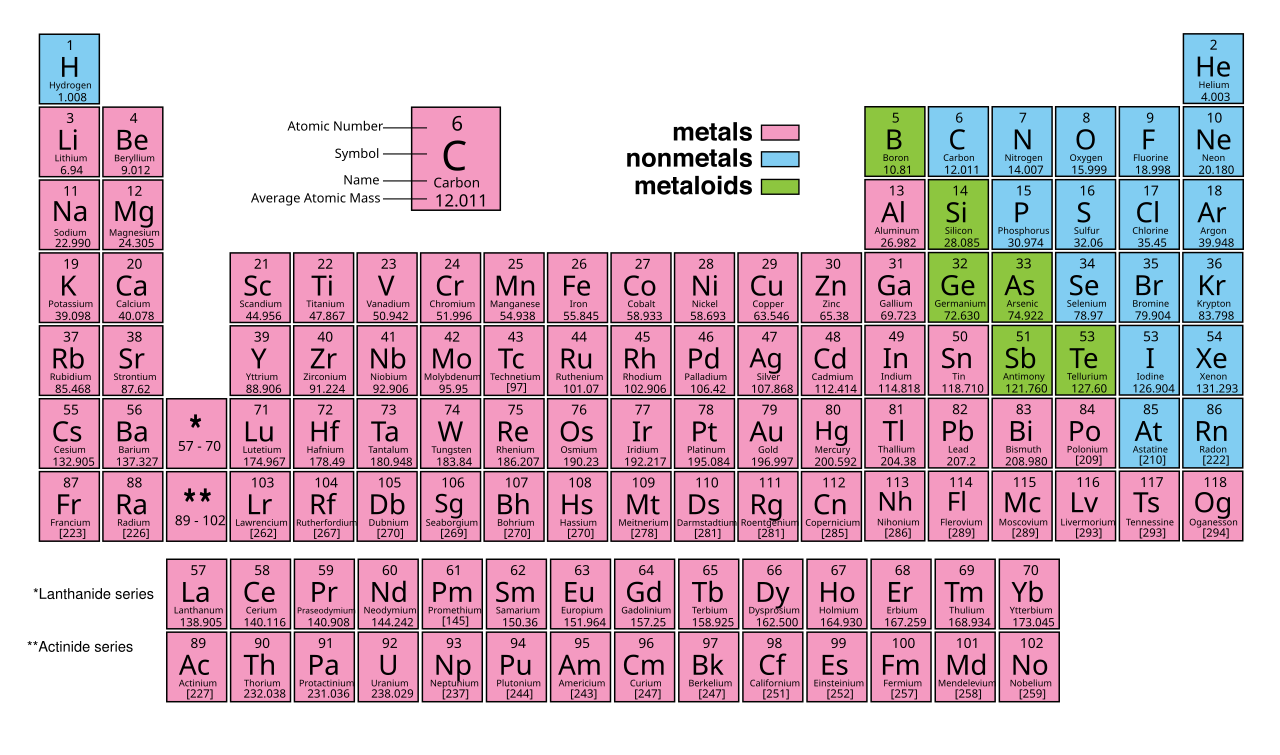
Periodic Table Of Elements


The Genesis of Tennessine
Tennessine (Ts), element 117, represents a significant milestone in the exploration of superheavy elements. Its official discovery was announced in April 2010 by a joint Russian-American research team, making it the most recently confirmed element. The synthesis of tennessine involved bombarding berkelium-249 targets with calcium-48 ions, a process requiring immense precision and sophisticated equipment.
The element's name honors the U.S. state of Tennessee, acknowledging the contributions of research institutions located there, such as Oak Ridge National Laboratory. This collaborative effort underscores the global nature of cutting-edge scientific discovery, where nations pool resources and expertise to push the boundaries of knowledge. The confirmation process was rigorous, involving independent replication of experiments by different international teams, culminating in IUPAC's official recognition and naming in 2016.
The Ephemeral Nature of Tennessine
A defining characteristic of tennessine is its extreme instability. The synthesized isotopes decay rapidly, with half-lives measured in mere milliseconds (tens to hundreds of milliseconds). This fleeting existence poses a formidable challenge for experimental characterization.
However, the very existence of such a heavy element, even if short-lived, provides crucial data points for nuclear physicists. Tennessine's position in the periodic table, as the penultimate element of the 7th period, places it in a region where scientists theorize the existence of an 'island of stability.' This concept posits that certain configurations of protons and neutrons in superheavy nuclei could lead to significantly longer half-lives compared to their neighbors.
Studying tennessine's decay patterns and properties, however limited, offers empirical evidence to refine models predicting this elusive island.
Relativistic Effects and Deviations from Periodic Trends
In the realm of superheavy elements, relativistic effects become profoundly significant. As atomic nuclei become more massive and their positive charge increases, the inner electrons orbit at speeds approaching the speed of light. This relativistic contraction of electron orbitals alters chemical properties in ways not observed in lighter elements.
For tennessine, predicted to reside in Group 17 (the halogens), these effects suggest a departure from typical halogen behavior. While lighter halogens are nonmetals that readily form anions and exhibit high oxidation states, tennessine is expected to be a volatile metal. It may not form stable anions and its oxidation states might be limited.
Nevertheless, some fundamental properties like melting point, boiling point, and first ionization energy are still anticipated to follow general periodic trends, albeit with significant modifications due to relativistic influences.
Significance in Fundamental Science and Future Research
The creation and study of tennessine are not merely academic exercises; they are fundamental to our understanding of nuclear structure and the limits of matter. Each new superheavy element synthesized provides vital data for refining nuclear models, helping scientists comprehend the forces that bind atomic nuclei. The pursuit of elements beyond the current periodic table drives innovation in experimental techniques, particle accelerators, and detection methods.
Furthermore, understanding the 'island of stability' could have profound implications, potentially leading to the discovery of elements with properties that could revolutionize fields like materials science or energy, though such applications remain highly speculative given the current challenges of production and stability. Tennessine serves as a crucial stepping stone, illuminating the path toward potentially more stable, yet undiscovered, superheavy elements.
Interdisciplinary Connections and Broader Implications
The study of tennessine bridges nuclear physics, chemistry, and even astrophysics. Understanding the conditions under which superheavy elements are formed, both in laboratories and potentially in cosmic events like neutron star mergers, deepens our knowledge of nucleosynthesis – the process by which elements are created. The challenges in synthesizing and detecting tennessine highlight the intricate interplay between nuclear forces and electromagnetic interactions, governed by quantum mechanics and relativity.
Its predicted metallic and volatile nature, deviating from its lighter halogen counterparts, serves as a powerful case study for relativistic quantum chemistry. This interdisciplinary approach is essential for building a comprehensive picture of the fundamental constituents of the universe and the laws that govern them, pushing the frontiers of scientific inquiry.
Go deeper
Frequently Asked Questions
What is tennessine?+
How was tennessine discovered?+
Why is tennessine so unstable?+
Where does tennessine fit in the periodic table?+
What makes tennessine different from other halogens?+
Based on content from Wikipedia · Licensed under CC BY-SA 4.0