

Temple Mount
Images
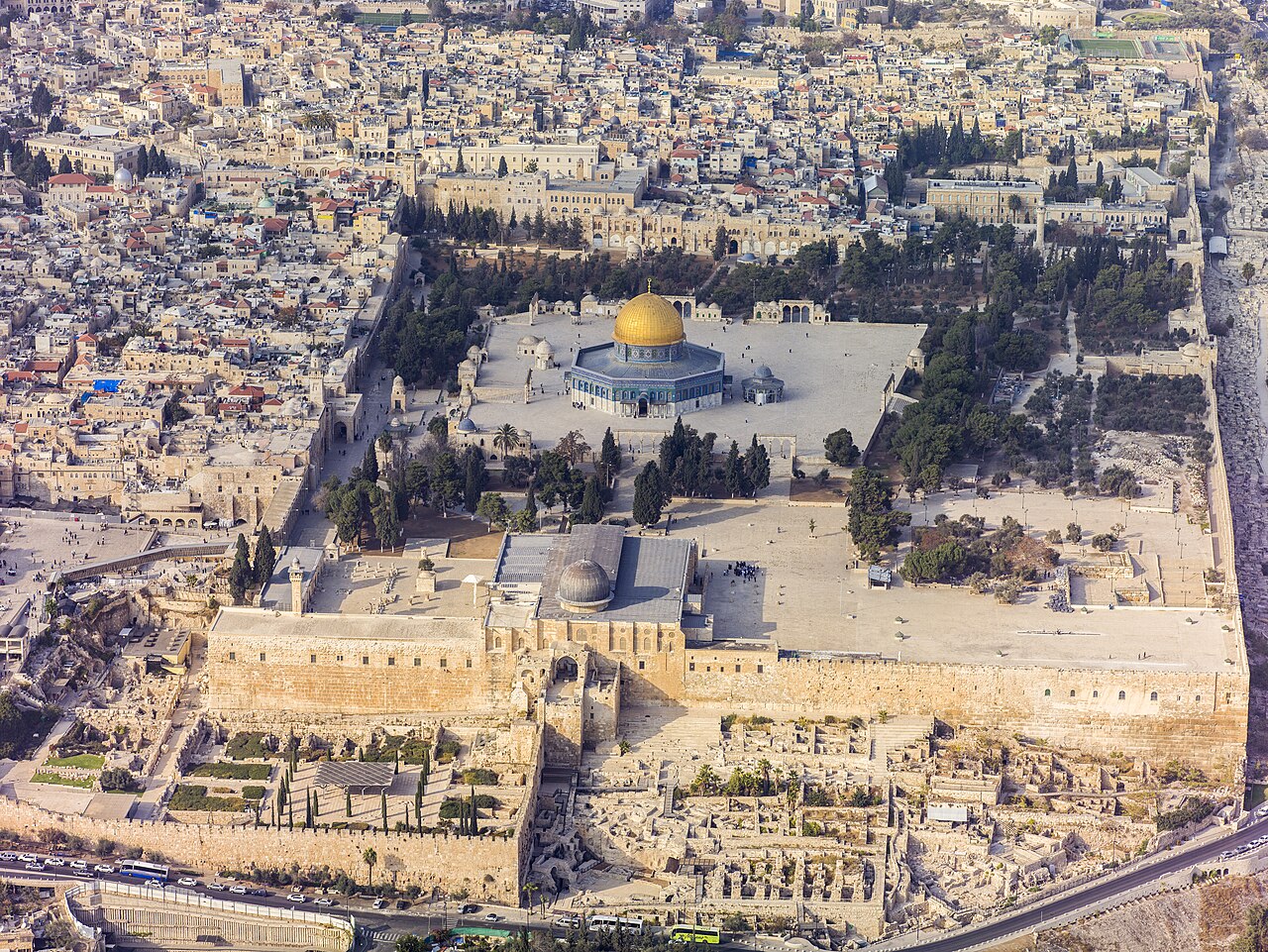
Temple Mount
The Foundation of Sacred Geography
The Temple Mount, known to Muslims as Haram al-Sharif, is a raised plateau in the Old City of Jerusalem that occupies a unique and profoundly significant position in religious history. For Judaism, it is the holiest site, believed to be the location of the First and Second Temples, the epicenter of divine presence and the focus of ancient Israelite worship. The destruction of these Temples marks pivotal moments in Jewish history, shaping diaspora narratives and aspirations for return.
In Islam, it is the third holiest site, intrinsically linked to the miraculous Night Journey (Isra and Mi'raj) of the Prophet Muhammad, from which he is believed to have ascended to heaven. This association imbues the site with immense spiritual weight. Christianity also recognizes its importance, as Jesus would have frequented the Temple complex, and it features prominently in biblical accounts. This layered sanctity makes the Temple Mount a unique geographical and spiritual nexus, drawing adherents from three major global religions and establishing it as a cornerstone of sacred geography.
Chronicles of Construction and Conquest
The historical narrative of the Temple Mount is a tapestry woven with threads of devotion, destruction, and reconstruction. The First Temple, commissioned by King Solomon, was established around the 10th century BCE, serving as the religious and national heart of ancient Israel. Its destruction by the Babylonians in 587/586 BCE led to the Babylonian exile.
The Second Temple was rebuilt after the return from exile, later expanded and lavishly renovated by Herod the Great in the 1st century BCE. This magnificent structure was ultimately destroyed by the Romans in 70 CE during the First Jewish-Roman War, an event that profoundly altered Jewish history. Following Roman rule, the site came under Byzantine, then early Islamic control.
The Umayyad Caliphate constructed the iconic Dome of the Rock in the late 7th century CE, a masterpiece of early Islamic architecture, and later the Al-Aqsa Mosque was built. Subsequent centuries saw periods of Crusader occupation, Mamluk rule, Ottoman administration, and modern Israeli control, each leaving their architectural and historical imprint on this contested landscape.
The Enduring Significance and Contested Claims
The Temple Mount's significance transcends its religious importance; it is a potent symbol of national and cultural identity, making it a focal point of ongoing geopolitical tension. For Jewish people, it represents an unbroken spiritual connection to their ancestral homeland and the ultimate site of future redemption. The desire to pray openly at the site, or even to rebuild a Third Temple, is a deeply held aspiration for some.
For Palestinians and the broader Muslim world, Haram al-Sharif is a vital religious and cultural heritage site, intrinsically linked to Islamic identity and history in Jerusalem, a city central to Palestinian national aspirations. The political status of Jerusalem and the Temple Mount is one of the most intractable issues in the Israeli-Palestinian conflict. International bodies like UNESCO recognize its universal value, designating it a World Heritage site, yet its administration and access remain subjects of intense debate and negotiation, reflecting its status as a place where divine claims and earthly power intersect.
Contemporary Realities and Archaeological Puzzles
In the present day, the Temple Mount is managed by the Jordanian Waqf, which oversees religious affairs, while Israel's police force is responsible for security and external access. This arrangement, established after the 1967 Six-Day War, attempts to balance religious sensitivities with security concerns. Non-Muslims can visit the site during specific hours, but are generally prohibited from praying there, a policy designed to maintain the status quo and prevent religious provocation.
The site is also a subject of ongoing archaeological interest, though extensive excavations are limited due to religious sensitivities and political complexities. Archaeological findings, often controversial, continue to shed light on the site's layered history, from ancient Israelite periods to Islamic eras. The ongoing challenge is to preserve this irreplaceable heritage while navigating the profound religious and political sensitivities that define the Temple Mount's unique place in the world.
Go deeper
Based on content from Wikipedia · Licensed under CC BY-SA 4.0