

Tarantulas: The Big, Hairy Spiders!
Images

Tarantula


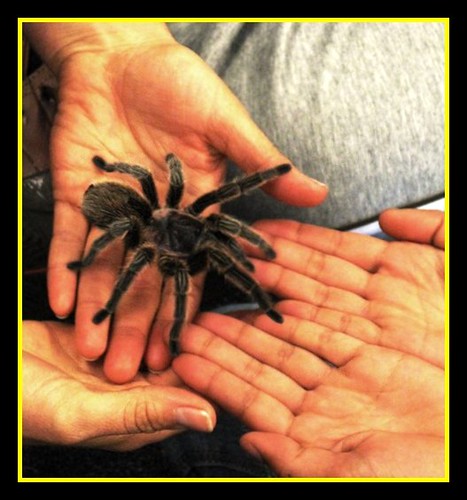

Morphology and Sensory Acuity
Tarantulas, belonging to the family Theraphosidae, are characterized by their robust build and dense covering of setae, or sensory hairs. These specialized hairs are crucial for their survival, functioning as mechanoreceptors to detect minute vibrations in the air and substrate, allowing them to sense approaching prey or potential threats from a considerable distance. Some setae also possess chemosensory capabilities, aiding in taste and smell.
While possessing up to eight eyes, their visual acuity is generally poor, with vision playing a secondary role to tactile and vibrational input. Their powerful chelicerae, equipped with fangs, are used for subduing prey and, in many species, injecting venom. The venom composition varies, but it primarily contains neurotoxins that paralyze invertebrates, though some larger species' venom can affect small vertebrates.
Physical characteristics like leg span can vary dramatically, from a few centimeters to over 30 centimeters, making them some of the largest arachnids globally.
Global Distribution and Ecological Niches
The Theraphosidae family exhibits a remarkable cosmopolitan distribution, found across diverse warm-temperate and tropical regions on every continent except Antarctica. Their ecological niches are equally varied. Many species are fossorial, constructing elaborate burrows that they meticulously line with silk.
These burrows serve as protection from environmental extremes, a secure hunting ground, and a safe haven from predators. Other tarantulas are arboreal, constructing silken retreats in tree hollows, under bark, or among foliage, where they actively hunt. Some species have adapted to arid deserts, while others thrive in the humid conditions of rainforests.
This adaptability allows them to fill crucial roles in their respective ecosystems, primarily as predators controlling insect and small vertebrate populations, and secondarily as prey for larger animals like birds, reptiles, and mammals.
Predatory Strategies and Dietary Adaptations
Tarantulas are obligate carnivores, employing a range of predatory strategies tailored to their habitat and morphology. Fossorial species are often ambush predators, lying in wait at the entrance of their burrows for unsuspecting prey to pass by. They utilize their sensitive setae to detect the slightest movement before launching a rapid, decisive attack.
Arboreal tarantulas may actively stalk their prey or employ sit-and-wait tactics in their arboreal retreats. Their diet primarily consists of invertebrates, including a wide array of insects, other arachnids, and myriapods. However, larger species are known to consume vertebrates such as frogs, lizards, small rodents, and even birds.
Some tarantulas possess the ability to liquefy their prey externally using digestive enzymes secreted from their mouths, making consumption more efficient. This predatory role is vital for regulating populations of their prey species within their ecosystems.
Defense Mechanisms and Remarkable Longevity
Tarantulas possess a suite of sophisticated defense mechanisms. A prominent defense, particularly in New World species (family Theraphosidae), is the flicking of urticating hairs from their abdomen. These barbed setae can cause severe irritation to the skin, eyes, and mucous membranes of potential threats, acting as a significant deterrent.
When confronted directly, tarantulas may adopt a defensive posture, rearing up on their hind legs and displaying their fangs, a clear warning to back off. In terms of lifespan, tarantulas are notable for their longevity, especially females. While males typically have a short adult life, often dying within months of reaching sexual maturity, females can live for exceptionally long periods.
In captivity, some species have been documented to live for over 30 years, with certain individuals potentially reaching 40 years. This extended lifespan allows females ample opportunity to reproduce over many years, contributing to the long-term survival of their species.
Go deeper
Based on content from Wikipedia · Licensed under CC BY-SA 4.0