

Taj Mahal
Images
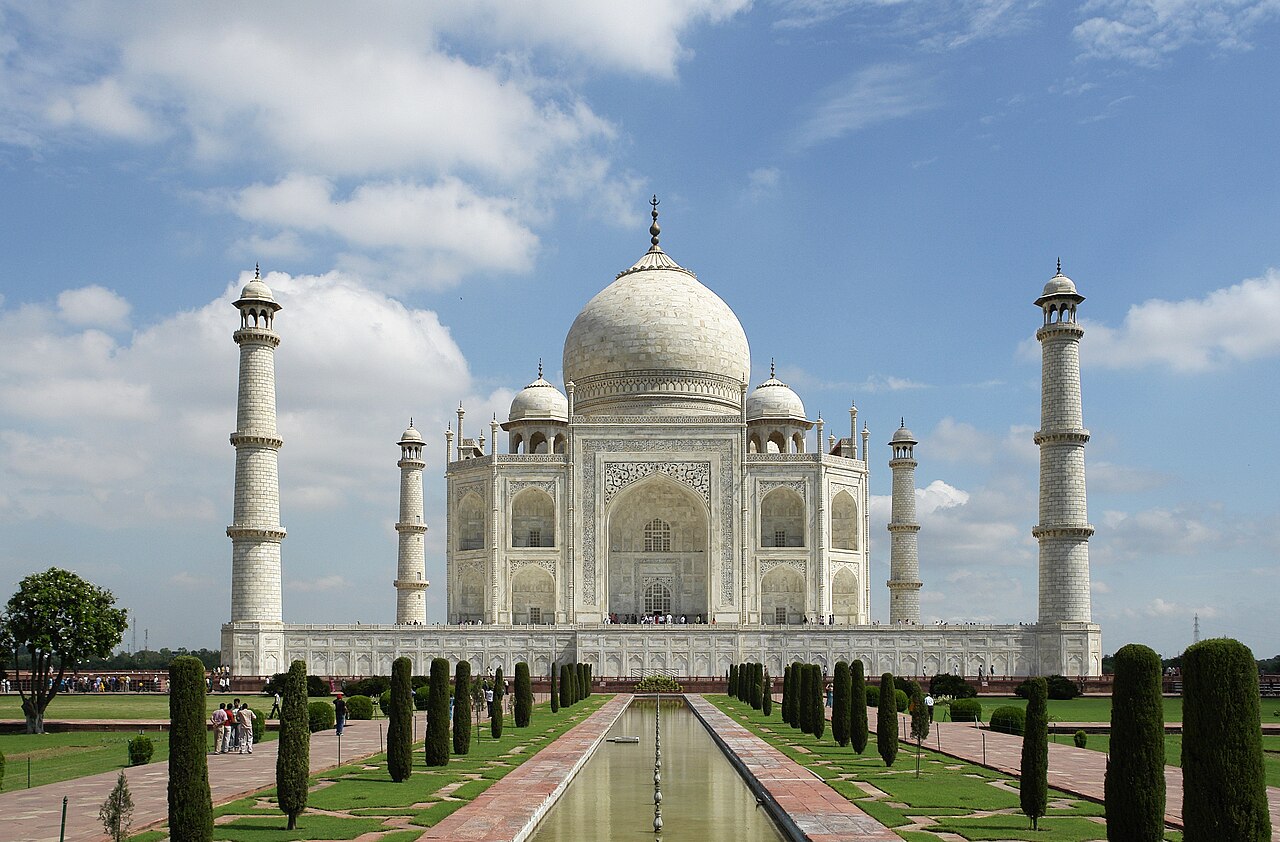
Taj Mahal
The Genesis of a Monument
The Taj Mahal, a breathtaking white marble mausoleum, stands as a testament to the profound grief and enduring love of Mughal Emperor Shah Jahan for his favorite wife, Mumtaz Mahal. Her death in 1631 during the birth of their 14th child plunged the emperor into deep mourning, leading him to commission an unparalleled monument to her memory. Construction commenced around 1632 in Agra, on the banks of the Yamuna River.
The project was an immense undertaking, employing over 20,000 artisans, craftsmen, and laborers from across the Mughal Empire and Central Asia. The design was overseen by a board of architects, with Ustad Ahmad Lahori often credited as the principal architect. The sheer scale and ambition of the project aimed to create a structure that would be the pinnacle of Mughal artistic and architectural achievement, a lasting symbol of imperial power and personal devotion.
Architectural Prowess and Material Splendor
The Taj Mahal is celebrated for its perfect symmetry and harmonious proportions, a hallmark of Mughal architecture. The central tomb, housing the cenotaphs of Mumtaz Mahal and Shah Jahan (the actual graves are in a crypt below), is crowned by a majestic onion dome, approximately 35 meters (115 feet) high, and flanked by four smaller domes. Four elegant minarets, each over 40 meters (130 feet) tall, stand at the corners of the plinth, designed to lean slightly outwards to protect the main structure.
The entire complex is constructed from pristine white Makrana marble, sourced from Rajasthan, which exhibits remarkable chromatic variations, appearing pinkish at sunrise, brilliant white at midday, and golden under moonlight. The surfaces are adorned with exquisite pietra dura inlay work, featuring semi-precious and precious stones like jade, crystal, lapis lazuli, amethyst, and turquoise, forming intricate floral motifs and Quranic verses in elegant calligraphy.
A Harmonious Ensemble
Beyond the mausoleum itself, the Taj Mahal complex is a meticulously planned ensemble designed to enhance its beauty and symbolic meaning. It is set within a vast charbagh, a four-quartered Persian-style garden, symbolizing paradise. A raised marble water channel runs through the center of the garden, reflecting the mausoleum and adding to the serene atmosphere.
The complex also includes a grand mosque to the west and a jawab (guest house) to the east, both built of red sandstone, providing architectural balance and functional spaces. The entire site is elevated on a raised plinth, further emphasizing its grandeur and separation from the mundane world. The symbolism extends to the materials and motifs, with floral designs representing life and paradise, and the overall purity of the white marble signifying spiritual transcendence.
Enduring Legacy and Global Significance
Recognized as a UNESCO World Heritage site since 1983 and consistently ranked among the world's most admired buildings, the Taj Mahal transcends its function as a tomb. It is a global icon of India, a masterpiece of human creativity, and a profound symbol of eternal love that continues to inspire awe and wonder. Its architectural brilliance has influenced countless structures, and its romantic narrative captivates millions of visitors annually, making it a crucial element of India's cultural heritage and a testament to the artistic zenith of the Mughal Empire.
The Taj Mahal remains a powerful reminder of the enduring impact of art, love, and historical ambition on the human landscape.
Go deeper
Frequently Asked Questions
What is the Taj Mahal?+
Why did Shah Jahan build the Taj Mahal?+
How tall are the minarets at the Taj Mahal?+
What kind of marble is the Taj Mahal made of?+
Where is the Taj Mahal located?+
Based on content from Wikipedia · Licensed under CC BY-SA 4.0