

Tacitus: The Roman Storyteller
Images
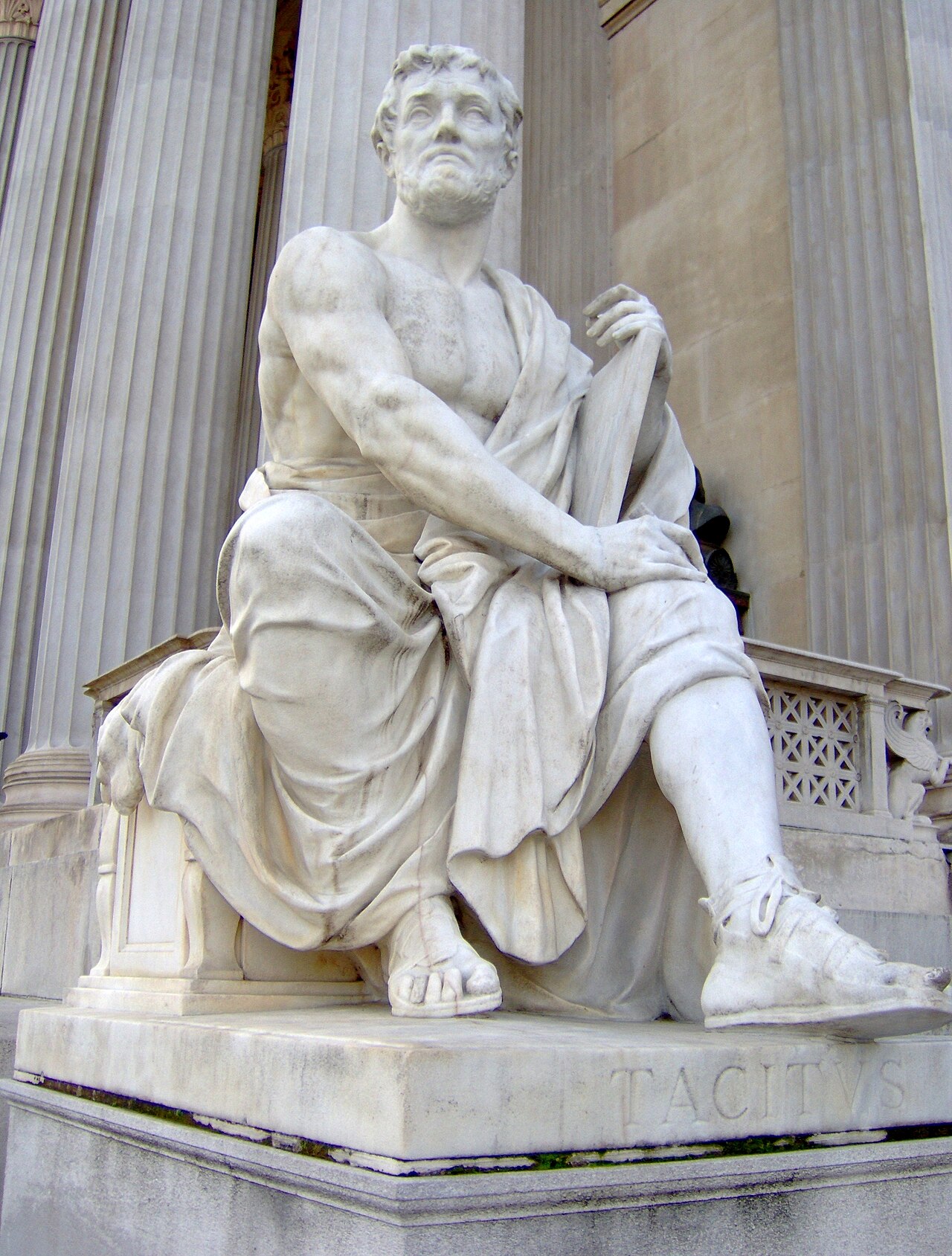
Tacitus
The Orator, Politician, and Historian
Publius Cornelius Tacitus (c. AD 56 – c. AD 120) stands as one of the preeminent historians of the Roman Empire, celebrated for his incisive prose and critical perspective.
His career as a politician, culminating in a consulship, provided him with an intimate understanding of senatorial politics and imperial administration, which deeply informed his historical writings. His early work, 'Dialogus de oratoribus' (Dialogue on Orators), showcases his rhetorical skill and offers insights into the decline of classical oratory. Tacitus's unique position allowed him to observe firsthand the machinations of power, the personalities of emperors, and the societal currents that shaped the Roman world, making his historical accounts exceptionally authoritative and compelling.
Annals and Histories
Tacitus's magnum opus, originally conceived as a continuous narrative, comprises the 'Annals' and the 'Histories'. The 'Annals' meticulously chronicles the reigns of the Julio-Claudian emperors, from Tiberius to Nero, and the tumultuous 'Year of the Four Emperors' (AD 69). The 'Histories' picks up the narrative, covering the Flavian dynasty.
These works are not mere chronicles; they are profound analyses of power, corruption, and the human condition under autocratic rule. Tacitus's distinctive style, characterized by its brevity, irony, and psychological depth, paints vivid portraits of emperors and their courts, revealing the often-brutal realities of imperial governance and the precariousness of life within the Roman elite.
Germania and Agricola
Beyond the imperial narrative, Tacitus contributed significantly to Roman ethnography and biography. His treatise 'Germania' offers a detailed, albeit sometimes idealized, account of the Germanic tribes, their customs, social structures, and perceived virtues and vices. This work is crucial for understanding Roman perceptions of 'barbarians' and the cultural frontier of the empire.
His biography of his father-in-law, Julius Agricola, provides invaluable information on the Roman conquest and administration of Britain. It serves as both a tribute and a subtle critique of imperial ambition, detailing Agricola's campaigns and his governorship, offering a rare glimpse into provincial life and military strategy.
The Significance of Tacitus
Tacitus's enduring significance lies in his multifaceted contributions. His 'Annals' contain one of the earliest non-Christian references to Jesus Christ and the persecution of Christians under Nero, providing critical external evidence for the early history of Christianity and its interaction with the Roman state. His unflinching examination of imperial tyranny and senatorial decline offers enduring lessons on political ethics and the fragility of republican ideals.
Furthermore, Tacitus's rigorous approach to historical inquiry, his emphasis on eyewitness accounts (where possible), and his critical evaluation of sources set a high standard for historical methodology. His work continues to be studied for its literary merit, historical insight, and profound commentary on power and society.
Go deeper
Frequently Asked Questions
Who was Tacitus and why is he important?+
What are the main books Tacitus wrote?+
Why do people read Tacitus today?+
How did Tacitus learn about Roman politics?+
What is special about Tacitus's writing style?+
Based on content from Wikipedia · Licensed under CC BY-SA 4.0